
Before You Start

Before you start:
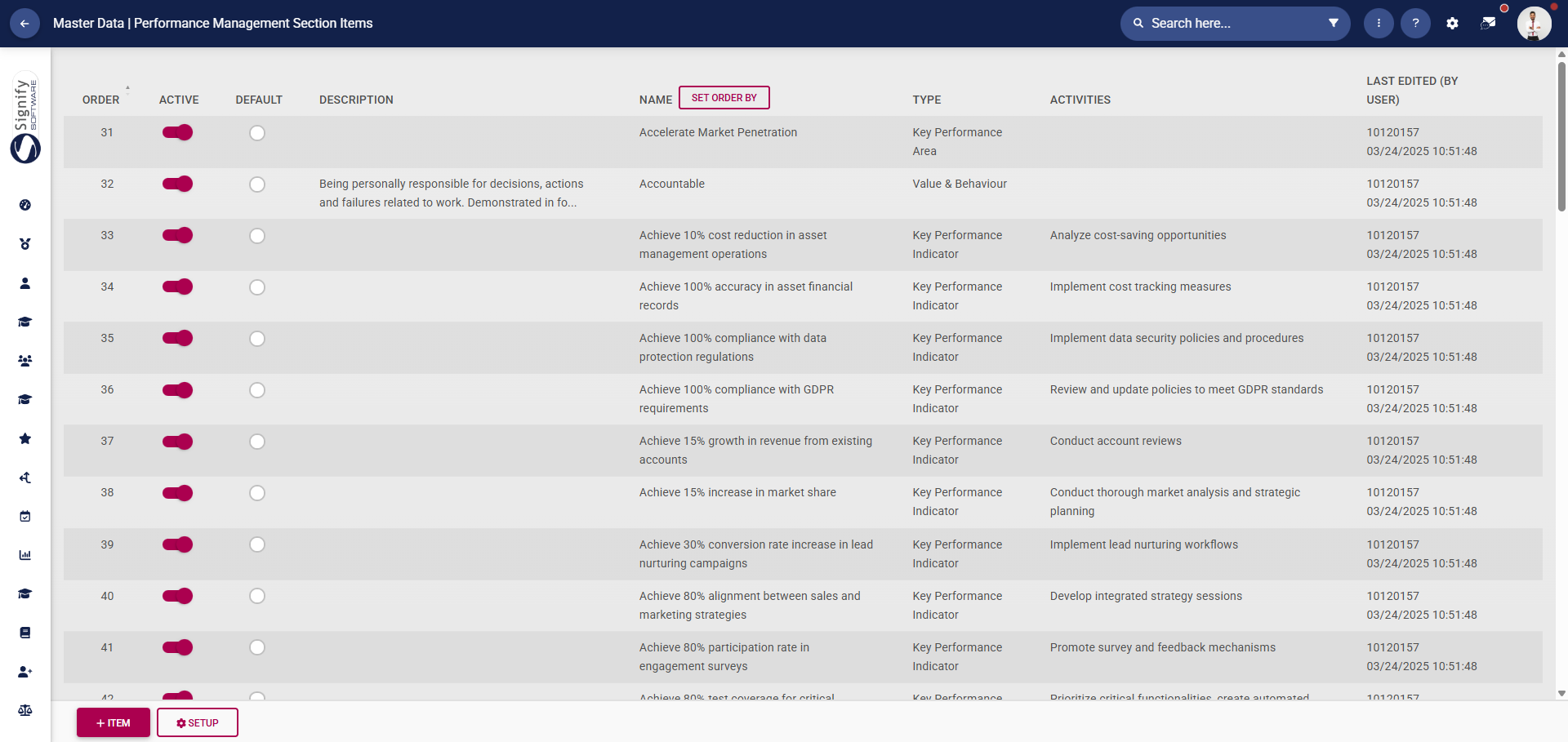
- Consider populating the Master Data Library with performance management items, which can streamline the performance management process. These library items include:
-
- Perspectives
- Key Performance Areas
- Key Performance Indicators
- Leadership Behaviours
- Values and Behaviours
- Key Competencies
-
Click here to find out how to update the Master Data Library.
- Ensure you have a clear understanding of the employee's responsibilities, the company's goals, and how the role fits into the overall picture.
- Base the performance objectives on SMART goals. Each objective should be:
-
- Specific
- Measurable
- Achievable
- Relevant
- Time-bound
-
- Ensure the goals support the department or organisation's priorities.
- Select clear performance indicators.
- Finally, employees are more likely to commit to the process if they have input in setting their goals, so consider engaging in a two-way discussion
Key elements to include:
- Performance goals and objectives
- These should be aligned with organisational priorities.
- Keep the language simple and clear.
- Avoid making goals too broad or unrealistic.
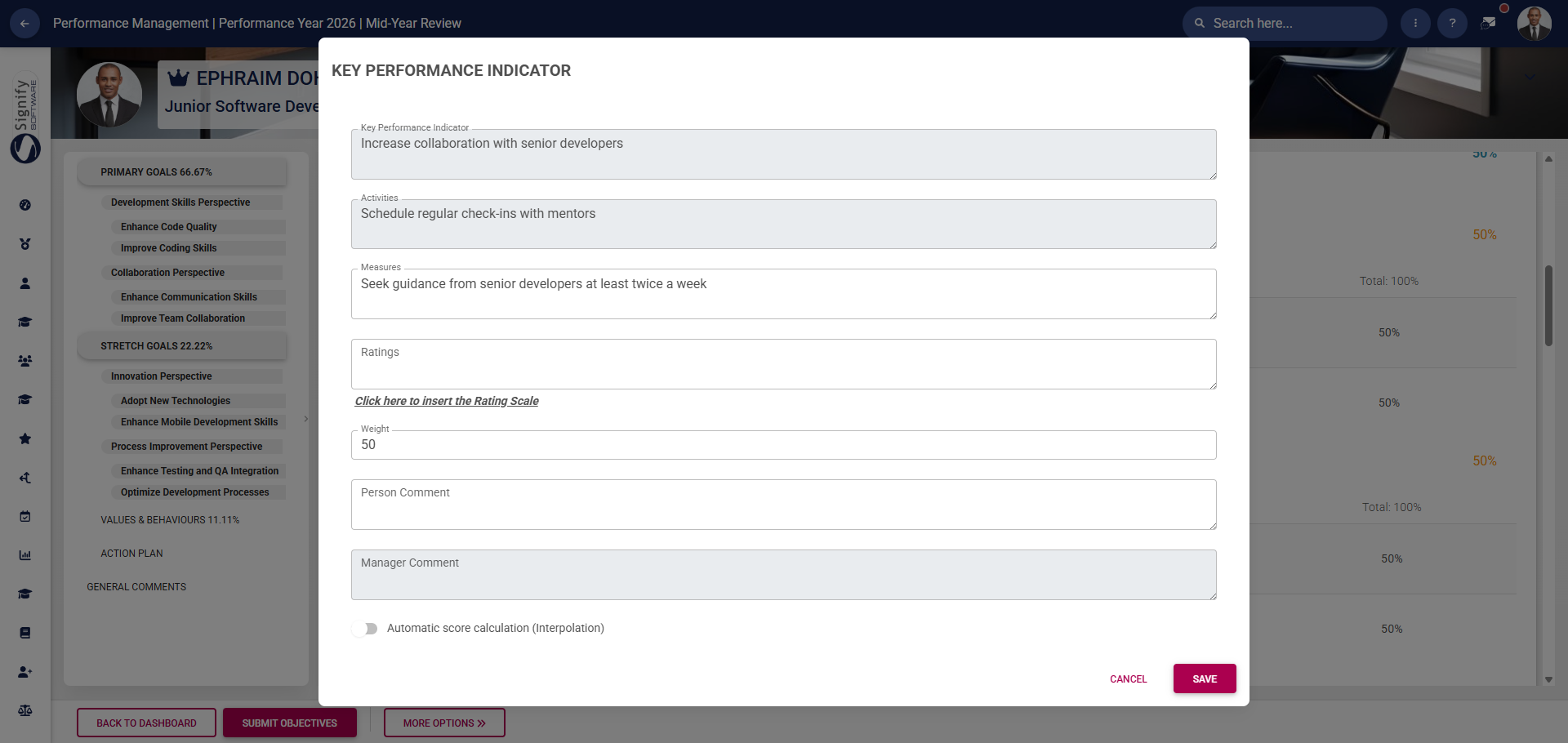
- Key Performance Indicators (KPIs)
- Select quantitative and qualitative indicators for each objective.
- Focus on the most impactful goals to avoid overloading the agreement.
- The employee's input is vital when setting targets.
- Behavioural expectations
- Include company values, as well as expected behaviours in teamwork, leadership, or communication.
- Employee support
- Consider the tools, resources, or support from management that the employee may need to succeed.
- Acknowledge that priorities may shift and that agreements should be revisited if needed.
- Think about the employee's development and their future potential.
- Review process and frequency
- Define how and when progress will be evaluated.
- Incorporate feedback loops that enable feedback to flow from the manager to the employee and vice versa.
