
Appoint, Transfer, or Terminate a Person

This guide focuses on the People Management module and the features available to the administrator. By following the outlined procedures, administrators can:
- Add users manually
-
- Create an organisational structure
- Define job titles and positions
- Appoint a person in a position
-
- Add users using an import
- Transfer a person to a different position
- Terminate a person
Add users
Users can be added to the system in two ways:
- Manually, using the Organisational
Structure,Structure, JobProfiler,Management, andManageView/EditPersonPeople functionalities, or - Using the import sheet.
This guide will show both methods.
Method 1: Add users manually
To add new users to the system manually, it is essential that the following prerequisites are established:
- The
OrganisationalorganisationalStructurestructure must be developed. TheJobTitlestitles andPositionspositions should be definedusingin the JobProfilerManagement module.
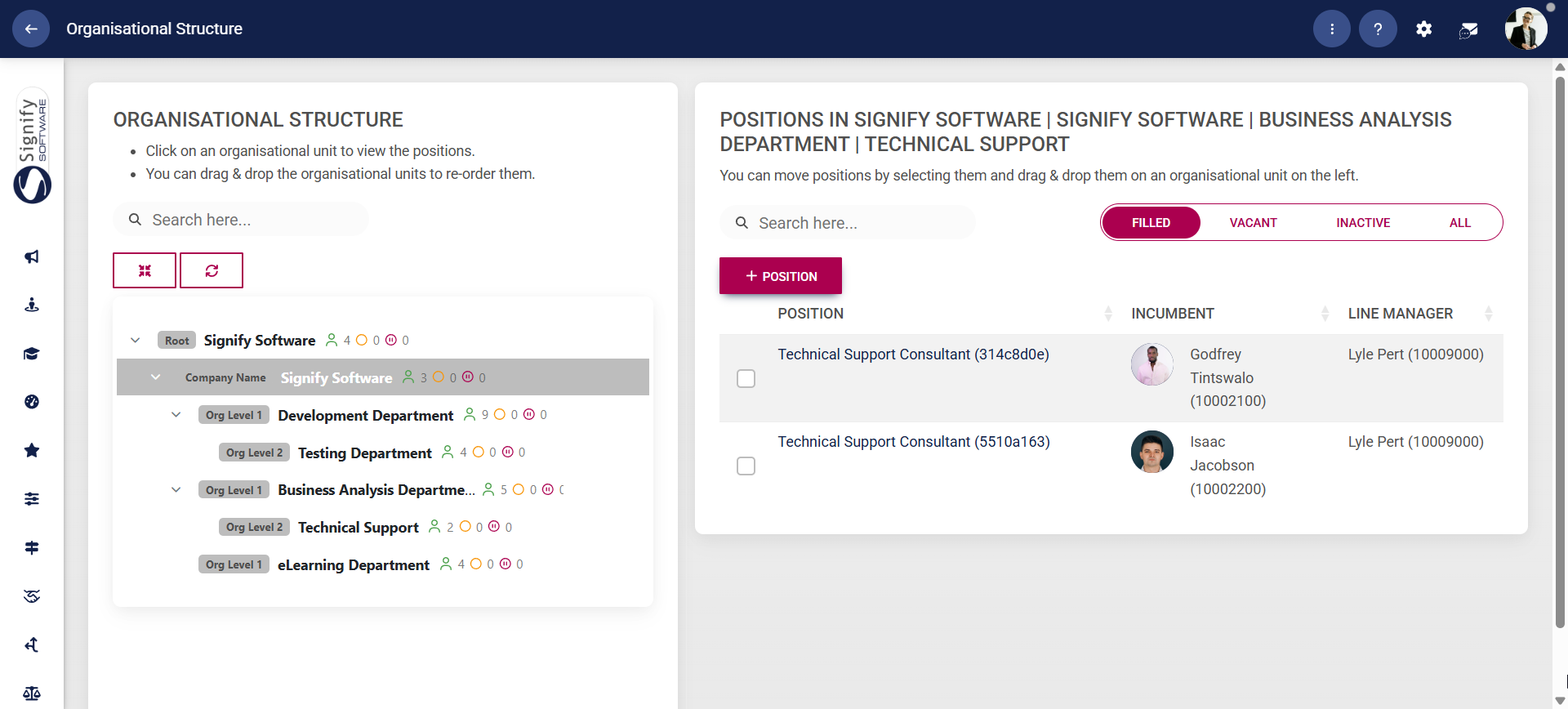
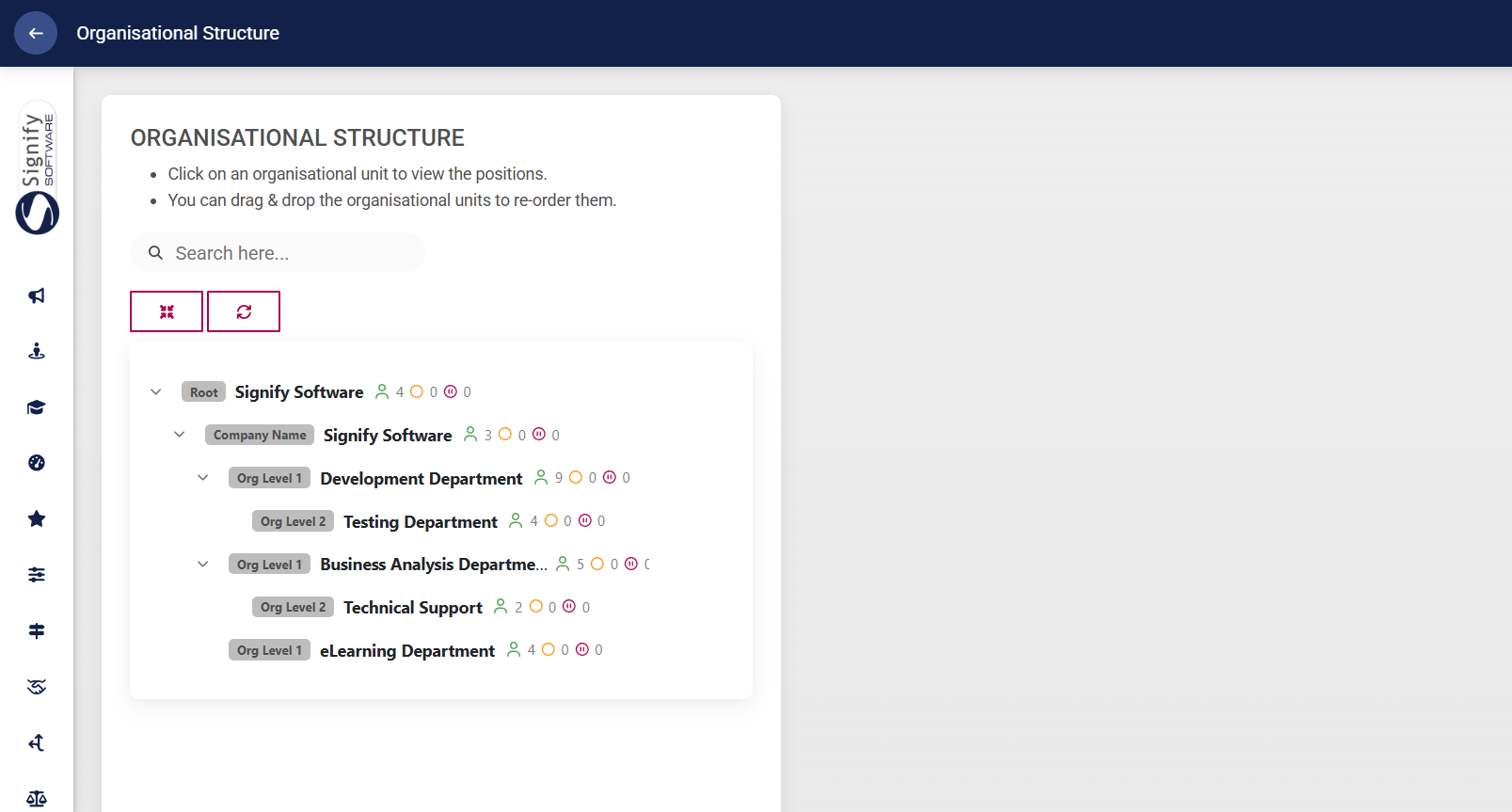
Create an organisational structure
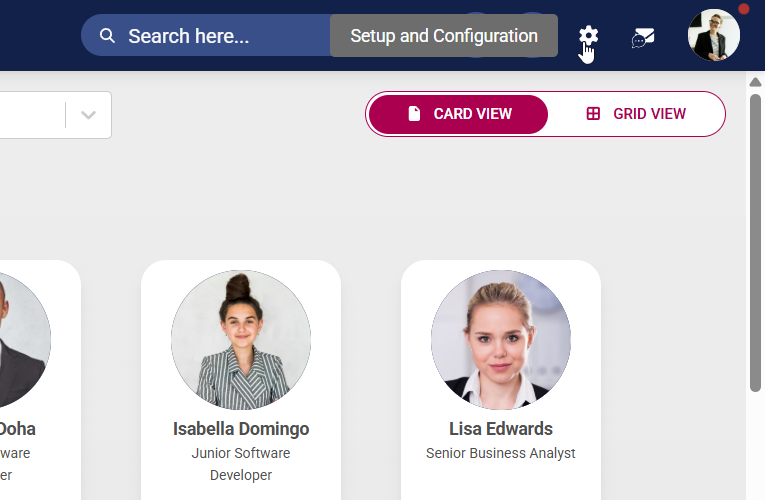
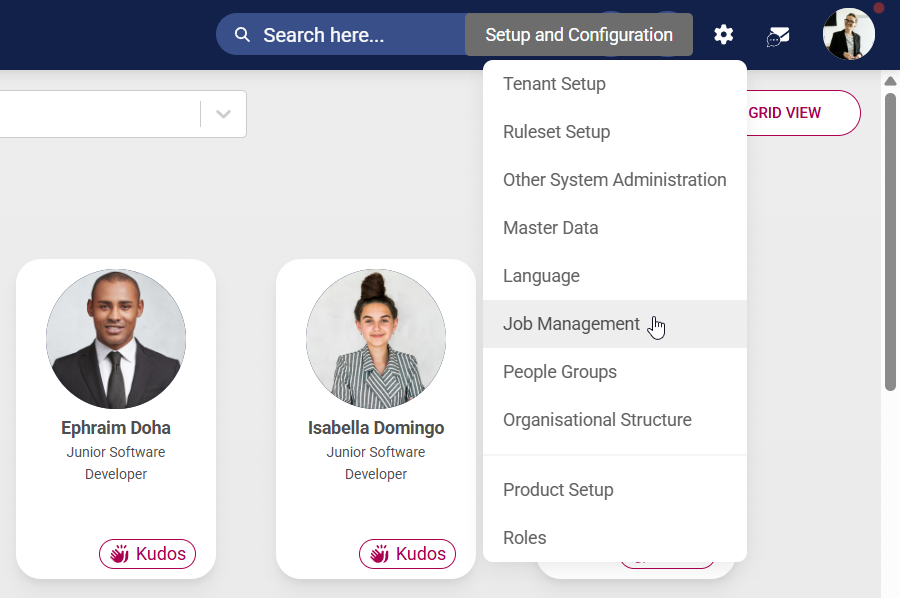
- Click the gear icon to access the Setup and Configuration menu.
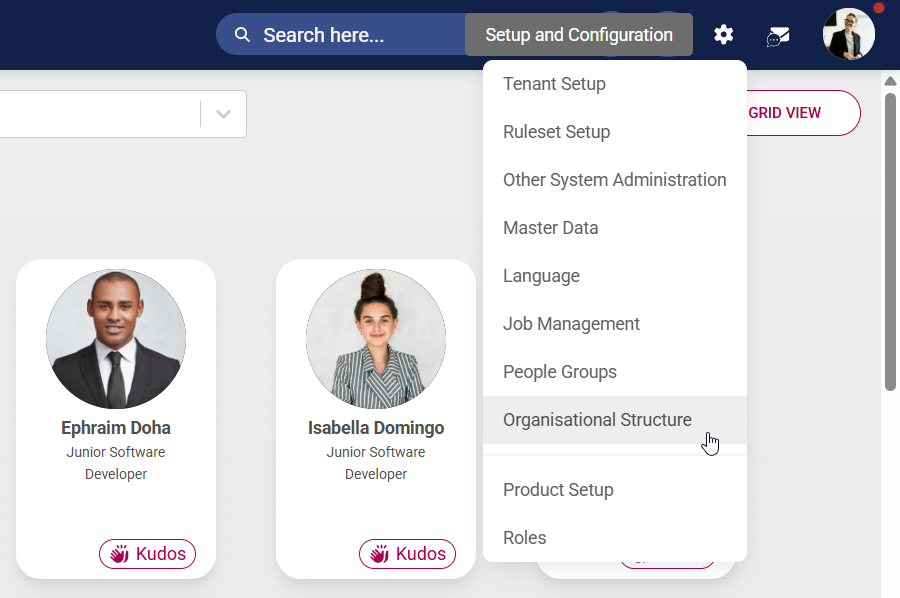
- Create an organisational structure based on the organisation’s size, goals, industry, and work style. Some examples of organisational structures:
-
- Hierarchical structure – based on levels of authority and responsibility
- Functional structure – focuses on specialised roles or departments
- Divisional structure – based on product lines, geographical locations, or customer types
- Team-based structure – centred around project teams or cross-functional units
- Process-based structure – focuses on workflow and end-to-end processes
-
Hover over the name of a level to access the editing options. You can rearrange organisational levels by using the drag-and-drop feature.
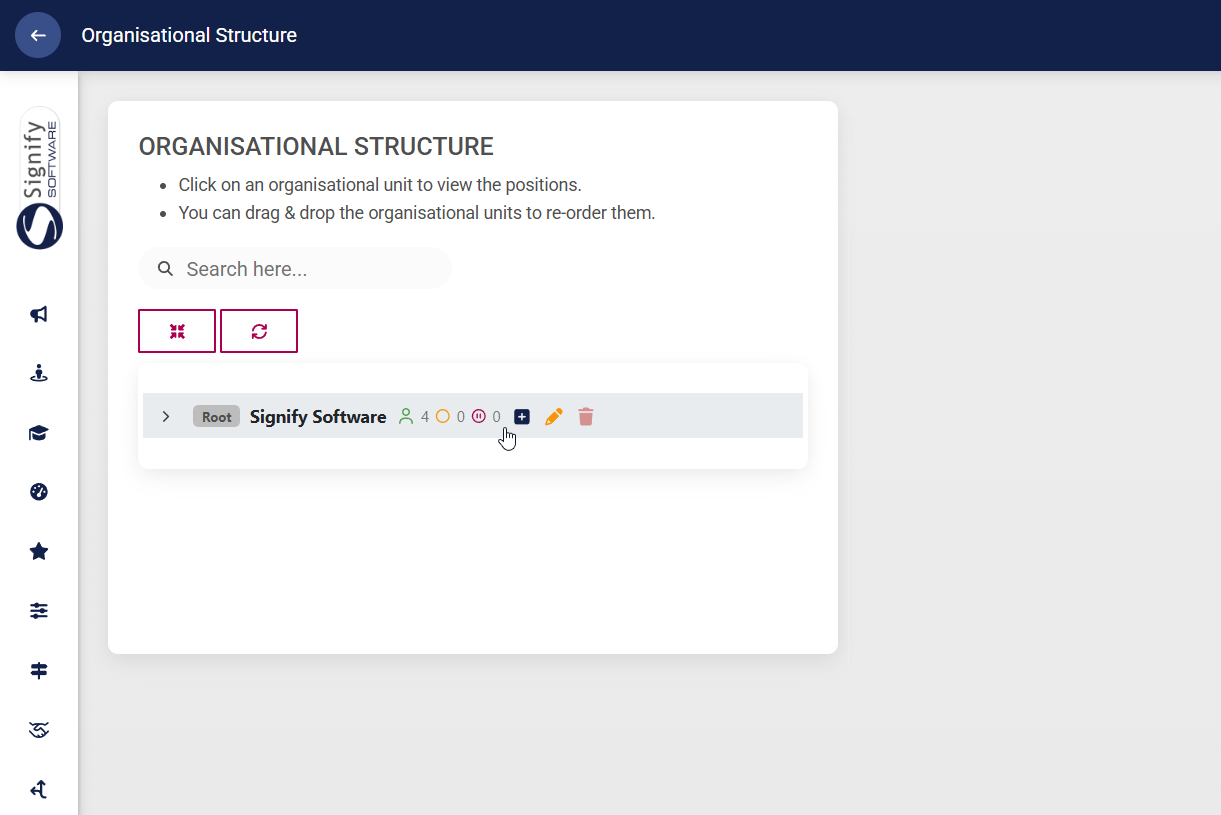
- To add a subordinate
levels,level, click the plus icon next to thenamerelevant level name.

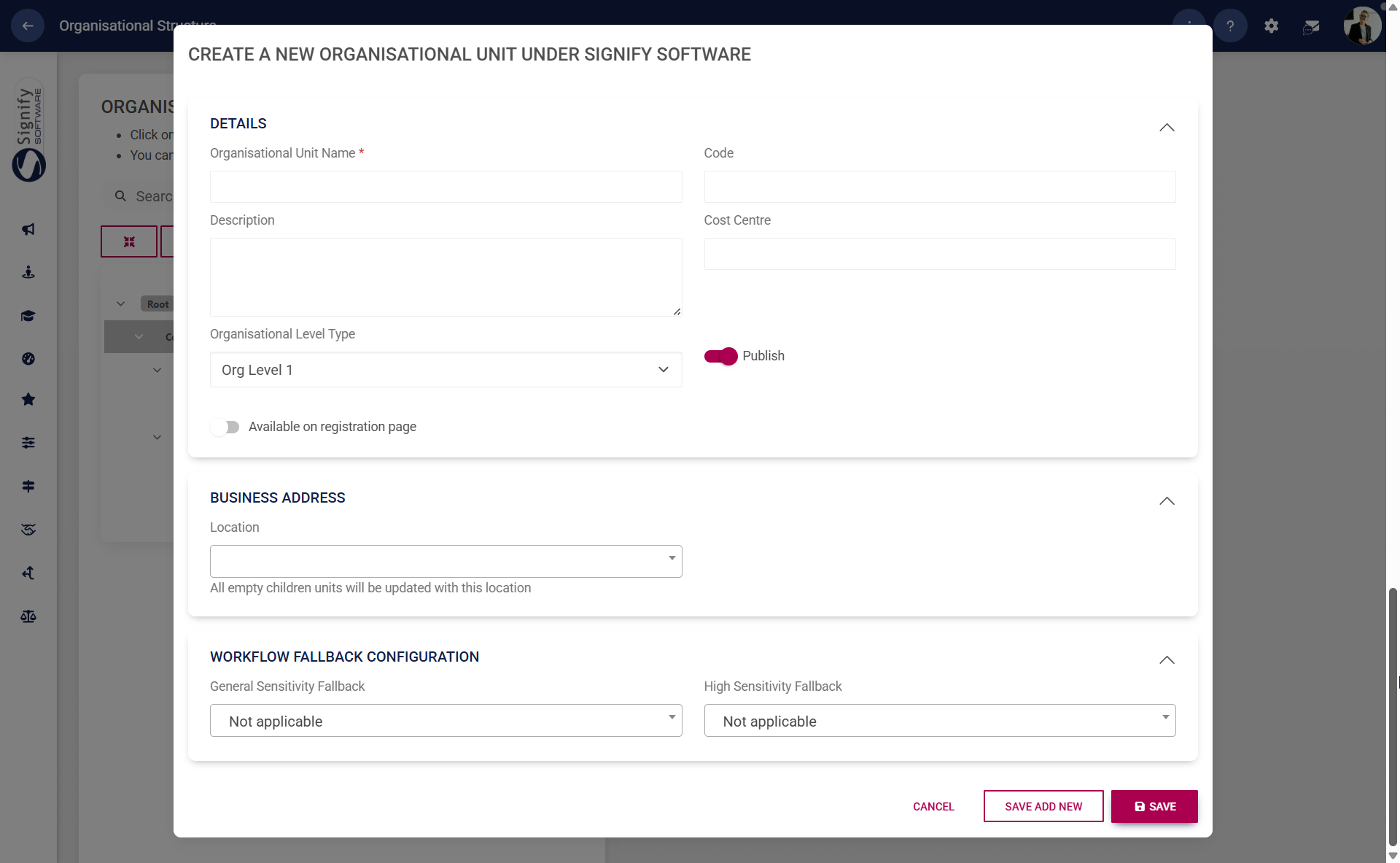
- Enter the
Namename andCodecode of the organisational unit. - Choose the appropriate
OrganisationalorganisationalLevellevelTypetype from the dropdown menu. - Toggle the Publish option on or off as needed.
IfToggleconfigured,to enable new registrants to select this organisational unit when registering on theBusinesssystem.
Click SAVE ADD NEW to add another subordinate level to the same organisational unit. Click SAVE when finished or click CANCEL to discard any changes.
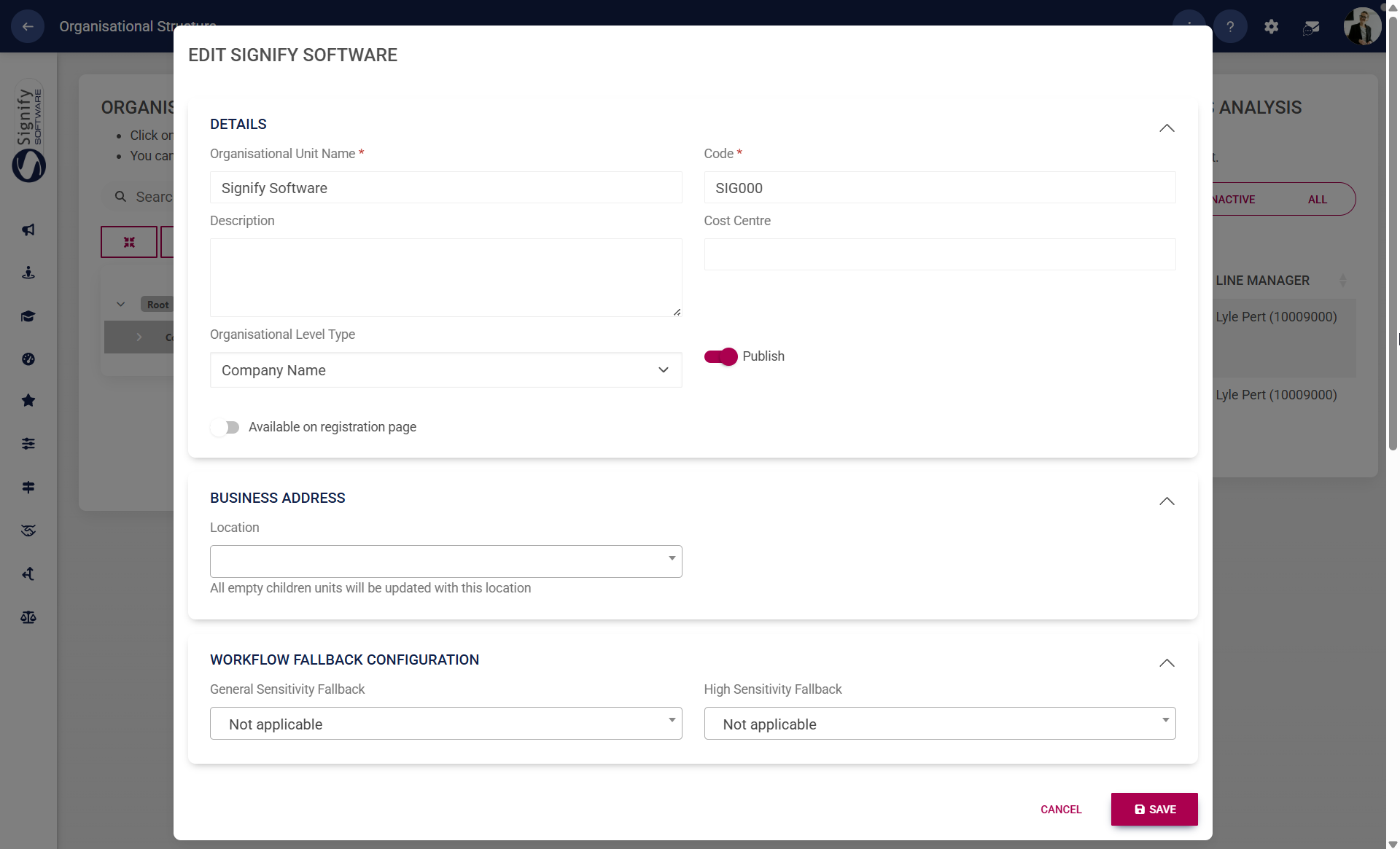
- Click the pencil icon next to the name of
aan organisational level to edit.
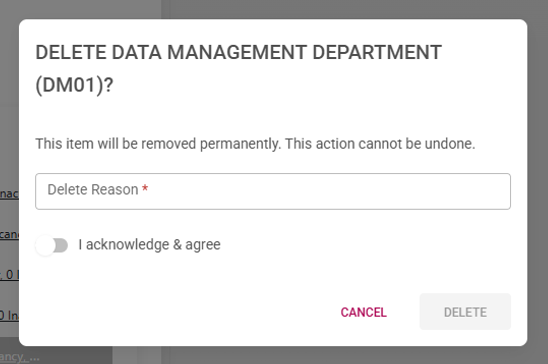
- To delete a level, click on the trash bin icon next to its name. Please note that a level cannot be deleted if it has:
-
- subordinate levels,
- vacant positions, or
- active positions.
-
Define job titles and positions
After establishing the Organisationalorganisational Structure,structure, we needcan toproceed createwith creating job titles and positions using the necessary Job TitlesManagement and Positions using Job Profiler.functionality.
- Click the gear icon to access the Setup and Configuration menu.
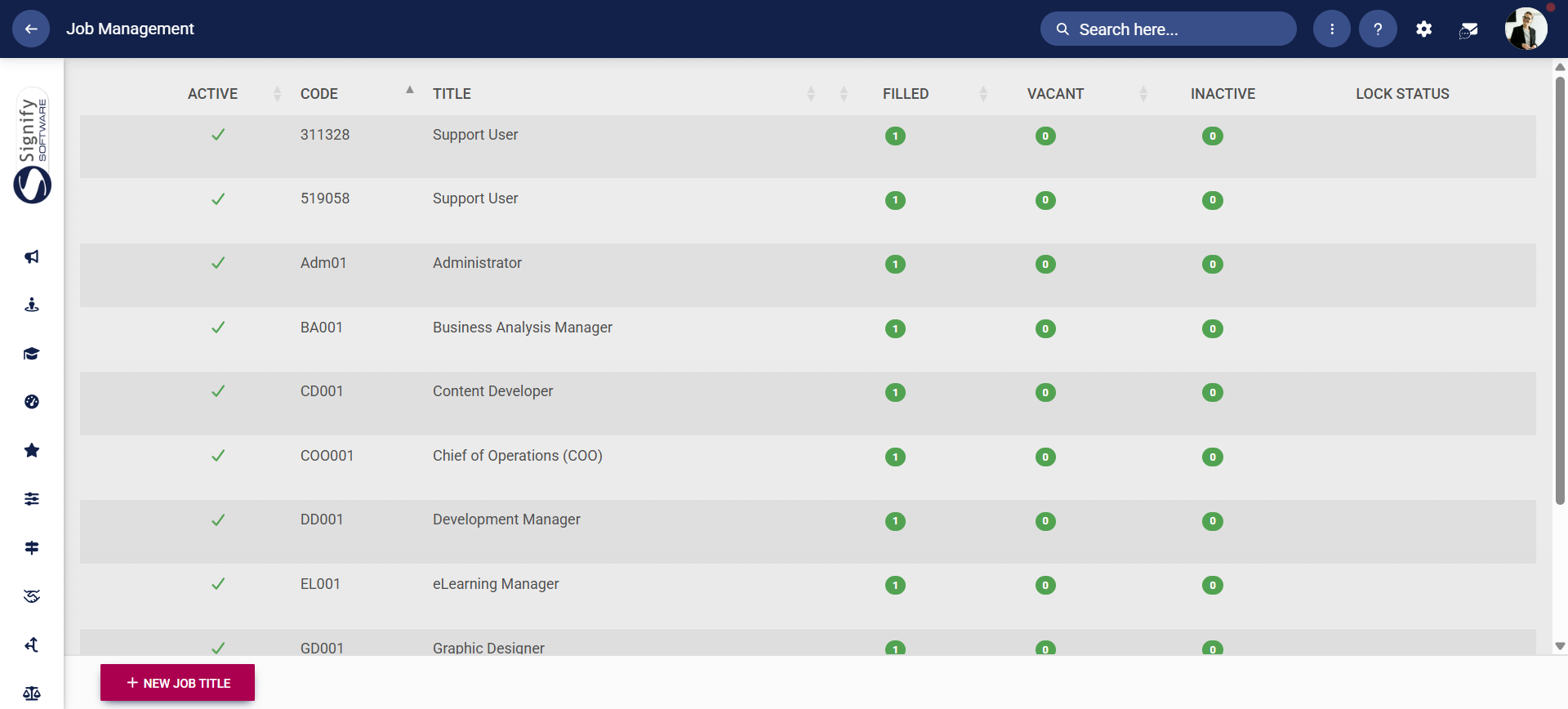
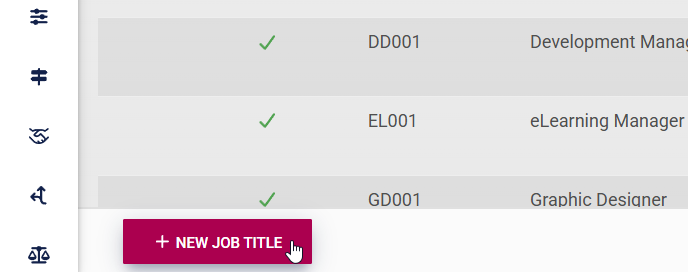
- This screen shows all the job titles, positions, and vacancies within your organisation.
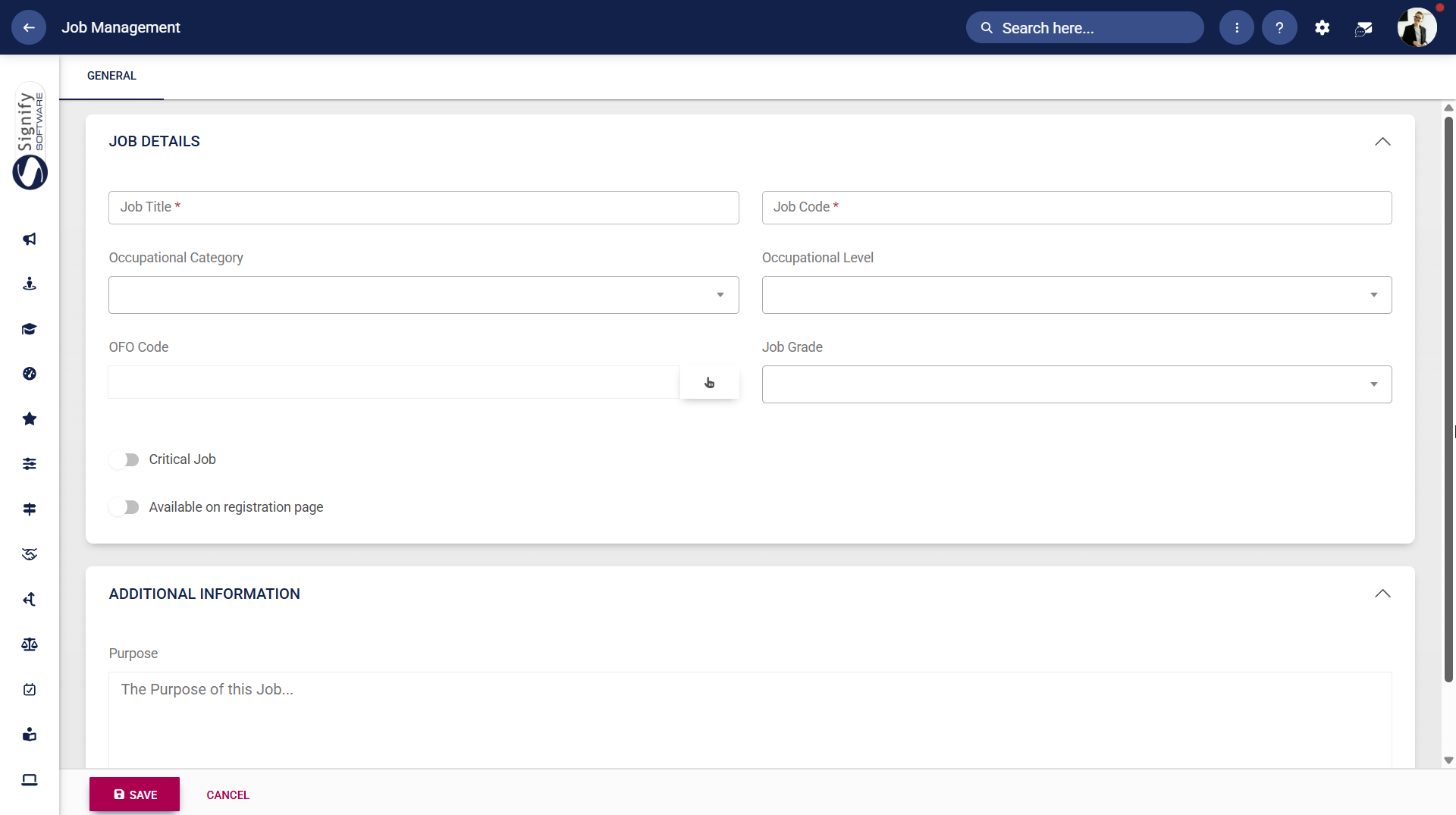
- Enter the
JobjobCode.title and job code. - If the
MastermasterDatadata for theOccupationaloccupationalCategorycategory, occupational level, OFO code, andOccupationaljobLevelgrade data fieldshavehas been set up, you can select the appropriate data from thedropdowndrop-down menus. To learn more about master data, navigate to the Master Data Maintenance part of this chapter. - You can toggle the Critical Job switch on and off as required.
- Toggle to enable new registrants to select this job title when registering on the system.
Click SAVE when you are finished or click CANCEL to discard your edits.
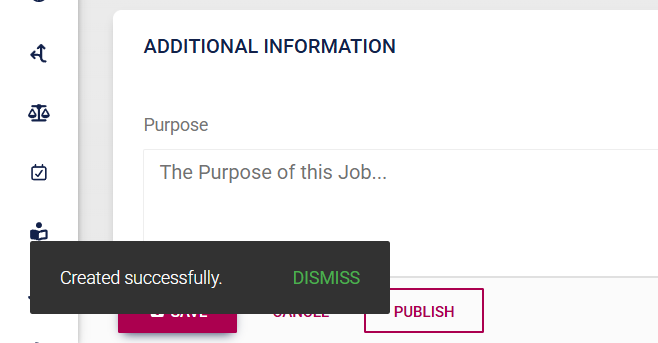
- After saving the new
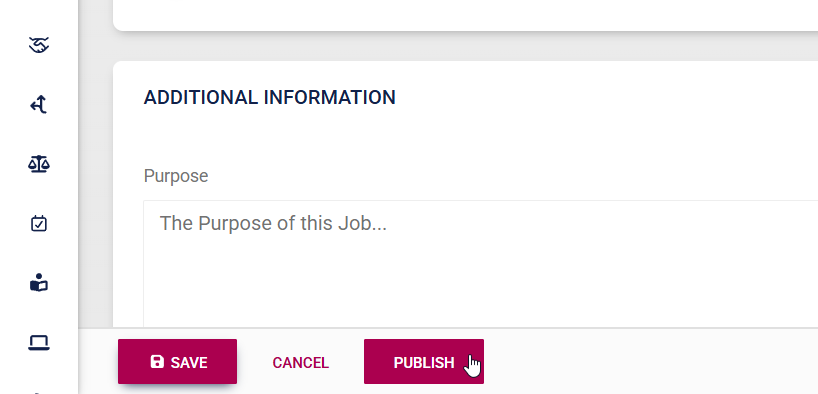
JobjobTitle,title, click PUBLISH to finalise and share it.
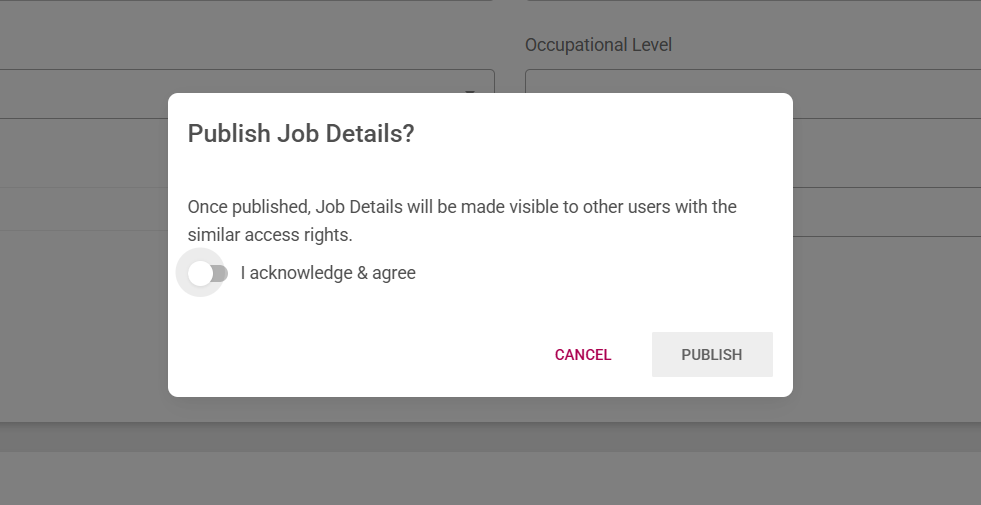
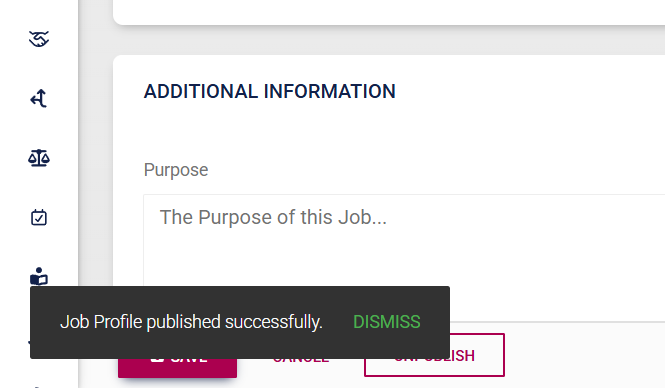
Click SAVE when you are finished or click CANCEL to discard your edits.
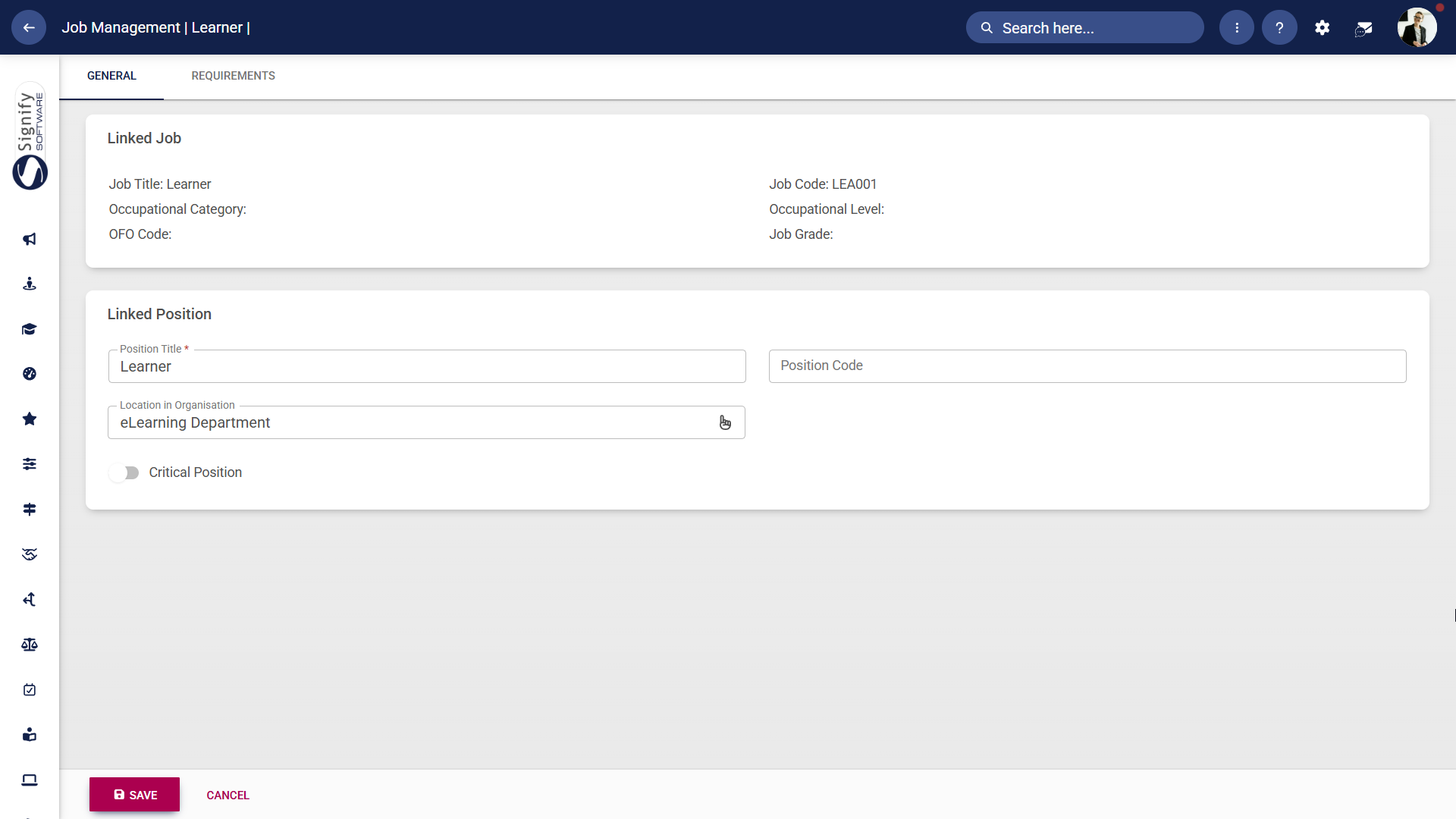
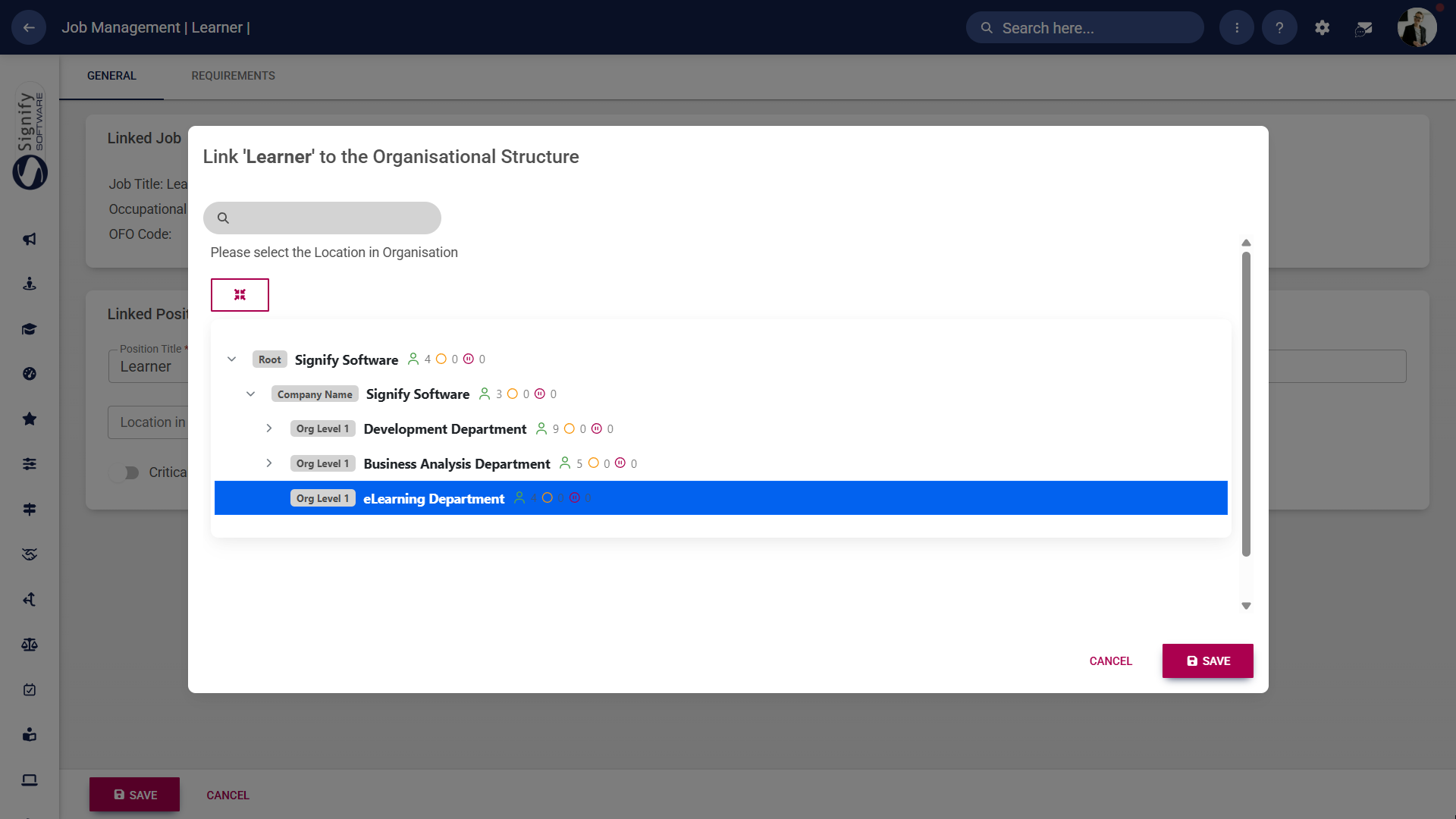
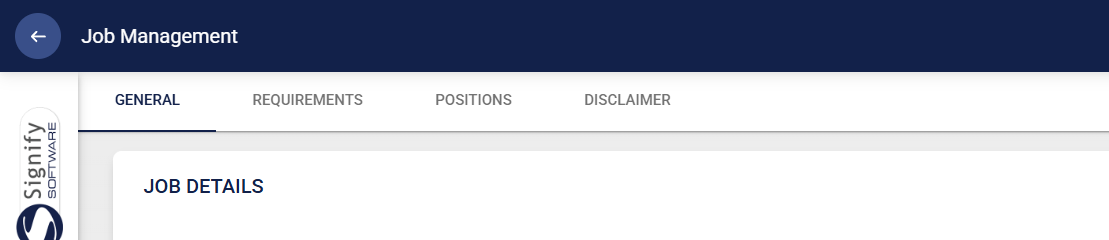
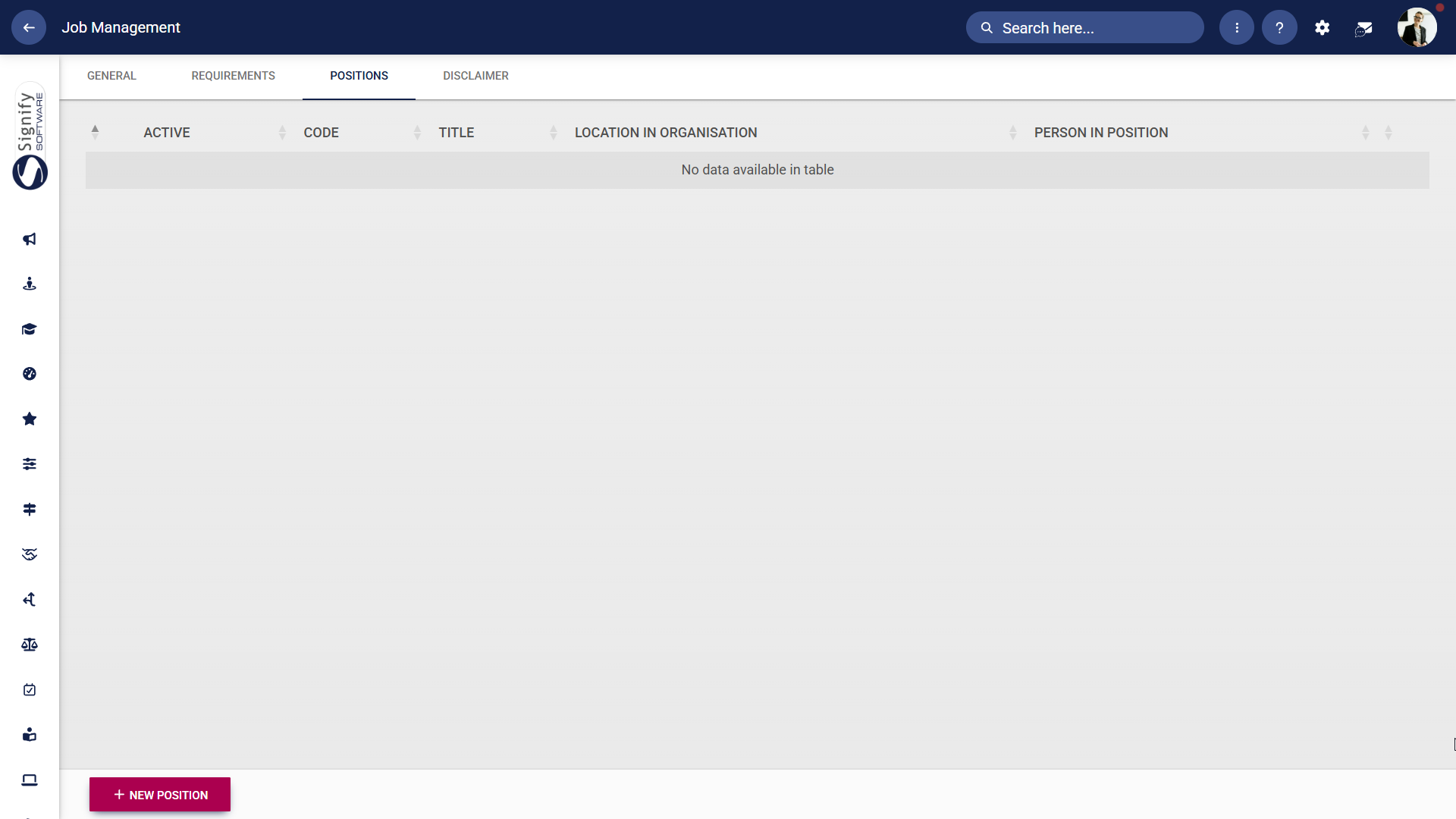
- You can
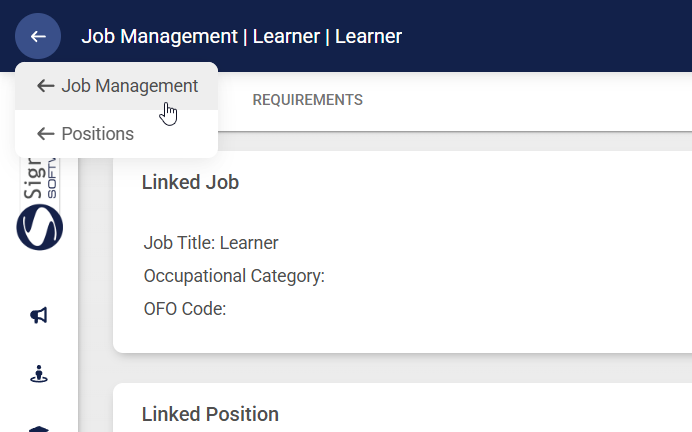
go backreturn totheJobProfilerManagement tokeepcontinue addingJobjobTitlestitles andPositionspositions asrequired.needed.
Appoint new users manually
Since the Organisationalorganisational Structurestructure and the Jobjob Titlestitles and Positionspositions have been created, we can now add a new person to the system.1.
Management.
3.
PERSON.
5.
Click Cancel to discard your edits.
8.
Notification
Click
Follow the above procedure to add users manually. This method is also effective for adding small amountsnumbers of users at a time.
Alternatively, follow Method 2 below if you prefer to streamline the process and add many users at a time.
TRANSFERRING EMPLOYEES
Once a person’s role or position in the company changes, they can be transferred on the system using the People Management module.
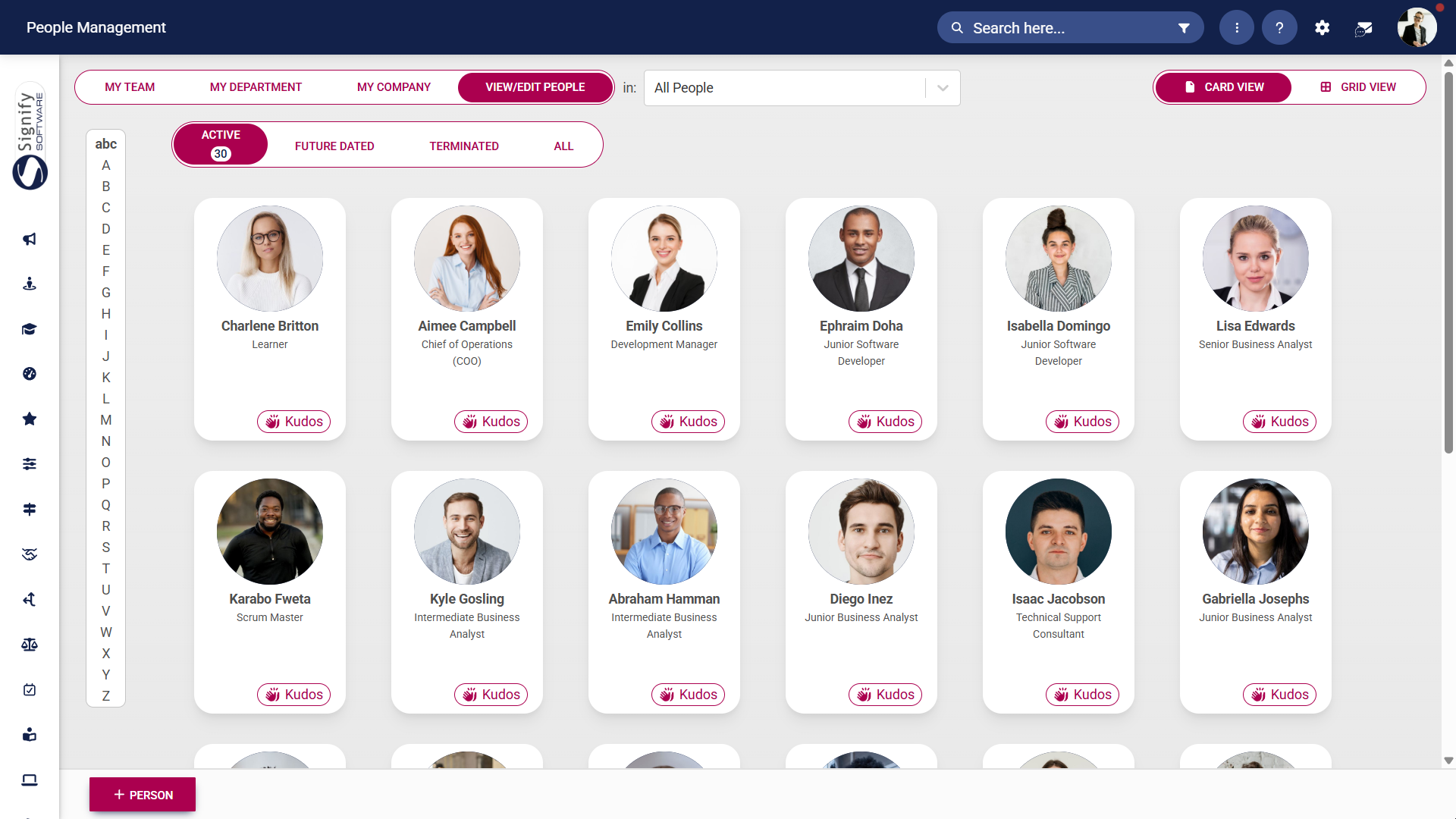
1. Hover over the sidebar menu and click People Management.
2. Navigate to the Manage People tab.
3. Hover over the card of the person you would like to transfer and click on the pencil icon to manage their profile.
4. On the lefthand menu, click on Appointment.
5. At the bottom of the screen, click on Transfer Person.
6. Expand the organisational structure to find the location in the organisation to which the employee is being transferred to.
7. Click on the employee’s new position on the right of the screen.
If the new position has not been created, you can do so by clicking +Position.
Alternatively, you can select an existing position from the Job Library.
8. Complete the appointment information, then click Save to proceed, or Cancel to discard your changes.
9. The employee’s previous appointment, as well as their new role, is recorded in the Appointment History tab on the employee's profile.
METHOD 2: ADD USERS USING THE IMPORT
Using an import sheet, you will establish the organisational structure, create job titles and positions, and add new users.
1. Use the sidebar menu to navigate to People Management.
2. Click this button to access Module-Specific Functions.
3. Click Export/Import on the menu and ensure the dropdown menus are set to People Management and Employee Data. Click Proceed to continue.
4. To access the import sheet, click Download Import Template.
Populate the downloaded import sheet with the users' information. This procedure requires attention to detail to ensure the information on the system is accurate. Please do not hesitate to ask the Signify Consultant for assistance.
5. Once the import sheet has been filled and checked for errors, click Upload Import File.
6. Click on Import to initiate the data validation and import processes. The users' data may take some time to appear in the system.