
Purpose of the Module

In
Performance dynamicmanagement is more than an annual review. It is an ongoing process that helps organisations measure performance, support employee development, and competitiveachieve business environment,goals.
The Performance Management module servesprovides asmanagers and employees with the tools to set clear expectations, monitor progress, provide meaningful feedback, and encourage continuous growth throughout the performance cycle.
Instead of relying on occasional reviews, organisations can adopt a consistent approach to performance management that is transparent, measurable, and focused on improvement.
Why performance management matters
Employees perform best when they understand what is expected of them and receive regular guidance throughout the year.
An effective performance management process helps organisations:
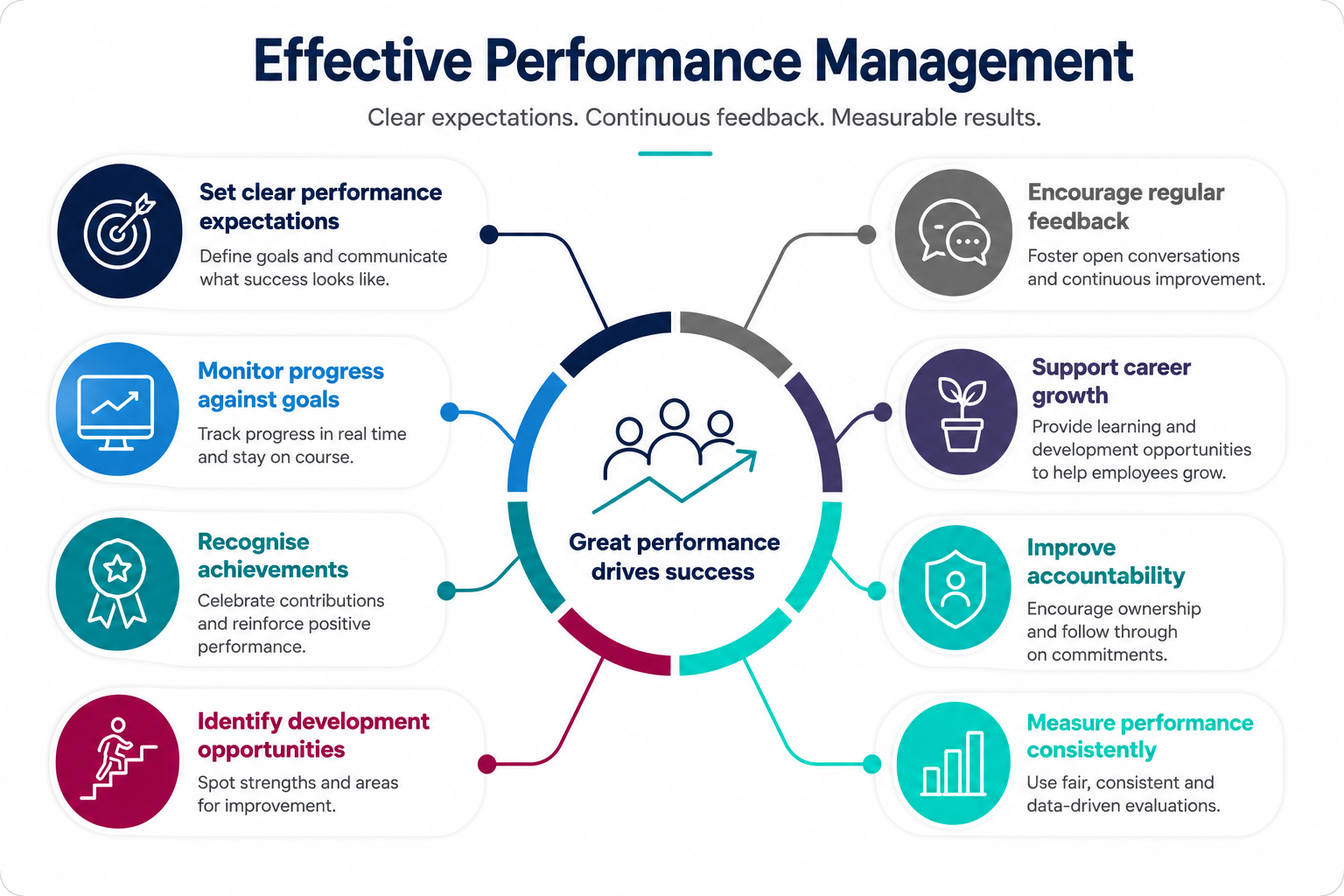
When employees understand how their work contributes to organisational success, they are more likely to stay engaged, motivated, and committed to delivering quality results.
What the Performance Management module helps you do
The module provides a structured framework designedfor to enhancemanaging employee performance,performance align individual contributions withthroughout the company'syear.
Managers and createemployees can work together to:
1. Set meaningful goals
Create performance goals, KPIs, and development objectives that clearly define what success looks like.
Goals provide direction and help employees focus on the work that matters most.
2. Monitor performance
Managers can monitor progress throughout the review period, identify challenges early, and recognise achievements as they happen instead of waiting for a cultureformal of continuous improvement. review.
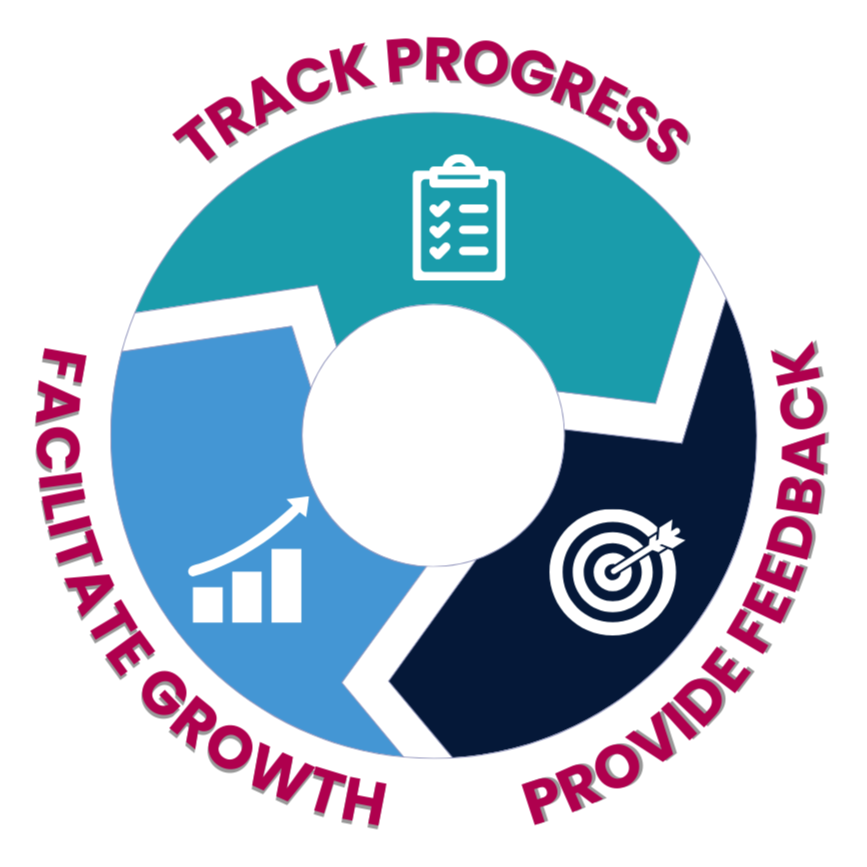
Effectivecheck-ins performancemake managementconversations ismore not just about evaluating past performance – it is a proactive approach to setting expectations, developing skills,productive and fosteringreduce engagementsurprises during evaluations.
3. Provide regular feedback.
Constructive benefitsfeedback include:
helps employees understand:
-
-
Improvingwhatproductivitythey are doing wellEnsuringwhereaccountabilitythey can improveIdentifyingwhatgapssupportintheytrainingneedBuildingwhichaskillsculturetheyofshouldcontinuous feedbackdevelop
-
Frequent conversations encourage trust and create opportunities for continuous improvement rather than corrective action.
4. Measure performance fairly
Using predefined goals, KPIs, competencies, and rating scales creates a consistent approach to evaluating performance.
This module enablesallows managers andto employeesmake informed decisions based on measurable evidence instead of personal opinion.
5. Support employee development
Performance management is closely connected to have open discussions about goals, competencies,learning and career development, ensuring that every team member understands their role in achieving success. Furthermore, it establishes clear performance metrics, helping companies identify high performers, address skill gaps, and drive productivity improvements.development.
By leveragingidentifying thestrengths Performanceand Managementdevelopment module,areas, companiesorganisations can recommend relevant learning opportunities, create adevelopment structured, transparent,plans, and fair approach to managing talent. This module is instrumental in building a high-performance culture whereprepare employees feelfor valued,future motivated,roles.
This supportedencourages in their professional journeys. The following sections will explore its purpose in greater detail, including how it aligns with business goals, enhances employee engagement, and contributes to thelong-term growth while helping organisations retain valuable talent.
Key components of the company.
Key Components
Aligning Goals and Objectives
management
For a company to achieve sustainable success, employees must understand how their roles contribute to broader business objectives. The Performance Management module bridgesbrings together several activities that support employee success.
PURPOSE
Goal setting Define clear objectives and expectations. KPIs Measure performance using objective criteria. Performance reviews Evaluate progress at scheduled intervals. Continuous feedback Encourage regular conversations between managers and employees. Competencies Assess behaviours, skills, and capabilities. Development planning Identify learning opportunities and career goals.
Together, these components provide a balanced view of employee performance throughout the gapreview betweencycle.
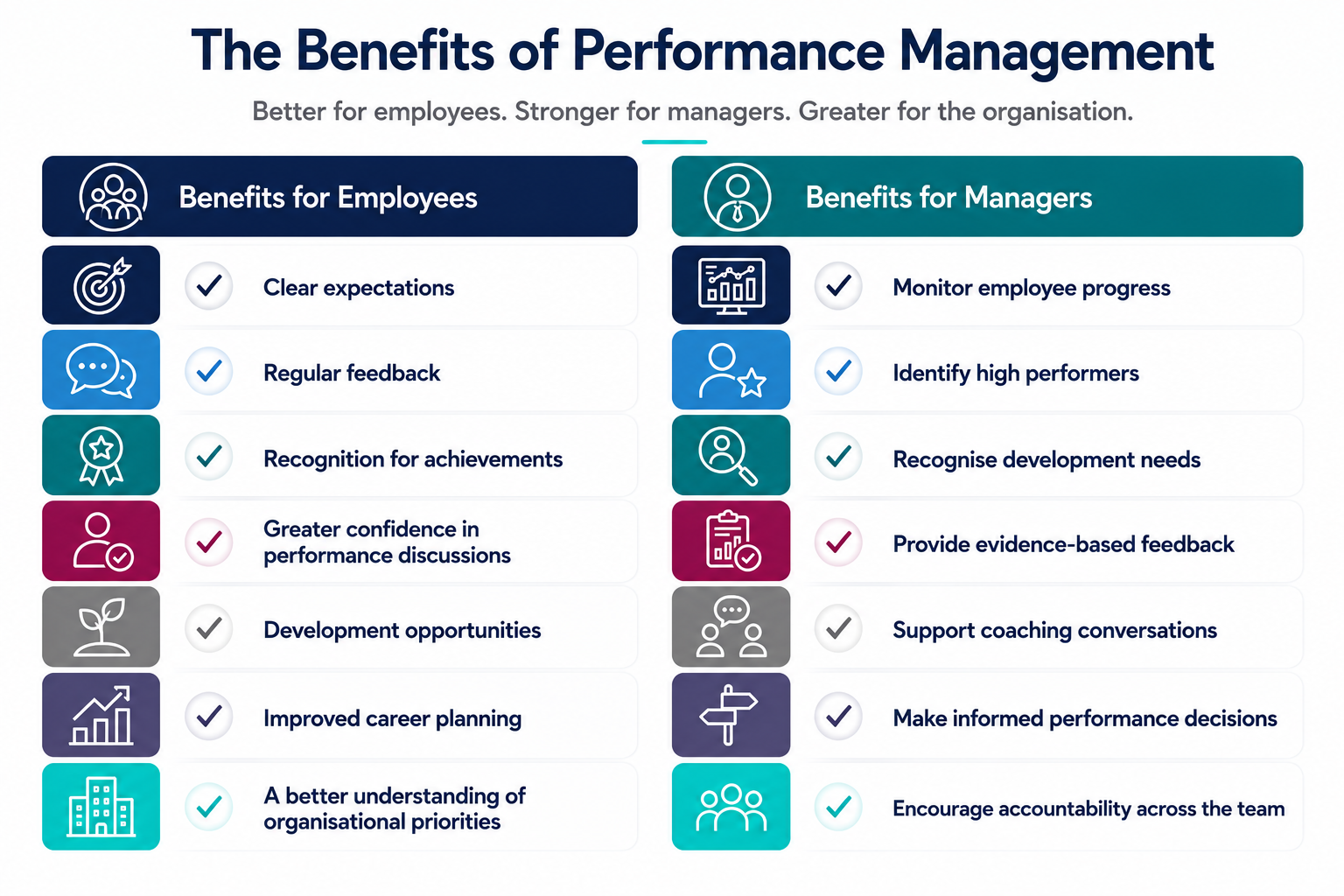
Benefits careerfor aspirationsemployees and managers
strategicEmployees goals,benefit ensuring that employees focus on outcomes that drive growth. By defining expectations, tracking progress, and providing continuous feedback, it createsfrom a structured approachperformance thatprocess alignsbecause individualthey developmentalways withknow companywhere priorities.they stand and what they need to do to continue growing. On the other hand, managers gain better visibility into team performance.
Supporting organisational success
Strong organisations are built on strong performance.
When performance expectations are clear, and employees seereceive theongoing directsupport, impactorganisations benefit from:
Performance management system translates high-level business strategies into actionable, measurable objectives at every level. This clarity helps employeescreate understandan theirenvironment responsibilities and see a clear path for growth within the company.
Aligning individual and company goals benefitswhere both employees and the business.organisation Employeescan gainsucceed.
Performance purpose,management and developmenttechnology
Technology whilesimplifies the company fosters a culture of accountability, efficiency, and continuous improvement. By implementing performance management effectively,process businessesby canbringing creategoals, anreviews, environment where individual successfeedback, and companyreporting objectivestogether alignin seamlessly.one place.
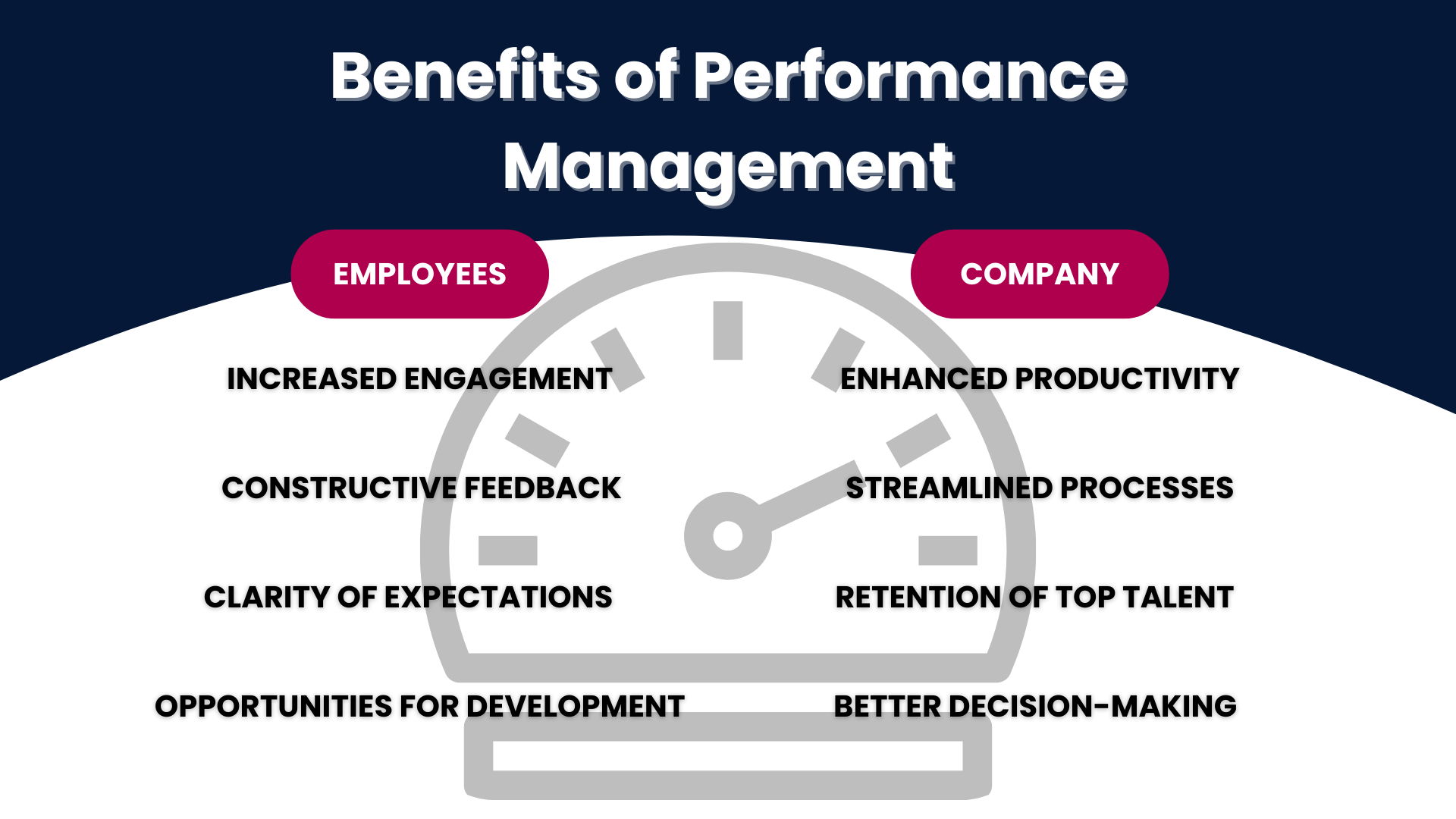
Employee Engagement and Organisational Success
Engaged employees drive company success. When they receive regular feedback and recognition, they feel valued and remain committed to their roles. The Performance Management
More than just motivation, effective
With accurate information readily available, managers detectcan spend less time on administration and addressmore disengagementtime beforesupporting ittheir affectsteams.
What Ityou'll promoteslearn opennext
The allowingfollowing employeessections explain how to share concerns and receive guidance. This proactive approach reduces turnover, strengthens job satisfaction, and cultivates a supportive work environment.
By integrating modules such as Learning Management and Career and Succession Planning intouse the Performance Management module,module companiesto:
By understanding how each feature works, you'll be able to create a culturefair, of growth. Employees who see clear advancement opportunities are more likely to stay engagedconsistent, and contribute meaningfully. Empowering individuals through goal-setting and skill development not only enhances their careers but also drives business success.
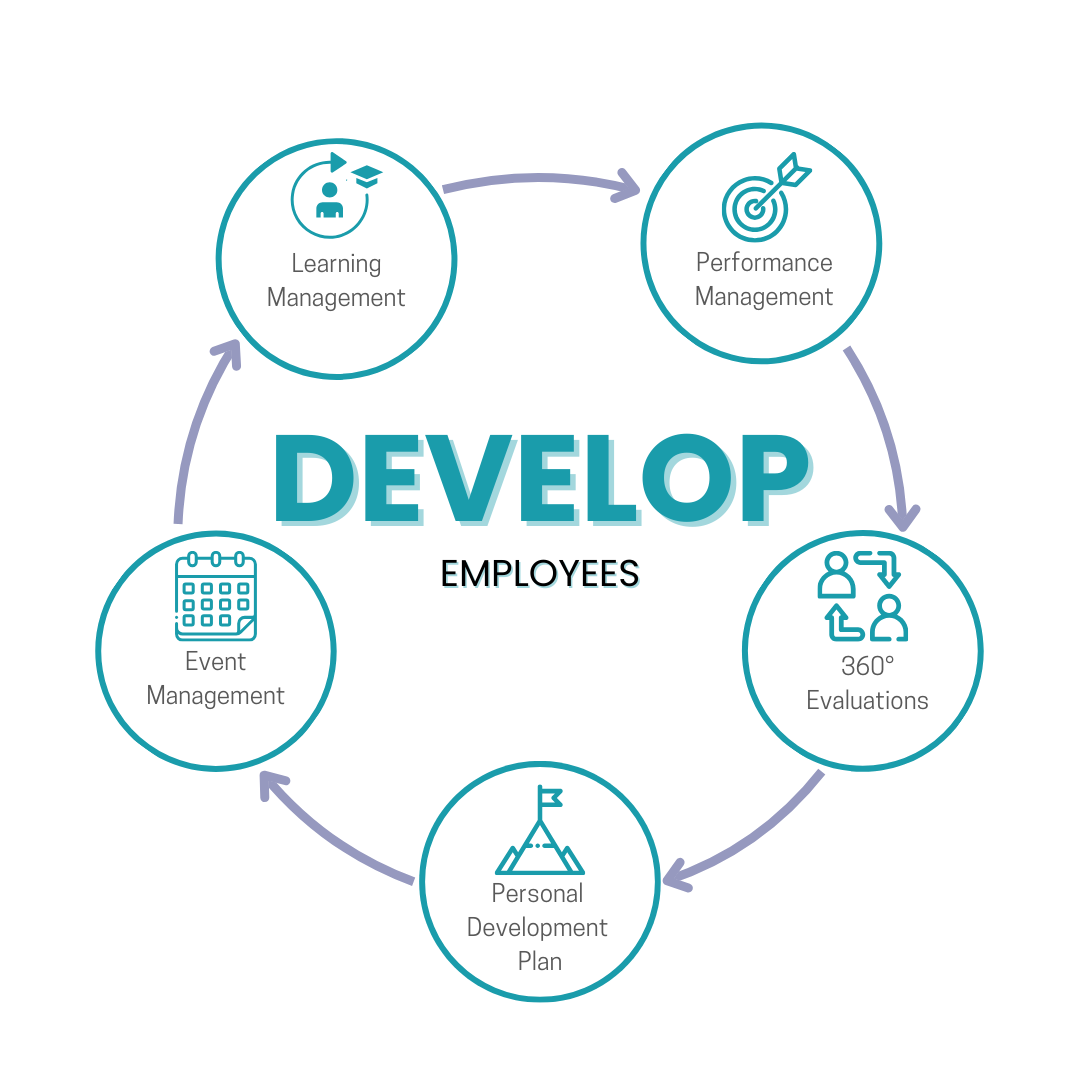
Performance Management and Technology
Technology streamlineseffective performance management byprocess automatingfor reviews,your tracking progress, and providing real-time feedback. Platforms like SignifyHR integrate goal setting, performance tracking, and analytics to improve decision-making. Centralised records and data-driven insights help identify top performers and address skill gaps. Digital tools also support continuous learning by linking training and career development to performance goals. By leveraging technology, organisations create a more efficient, transparent system that enhances employee growth while aligning talent strategies with business objectives.organisation.
