
Purpose of the Module

Performance management is more than an annual review. It is an ongoing process that helps organisations measure performance, support employee development, and achieve business goals.
The Performance Management module provides managers and employees with the tools to set clear expectations, monitor progress, provide meaningful feedback, and encourage continuous growth throughout the performance cycle.
Instead of relying on occasional reviews, organisations can adopt a consistent approach to performance management that is transparent, measurable, and focused on improvement.
Why performance management matters
Employees perform best when they understand what is expected of them and receive regular guidance throughout the year.
An effective performance management process helps organisations:
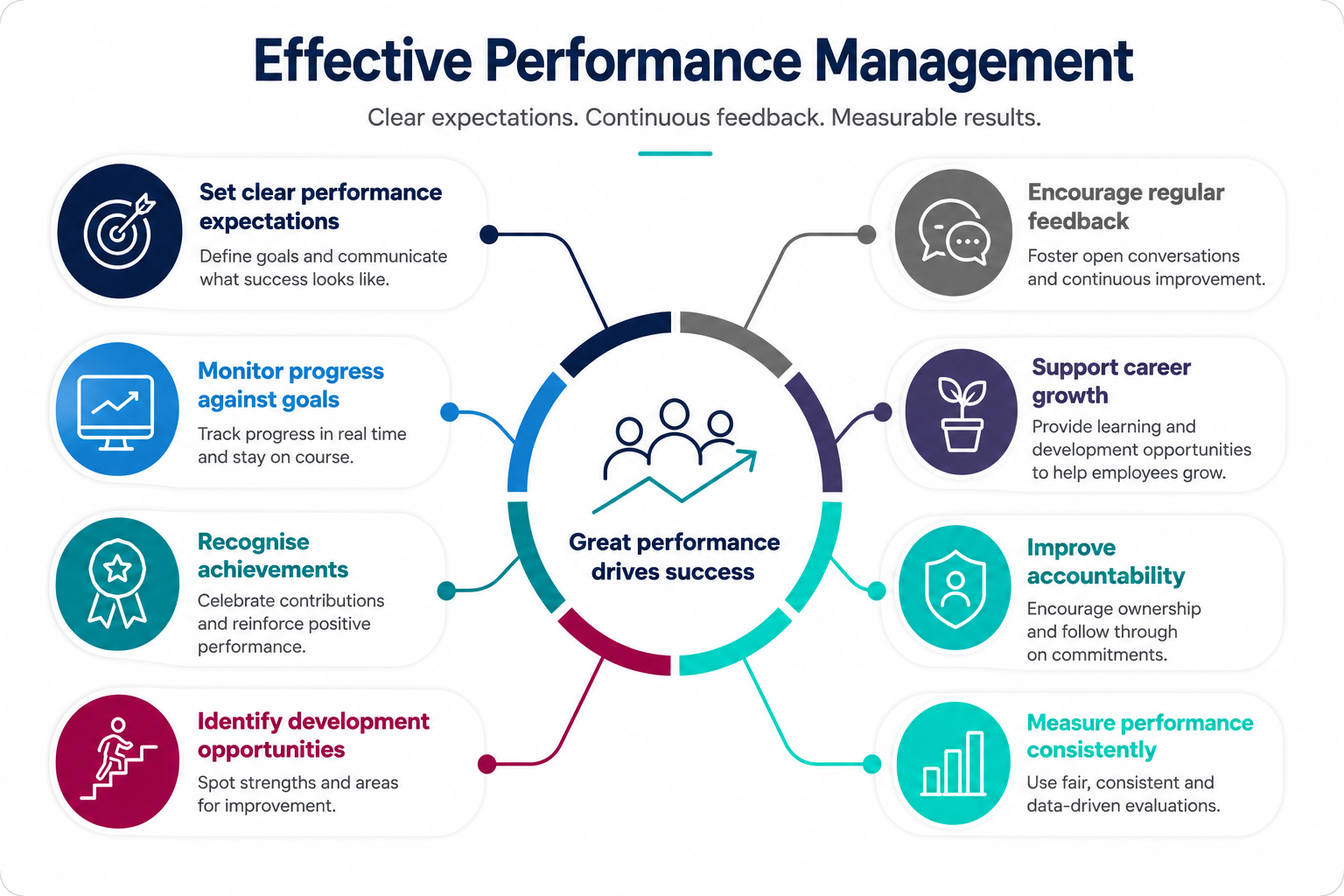
When employees understand how their work contributes to organisational success, they are more likely to stay engaged, motivated, and committed to delivering quality results.
What the Performance Management module helps you do
The module provides a structured framework for managing employee performance throughout the year.
Managers and employees can work together to:
1. Set meaningful goals
Create performance goals, KPIs, and development objectives that clearly define what success looks like.
Goals provide direction and help employees focus on the work that matters most.
2. Monitor performance
Managers can monitor progress throughout the review period, identify challenges early, and recognise achievements as they happen instead of waiting for a formal review.
Regular check-ins make conversations more productive and reduce surprises during evaluations.
3. Provide regular feedback
Constructive feedback helps employees understand:
-
-
- what they are doing well
- where they can improve
- what support they need
- which skills they should develop
-
Frequent conversations encourage trust and create opportunities for continuous improvement rather than corrective action.
4. Measure performance fairly
Using predefined goals, KPIs, competencies, and rating scales creates a consistent approach to evaluating performance.
This allows managers to make informed decisions based on measurable evidence instead of personal opinion.
5. Support employee development
Performance management is closely connected to learning and career development.
By identifying strengths and development areas, organisations can recommend relevant learning opportunities, create development plans, and prepare employees for future roles.
This encourages long-term growth while helping organisations retain valuable talent.
Key components of performance management
The Performance Management module brings together several activities that support employee success.
| COMPONENT |
PURPOSE |
| Goal setting | Define clear objectives and expectations. |
| KPIs | Measure performance using objective criteria. |
| Performance reviews | Evaluate progress at scheduled intervals. |
| Continuous feedback | Encourage regular conversations between managers and employees. |
| Competencies | Assess behaviours, skills, and capabilities. |
| Development planning | Identify learning opportunities and career goals. |
Together, these components provide a balanced view of employee performance throughout the review cycle.
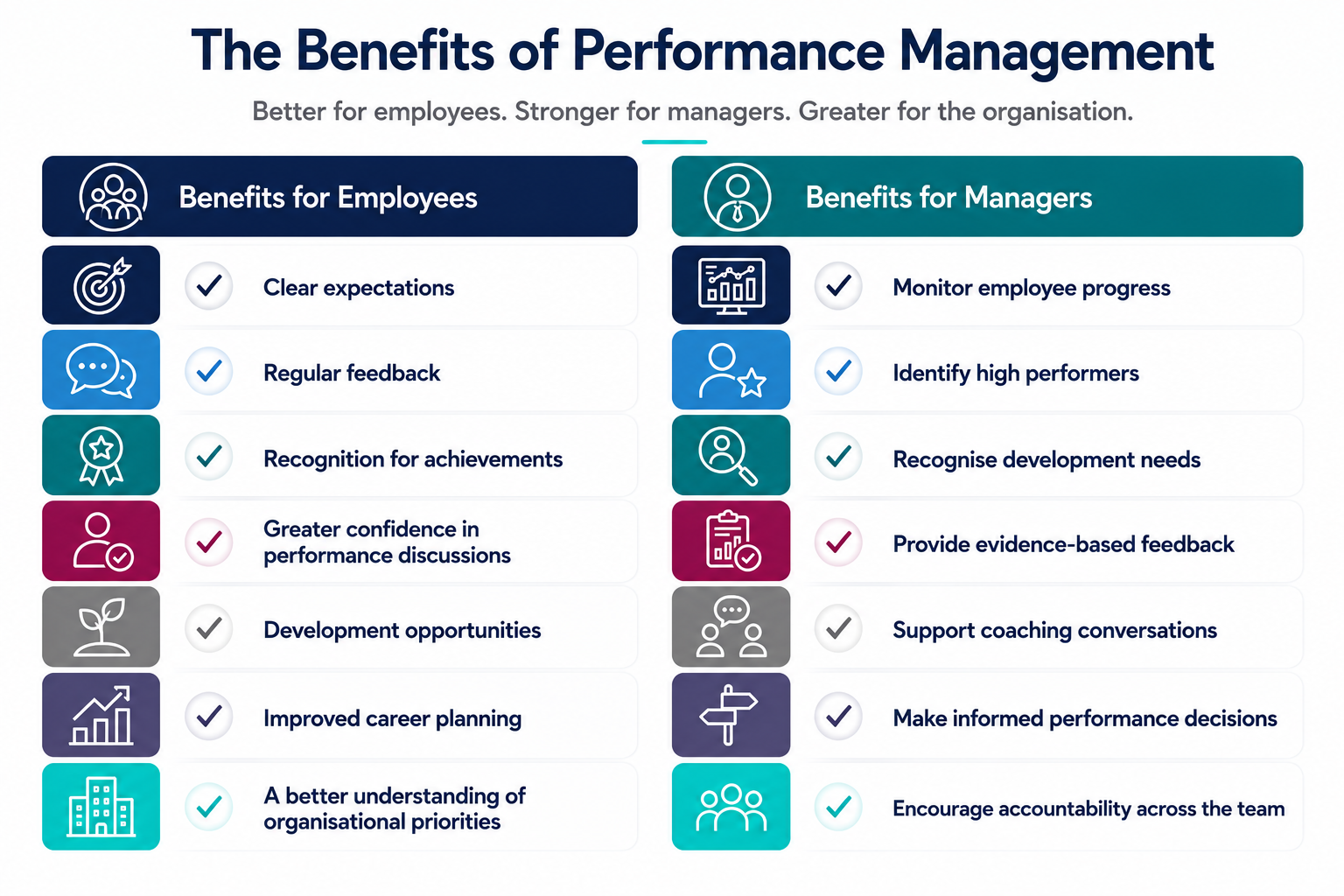
Benefits for employees and managers
Employees benefit from a structured performance process because they always know where they stand and what they need to do to continue growing. On the other hand, managers gain better visibility into team performance.
Supporting organisational success
Strong organisations are built on strong performance.
When performance expectations are clear, and employees receive ongoing support, organisations benefit from:
- improved productivity
- increased employee engagement
- better decision-making
- higher retention
- stronger leadership pipelines
- more effective workforce planning
- a culture of continuous improvement
Performance management helps create an environment where both employees and the organisation can succeed.
Performance management and technology
Technology simplifies the performance management process by bringing goals, reviews, feedback, and reporting together in one place.
The Performance Management module enables organisations to:
- record performance information centrally
- automate review cycles
- monitor progress in real time
- generate meaningful reports
- identify trends and development needs
- connect performance with learning and career development
With accurate information readily available, managers can spend less time on administration and more time supporting their teams.
What you'll learn next
The following sections explain how to use the Performance Management module to:
- create and manage performance templates
- define goals, KPIs, and competencies
- complete performance reviews
- record feedback
- monitor employee progress
- manage ratings and approvals
- support employee development
By understanding how each feature works, you'll be able to create a fair, consistent, and effective performance management process for your organisation.
