
Learning Management: eLearning Implementation Guide

Activate the Learning Management module
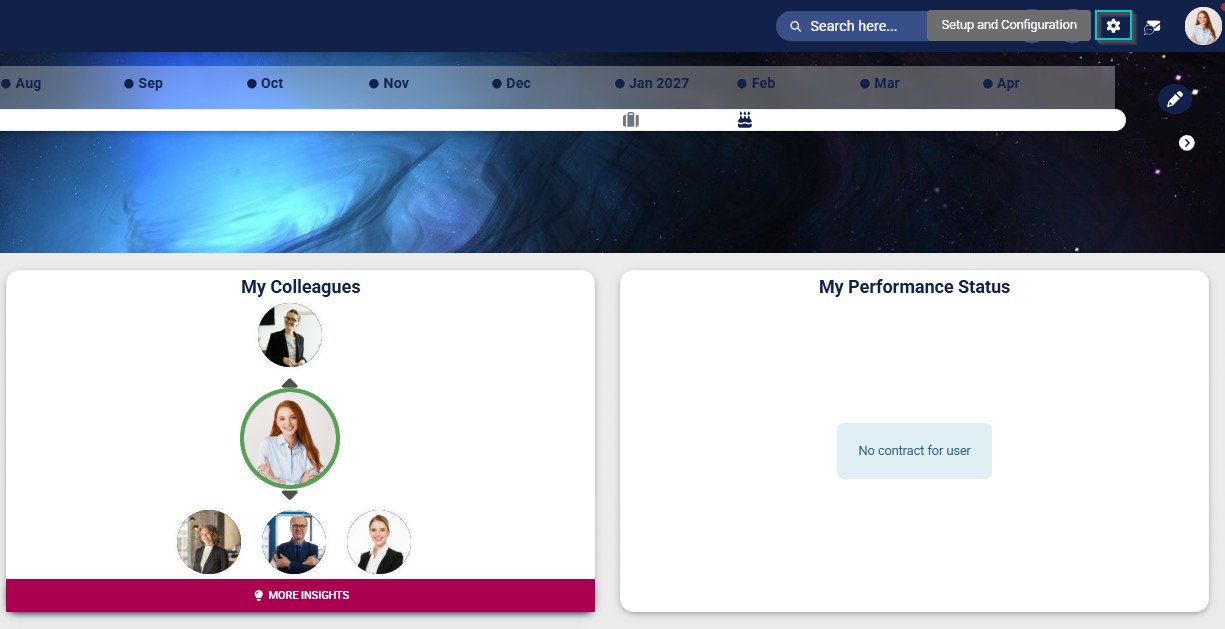
- Click the gear icon to access the Setup and Configuration menu.
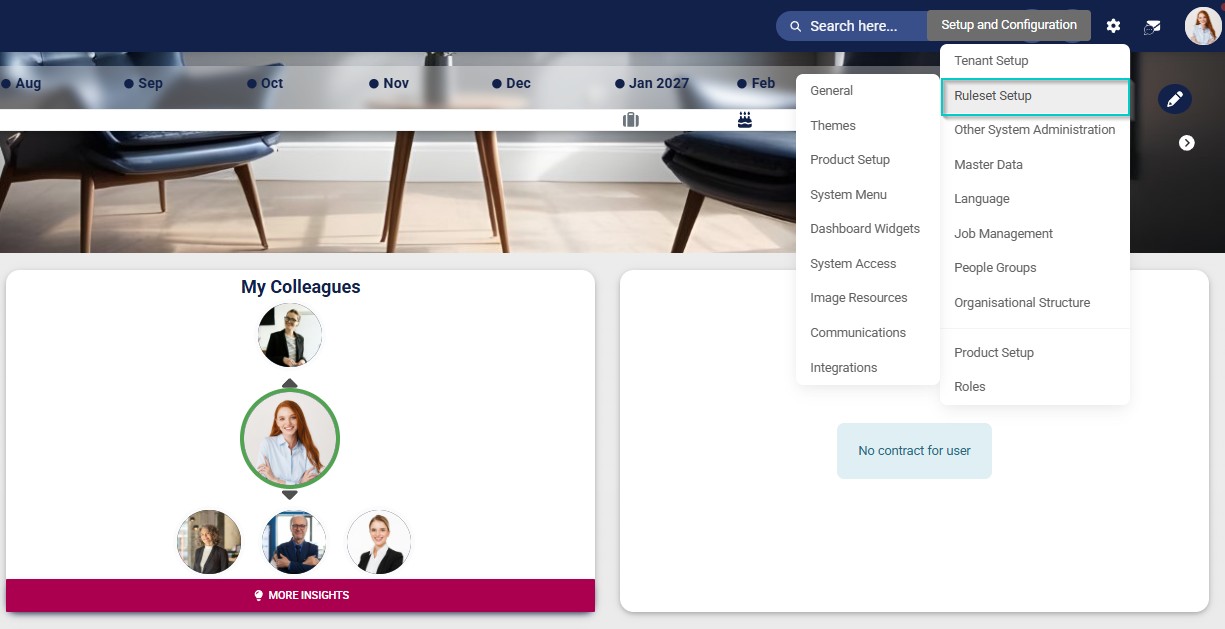
- Click Ruleset Setup.
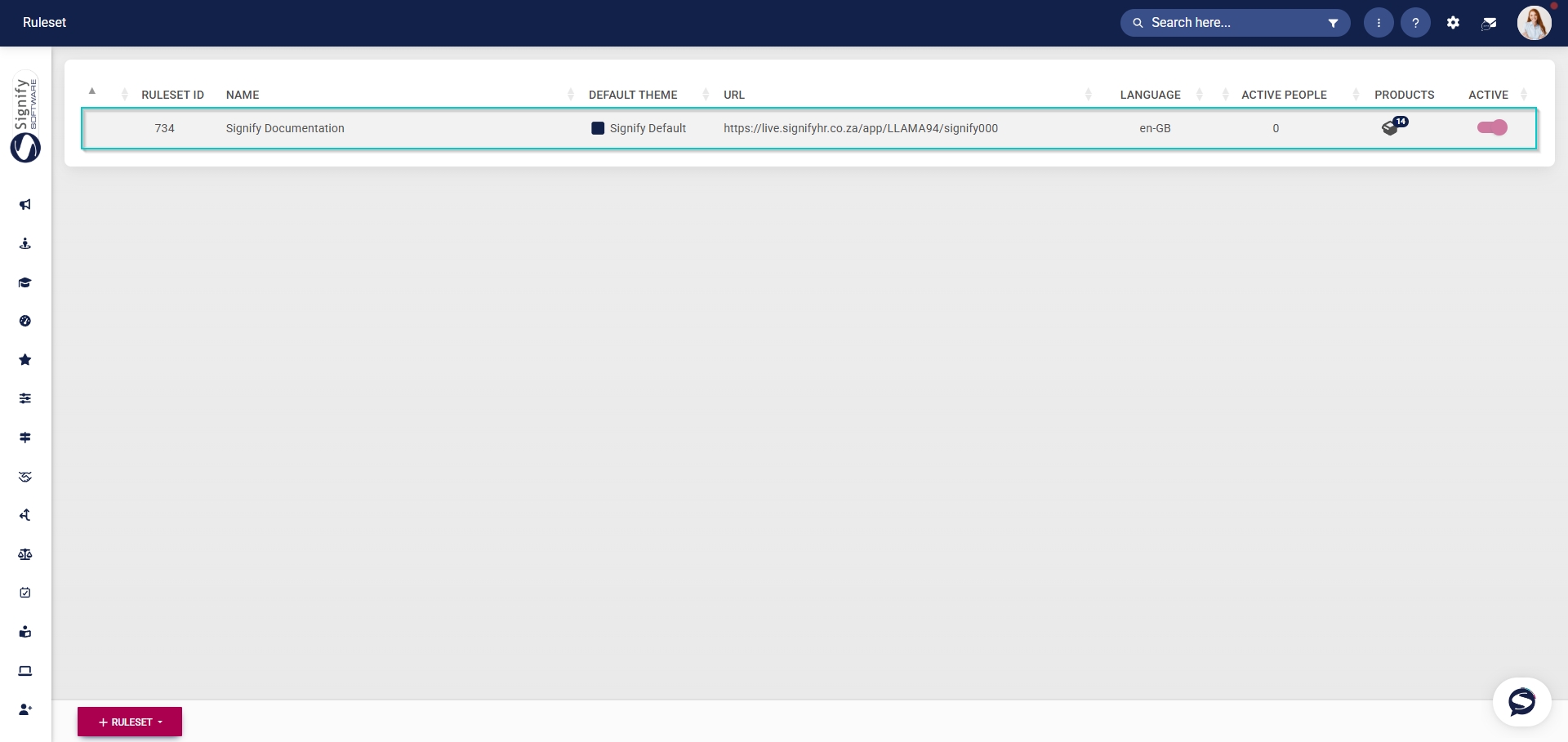
- Select the ruleset you would like to update.
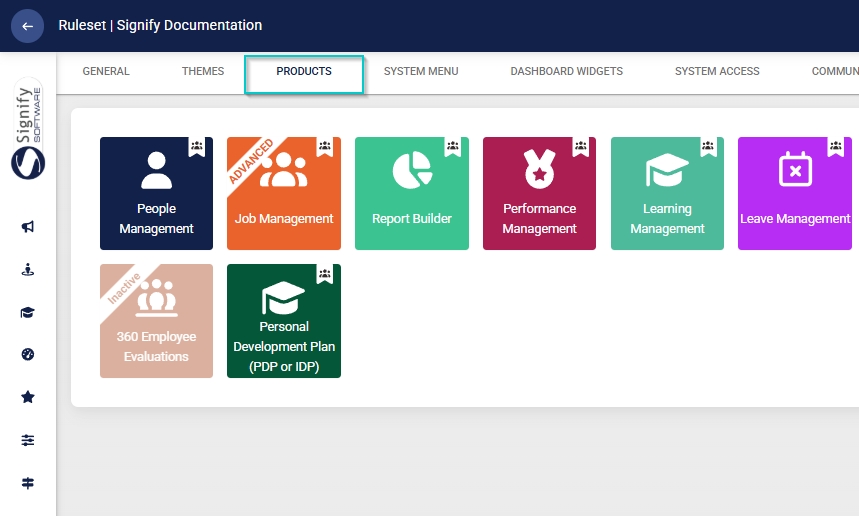
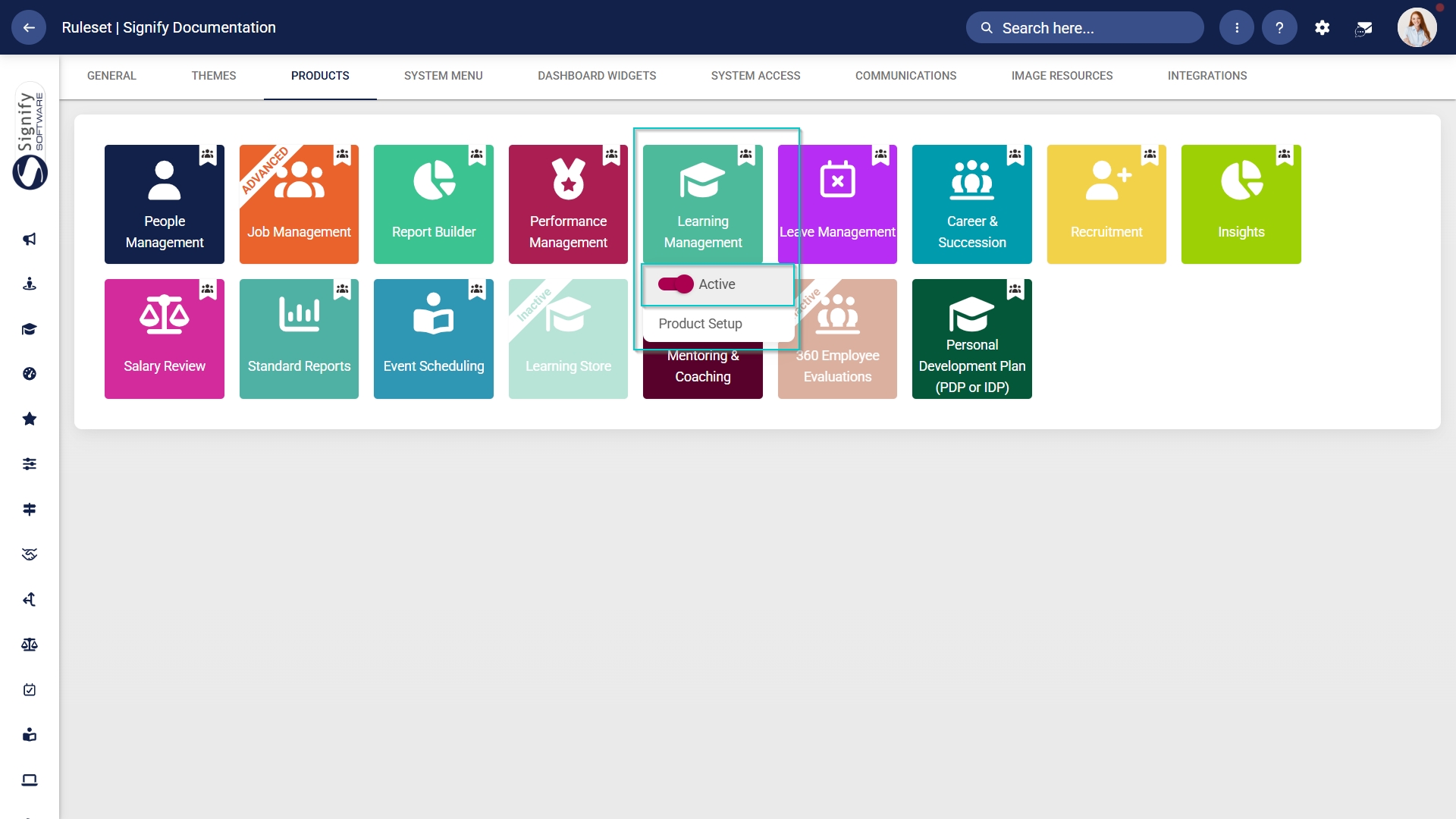
- Click on the Learning Management product card, then click the toggle button to set the product’s status to Active.
Add Learning Management to the system menu
- Click the gear icon to access the Setup and Configuration menu.
- Click Ruleset Setup.
- Select the ruleset you would like to update.
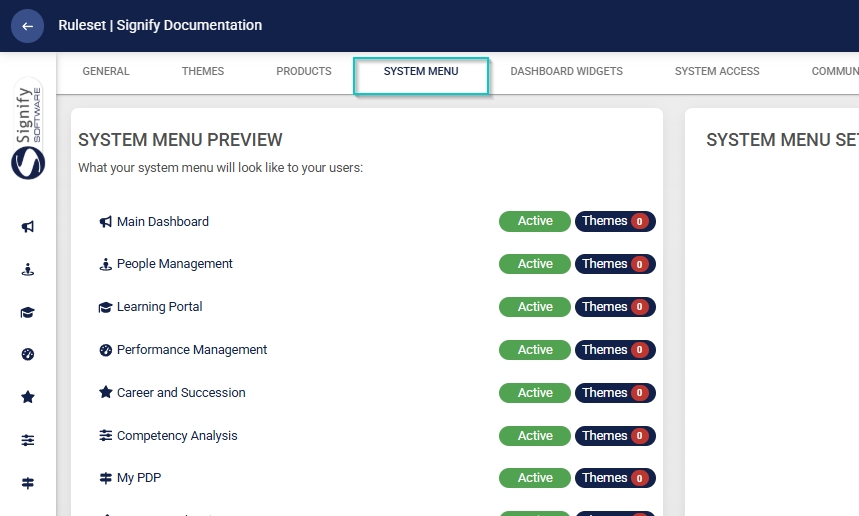
- Click the Learning Portal menu item in the system menu preview.
- Click the toggle button to set the system menu item’s status to Active.

- You can select an icon for the Learning Management module by clicking CHANGE ICON.
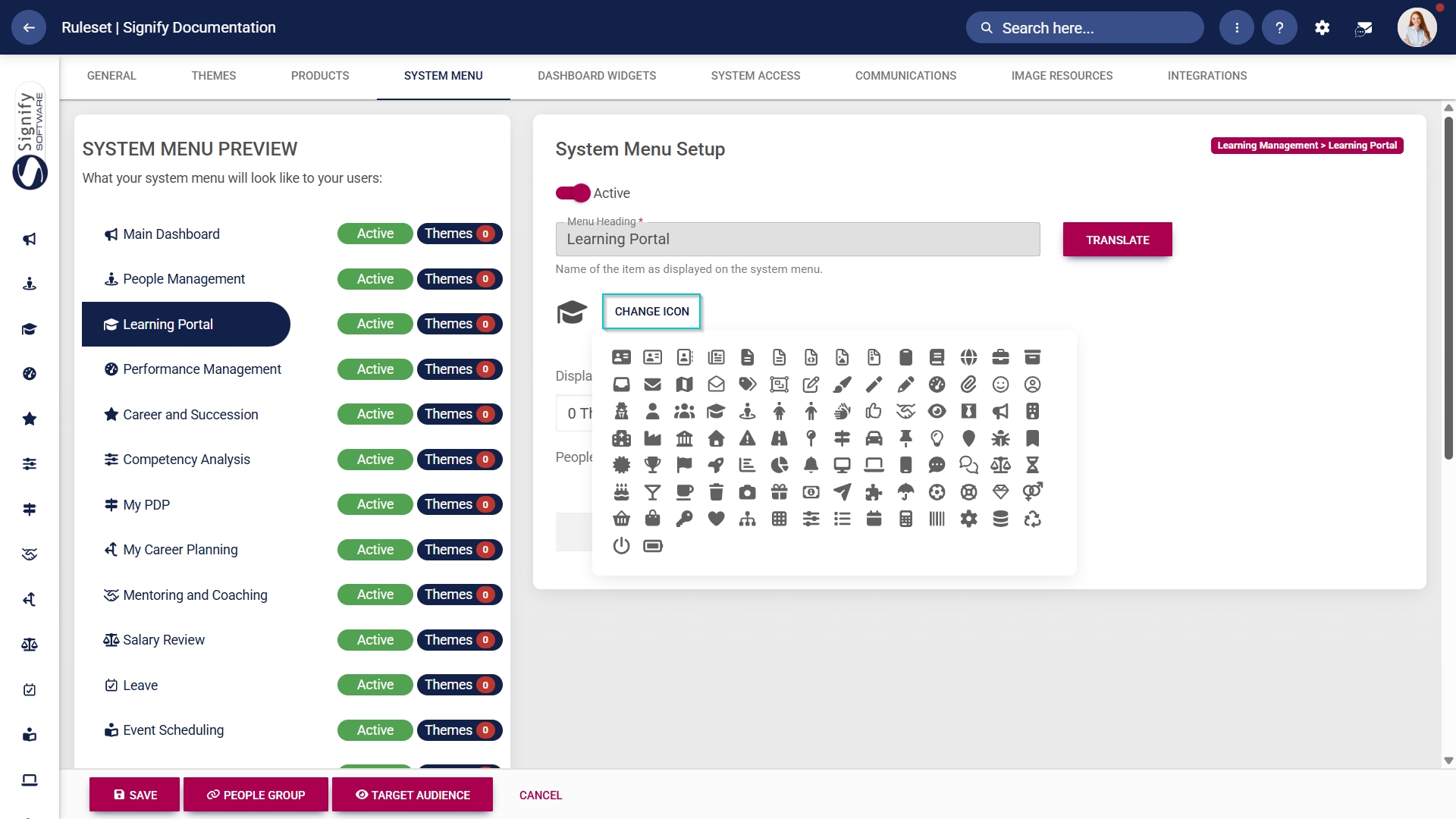
- Click SAVE to continue or CANCEL to discard your changes.

Assign the Learning Management administrator permission
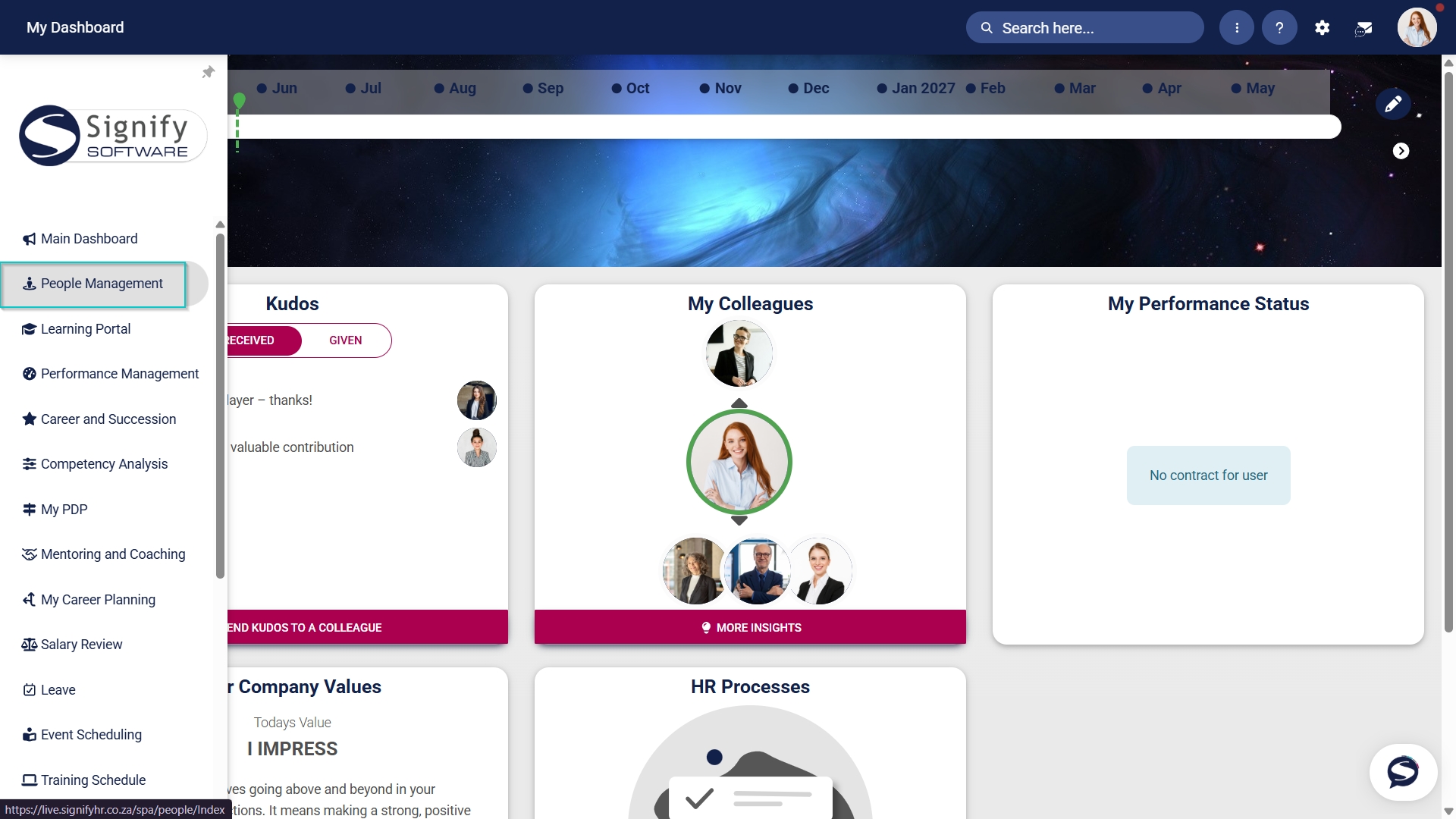
- Hover over the sidebar menu, then click People Management.
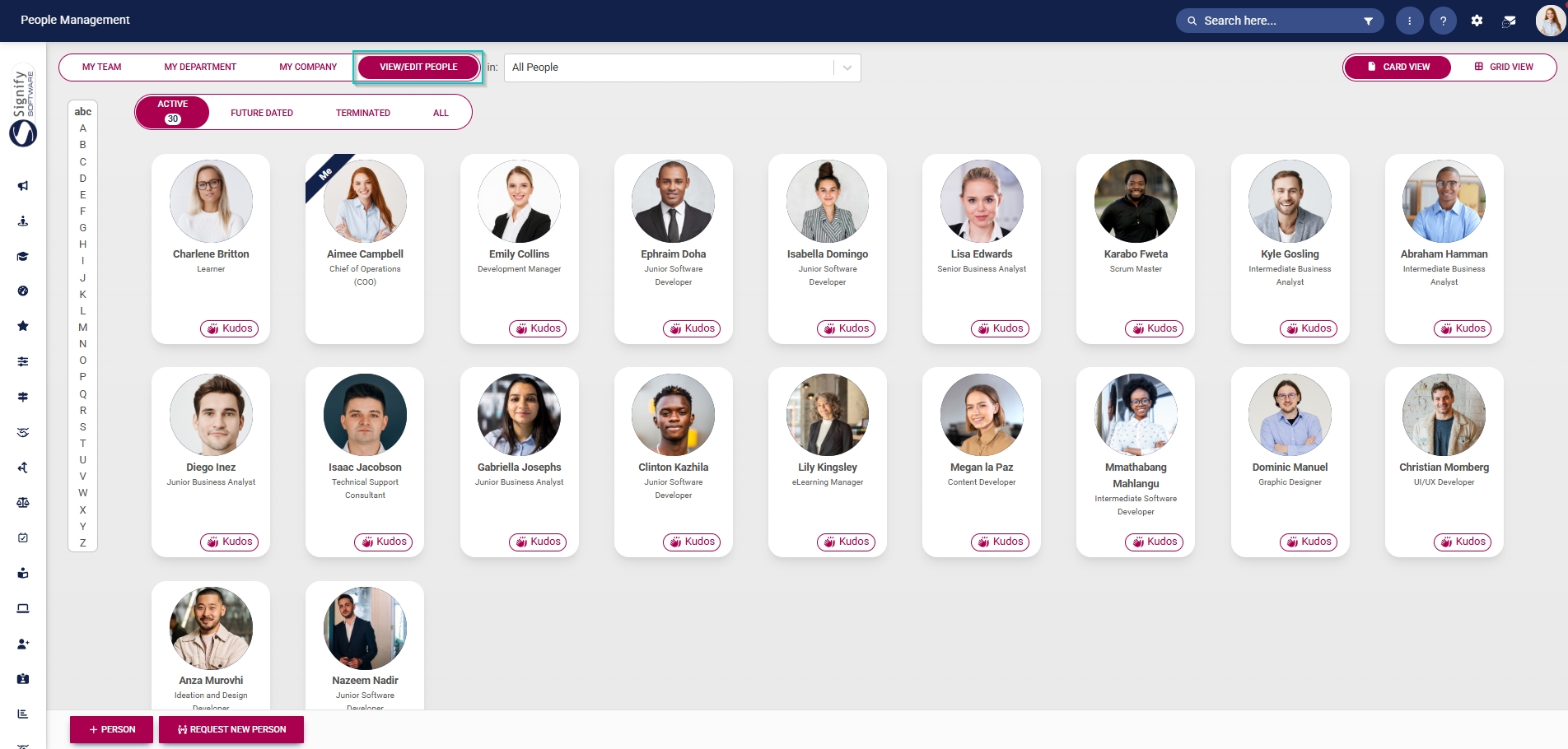
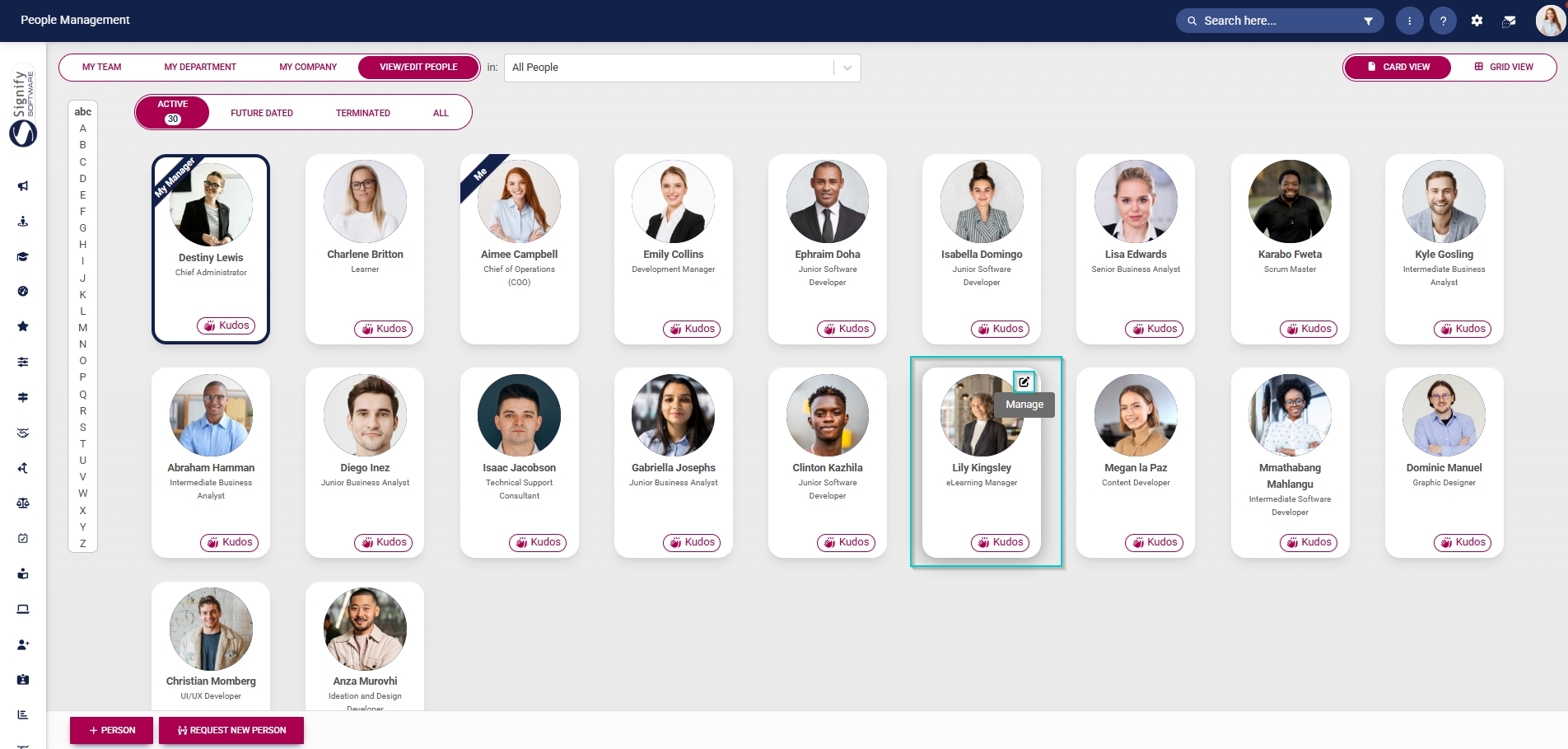
- Click the pencil icon to manage the profile of the person you want to edit.
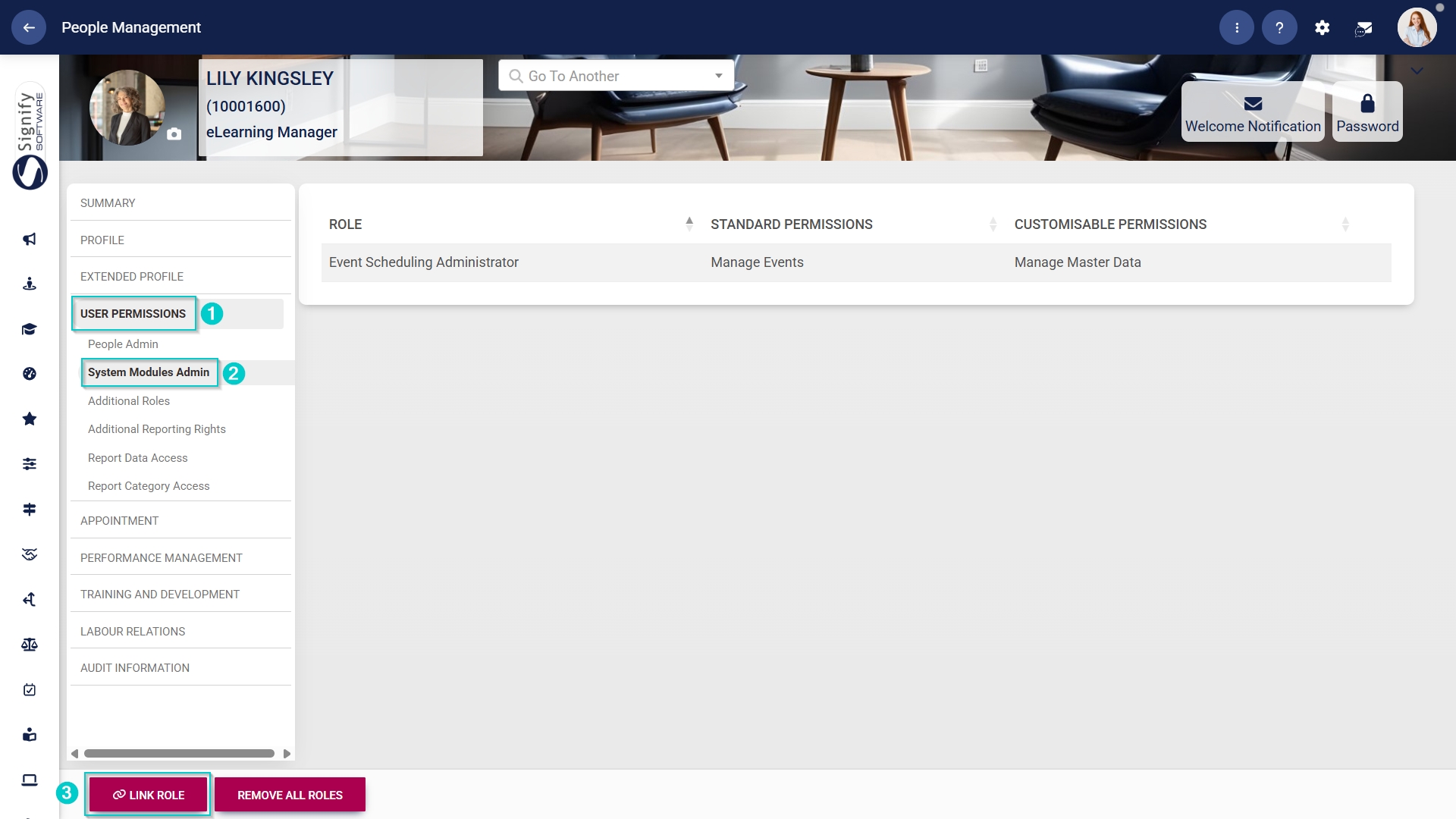
- In the left-hand menu, navigate to User Permissions, then click System Modules Admin.
- Click the LINK ROLE button.
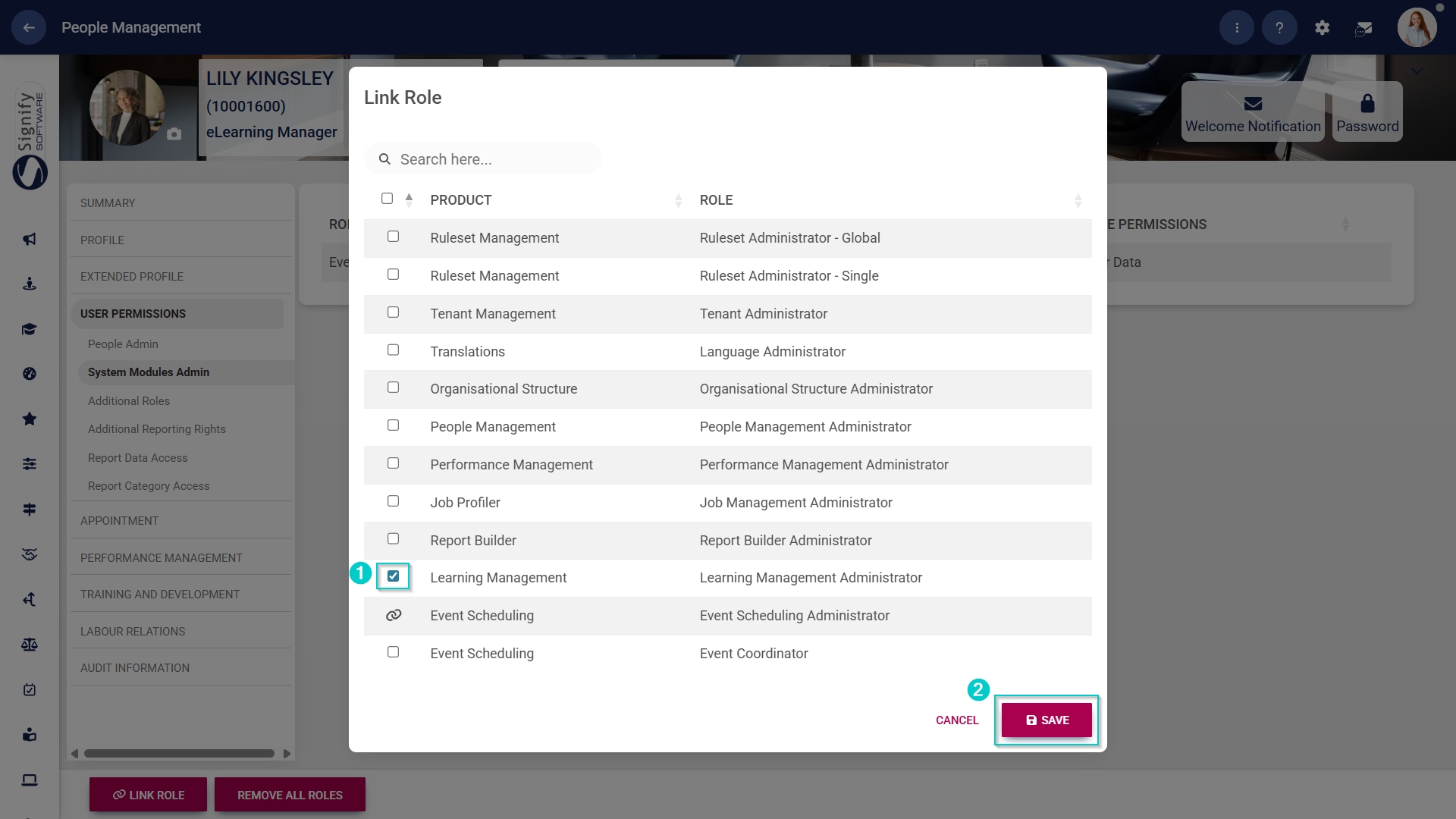
- Tick the checkbox next to Learning Management in the table to assign the Learning Management administrator role to the user.
- Click SAVE to continue or CANCEL to discard your changes.
Update the Master Data Library
Assessors / Moderators
Facilitators
Programmes
Qualifications
Training Providers
Units
Qualification Types
SETA Formats
SETA Periods
SETAs
Legislative First Category
Legislative Second Category
Event Training Category
Training Classification
Nature of Learning
Learning Type
Training Category
Training Sub Category
Cost Description
Report to Structure
Training Role
NQF Level
NQF Band
Priority Skills
Create people groups
- Click the gear icon to access the Setup and Configuration menu.
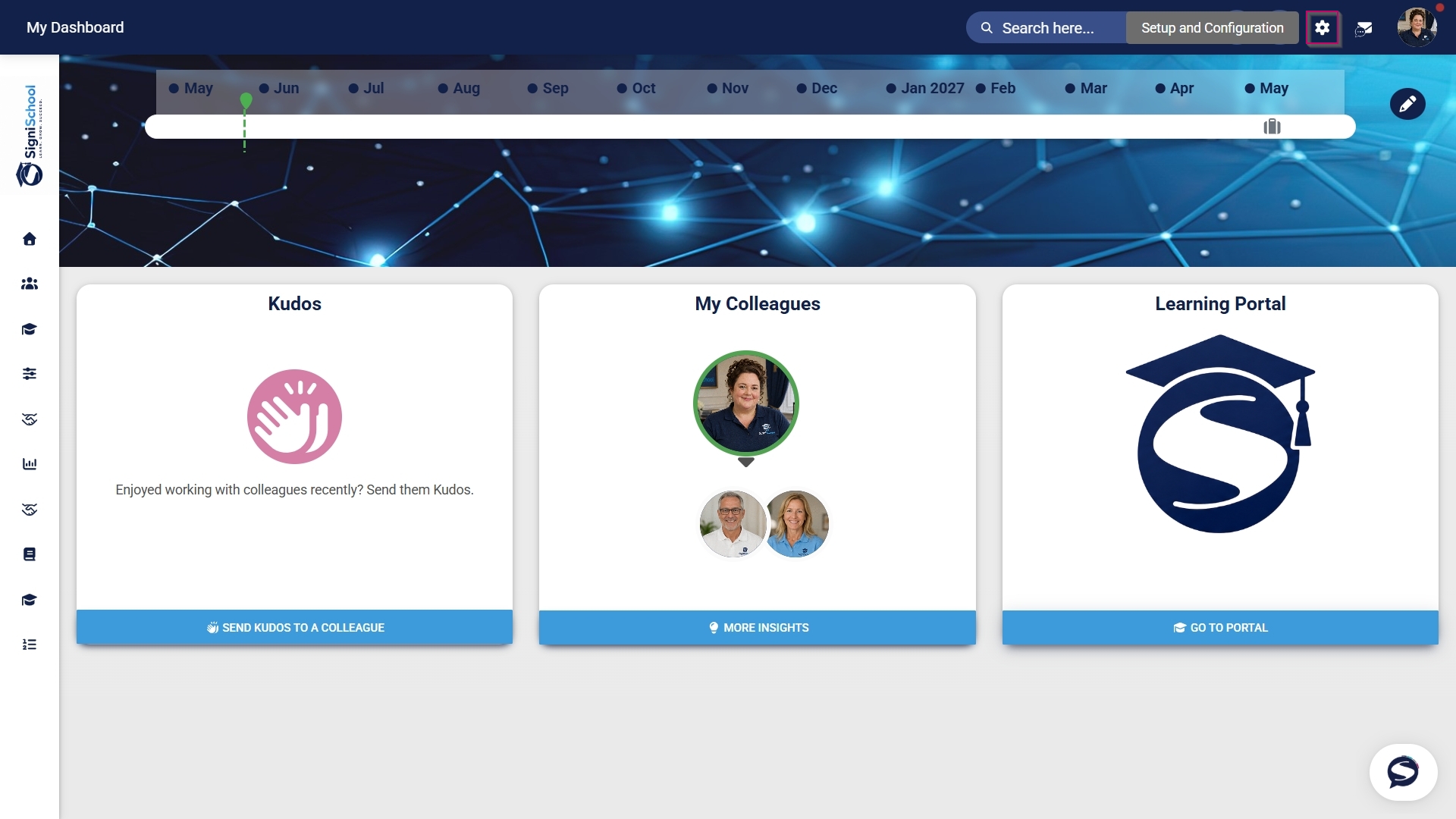
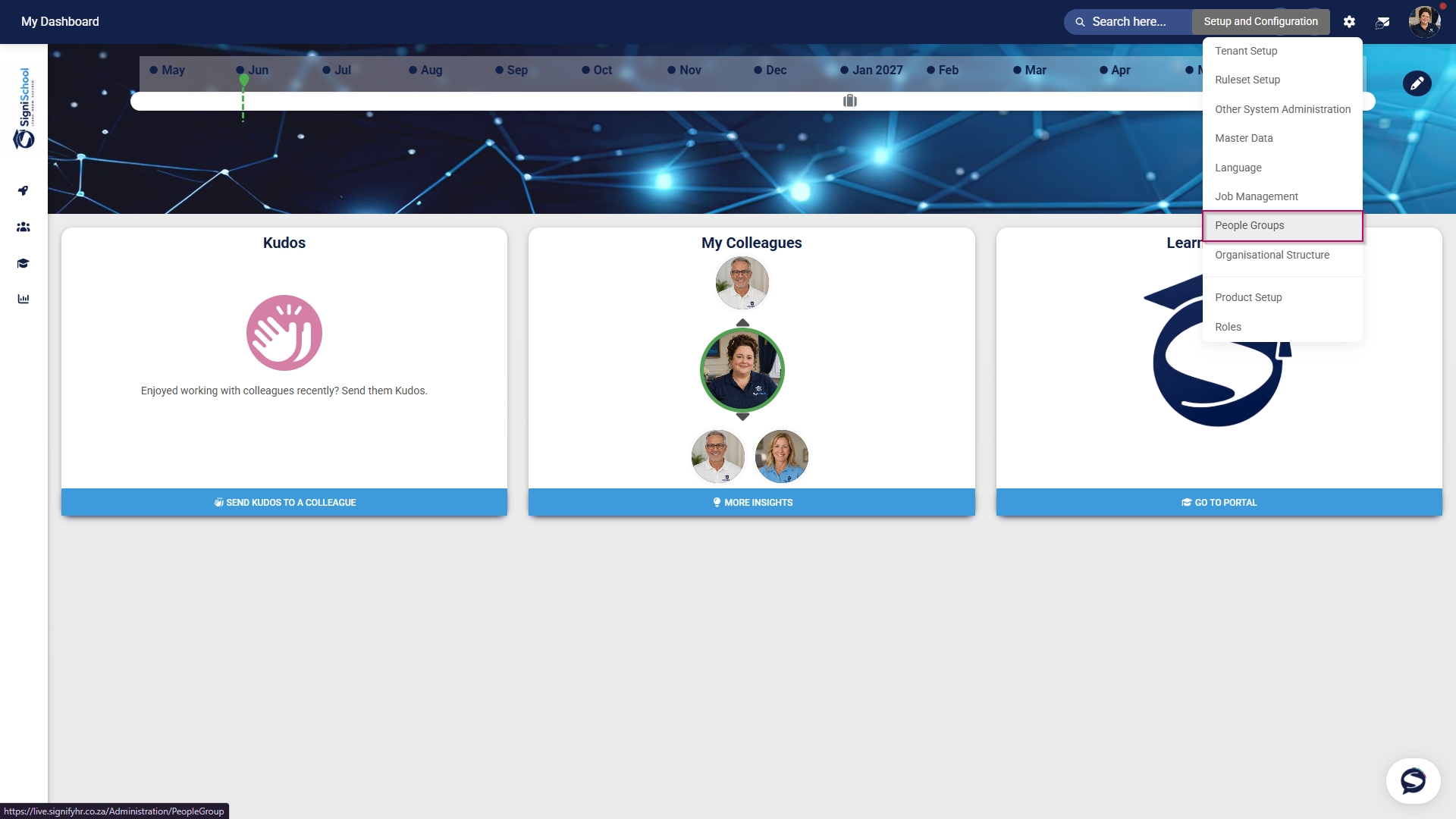
- Click People Groups.
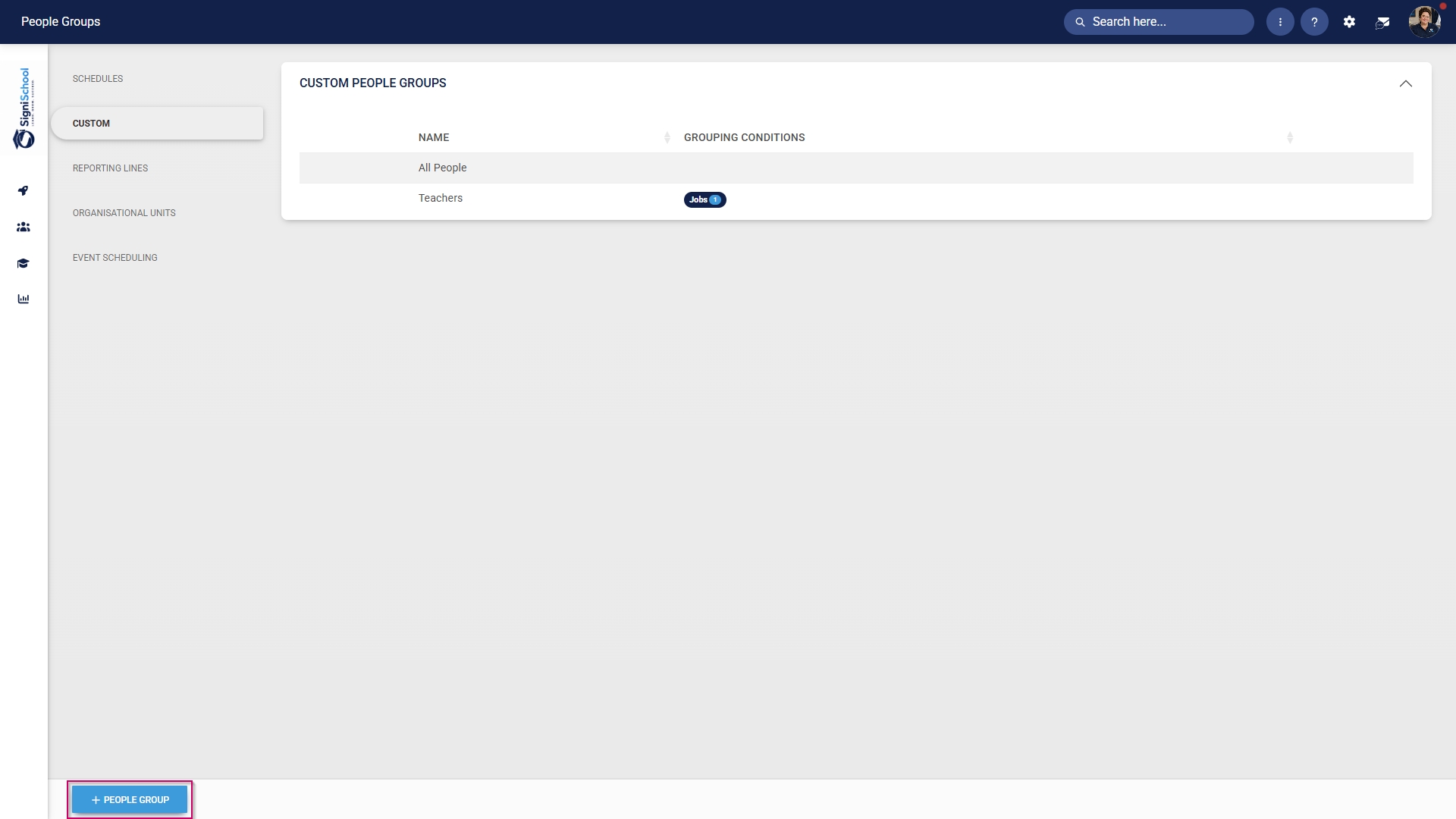
- In the left-hand menu, navigate to Custom, then click +PEOPLE GROUP.
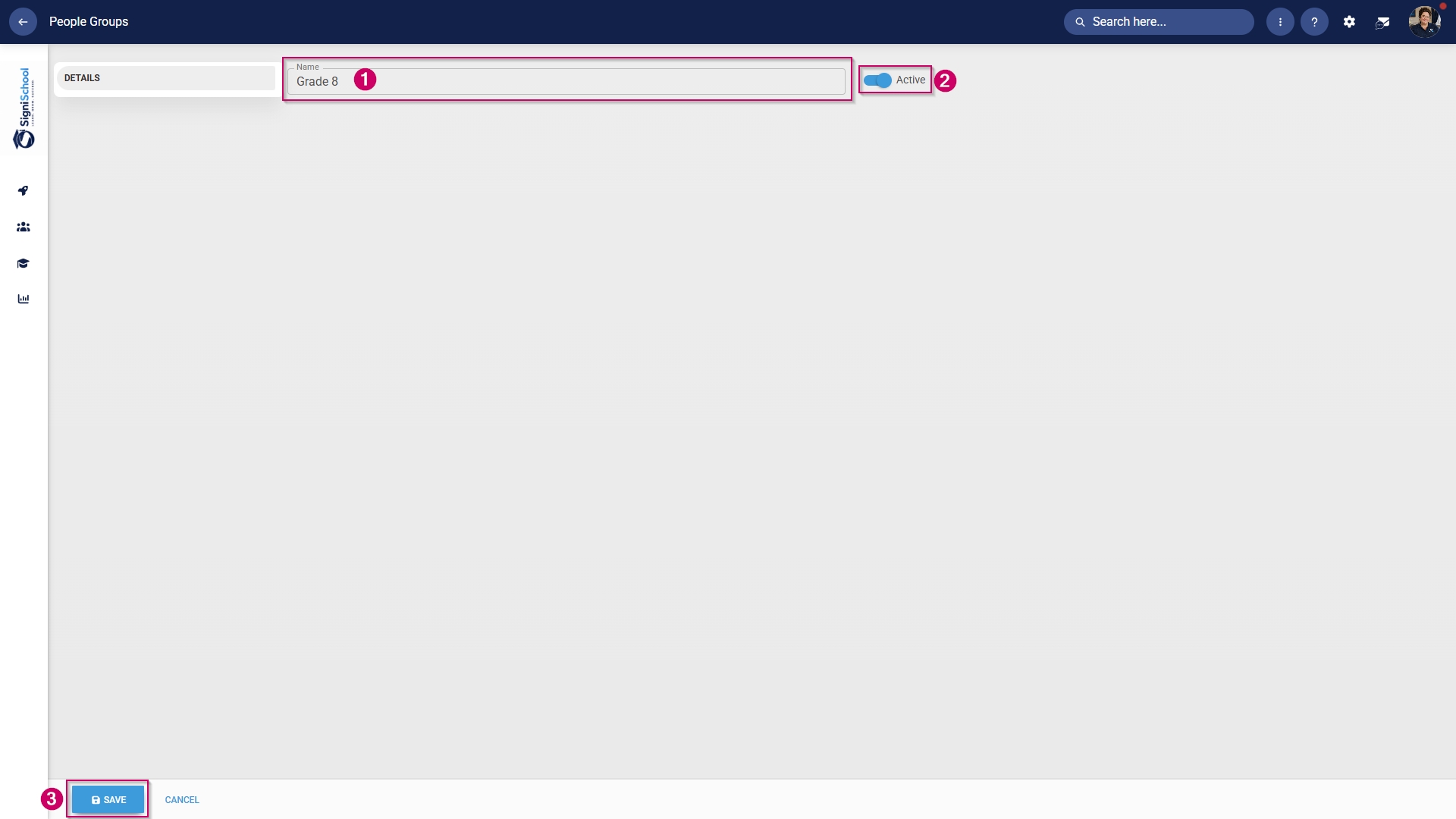
- Enter a descriptive name for the people group.
- Click the toggle button to set the status to Active.
- Click SAVE when you are finished or click CANCEL to discard your edits.
- Once the people group has been created, you can select the people to add to it.
Included: Individuals
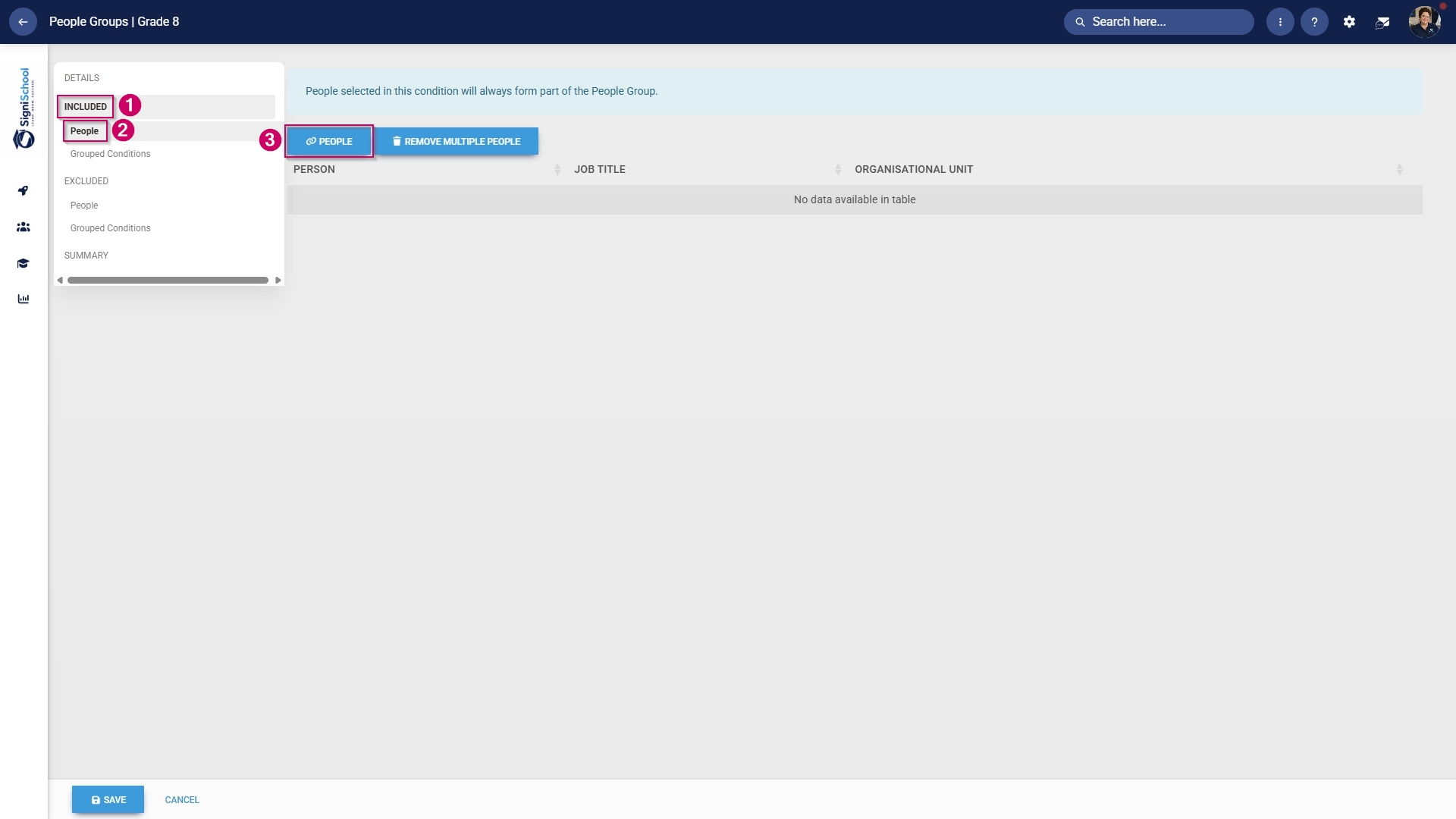
- In the left-hand menu, click to navigate to the Included section, then click People to add individuals.
- Click the PEOPLE button.
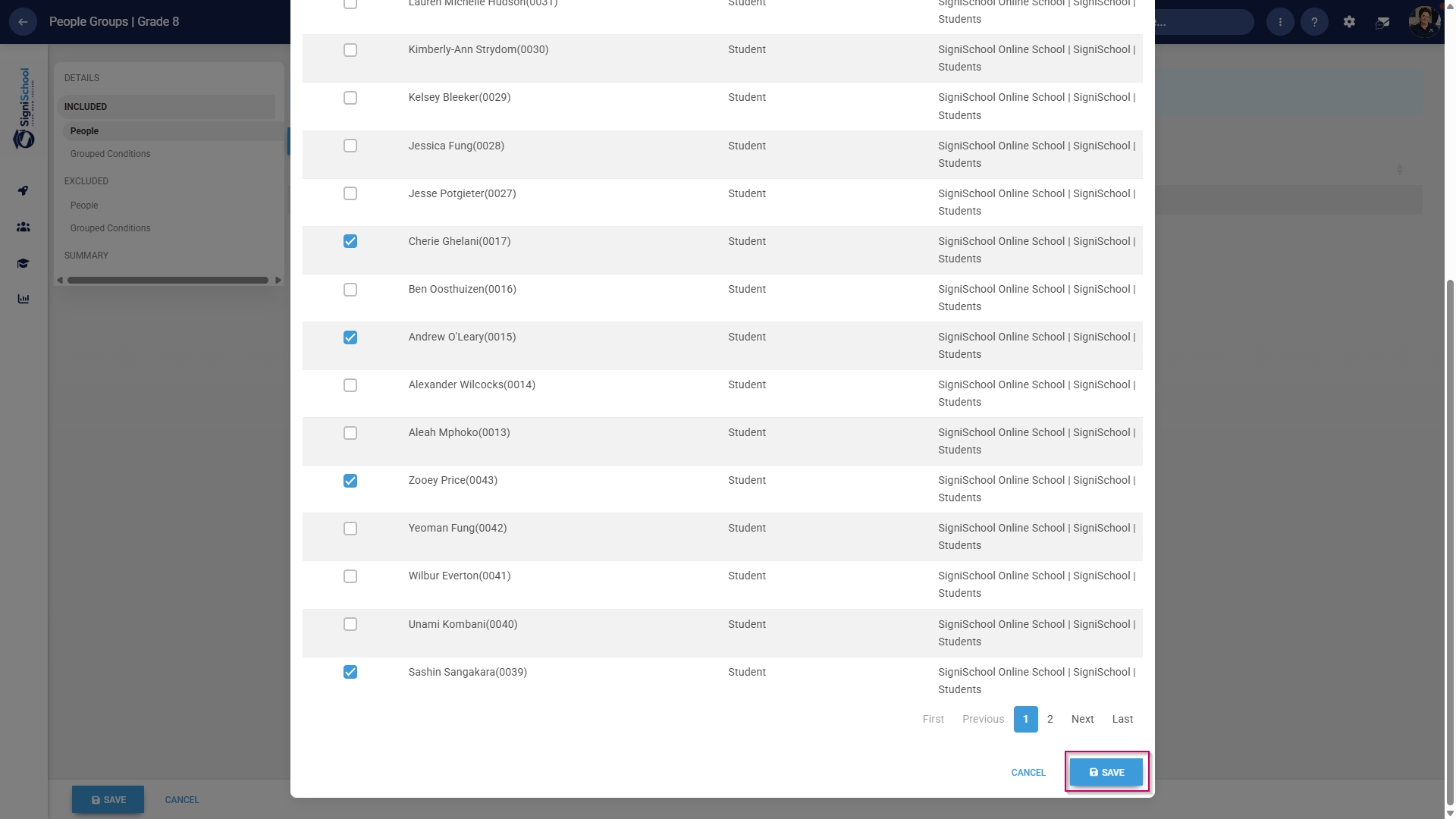
- Use the search bar to find a person based on their name, surname, username, or job title.
- Tick the checkbox to select a person.

- Click SAVE when you are finished or click CANCEL to discard your edits.
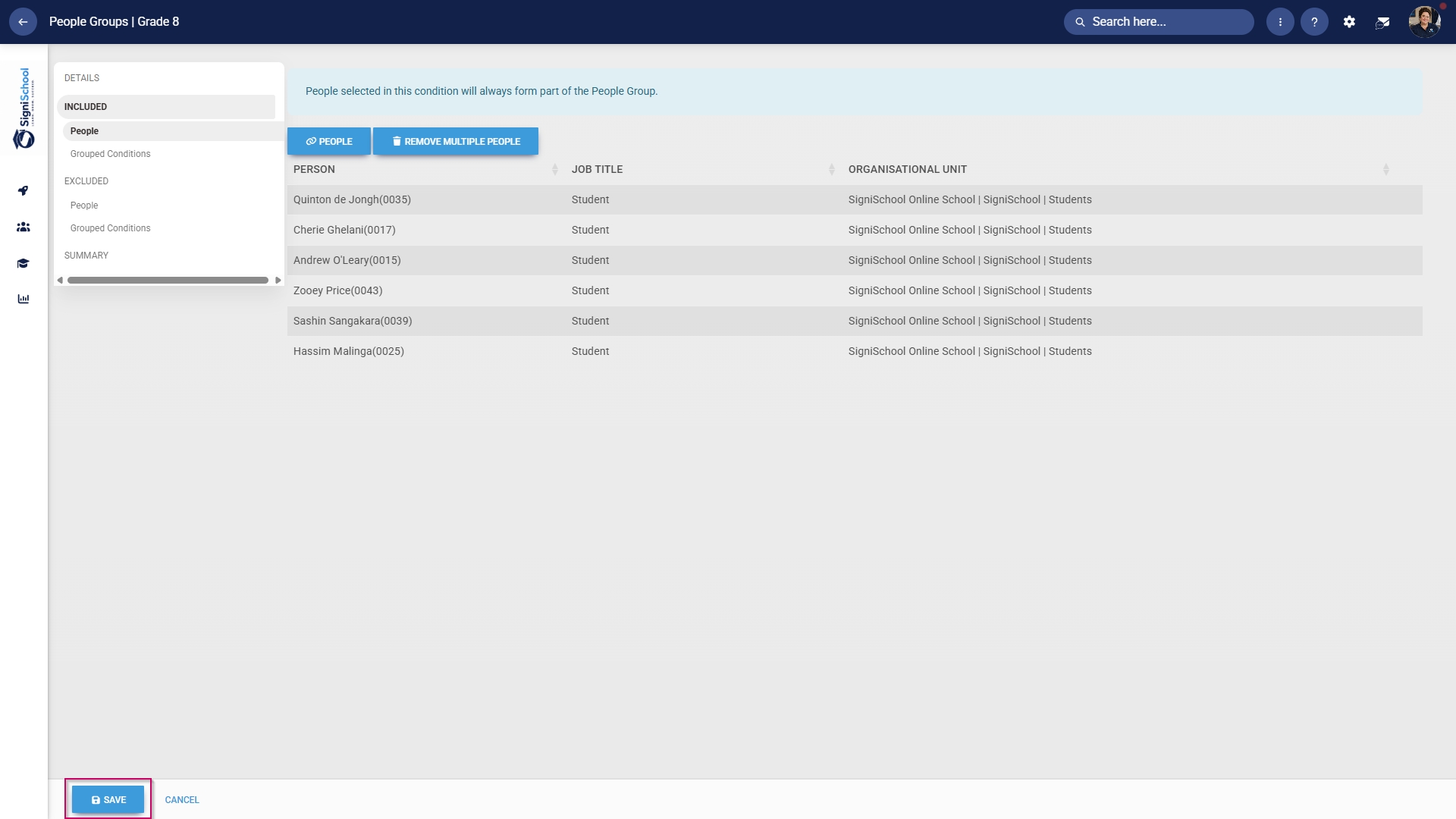
- Review the users added to your people group, then click SAVE when you are finished or click CANCEL to discard your edits.
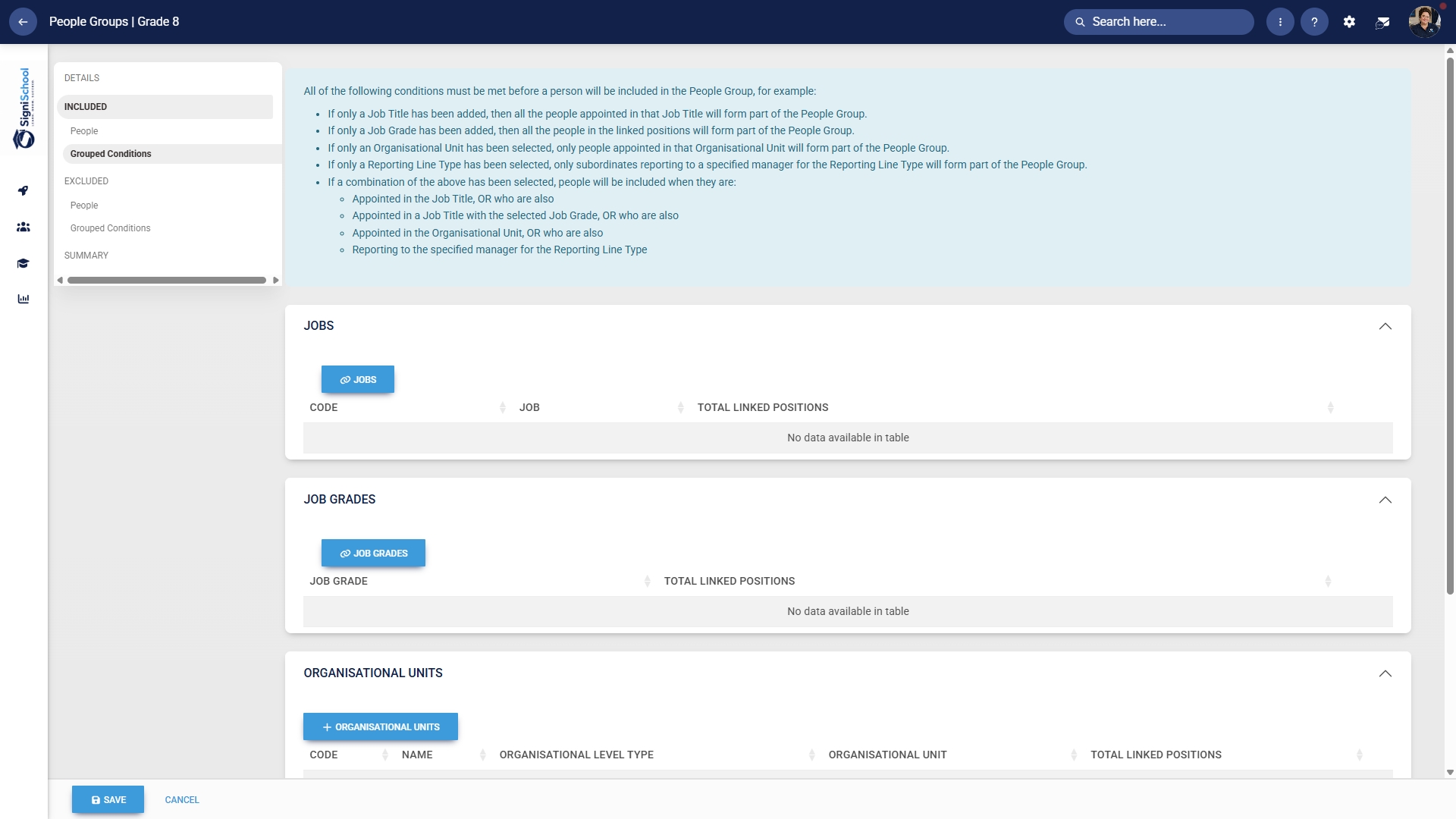
Included: Grouped conditions
- Click Grouped Conditions to add groups of people based on criteria such as job titles, organisational nodes, etc.
- Click SAVE when you are finished or click CANCEL to discard your edits.
Included: Individuals
- In the left-hand menu, click to navigate to People in the Excluded section.
-
- Click the PEOPLE button.
- Select the people you would like to exclude.
- Click SAVE when you are finished or click CANCEL to discard your edits.
-

Excluded: Grouped conditions
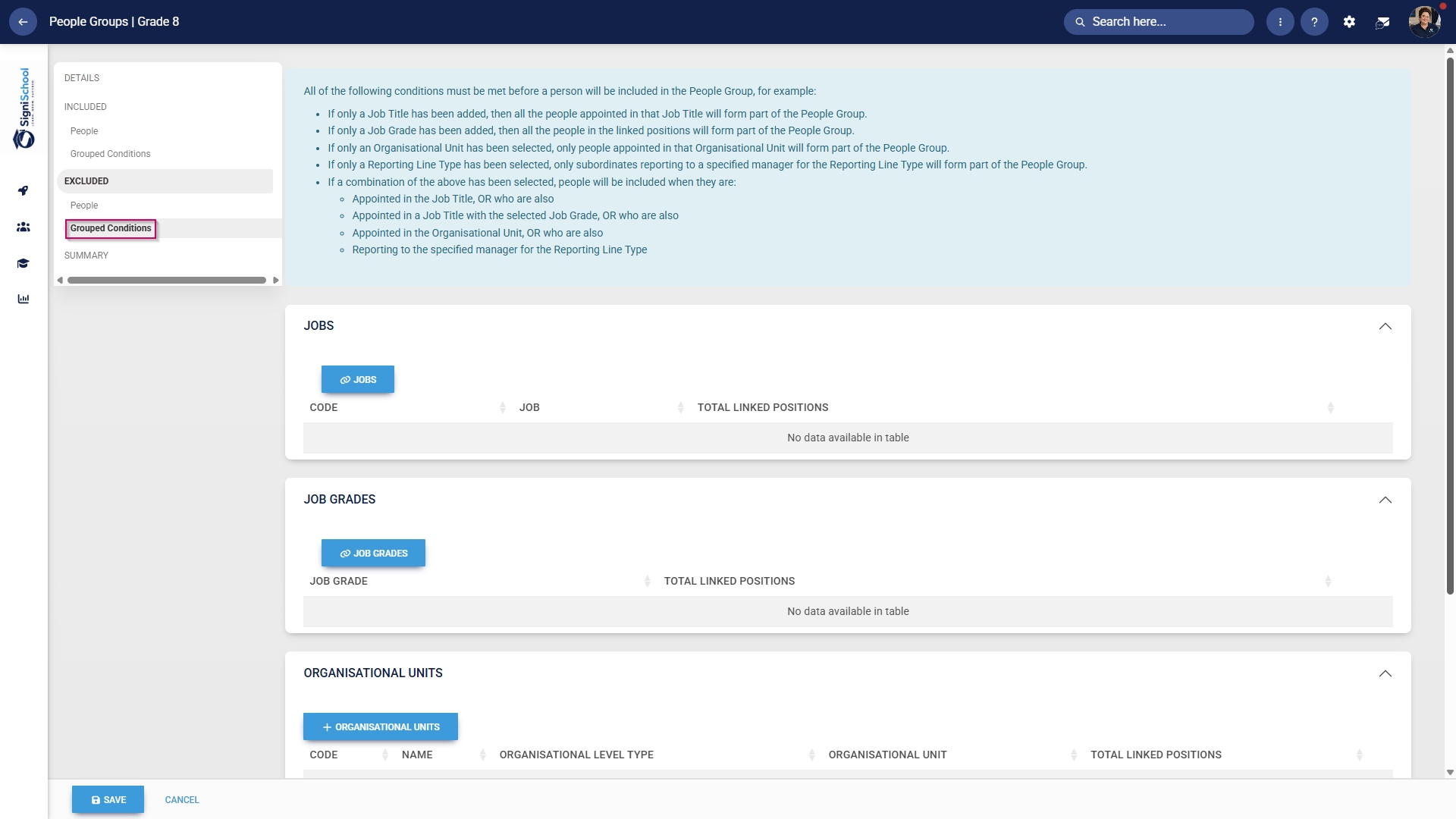
- Click Grouped Conditions to exclude groups of people based on criteria such as job titles, organisational nodes, etc.
- Click SAVE when you are finished or click CANCEL to discard your edits.
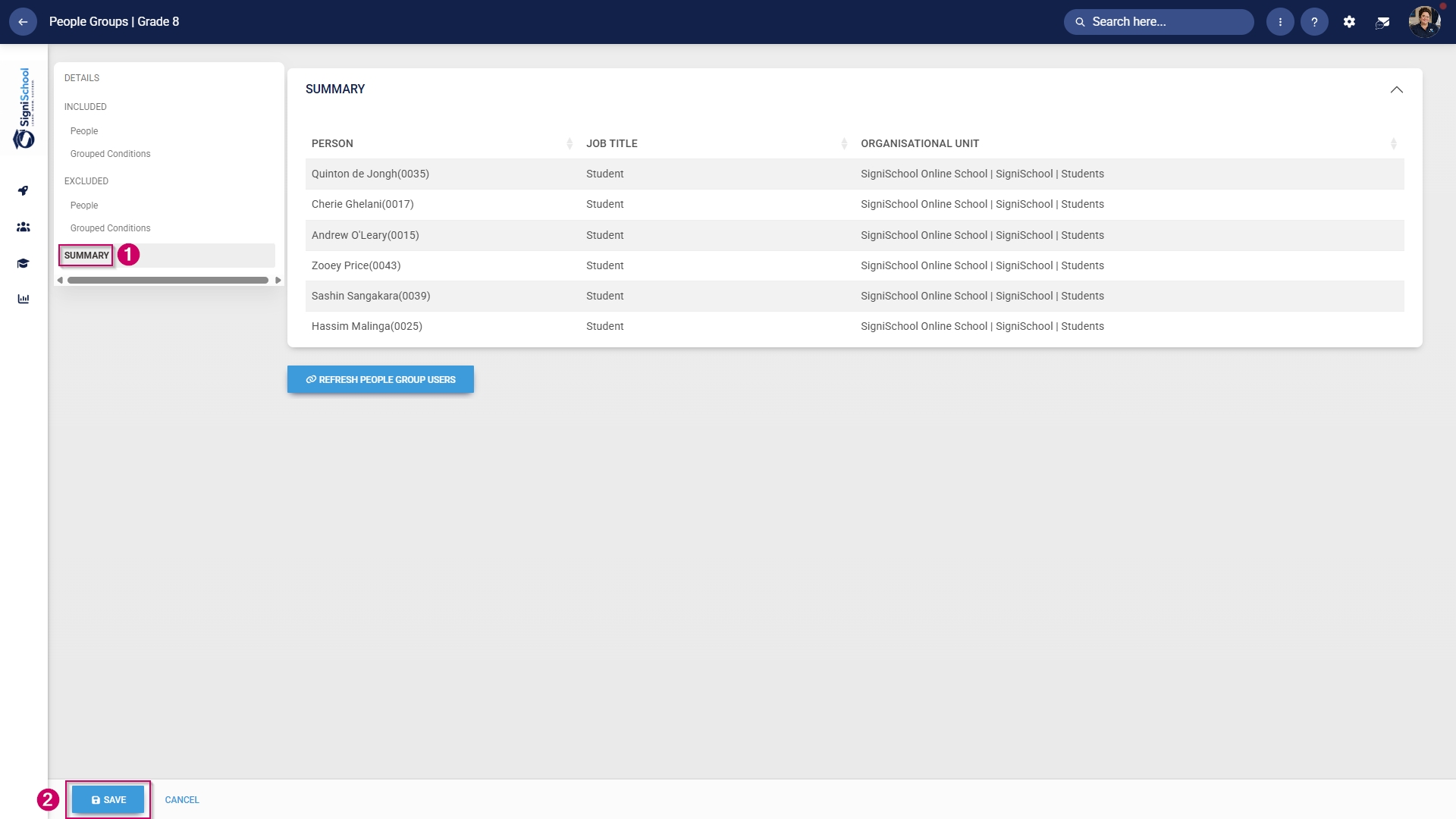
Summary
- In the left-hand menu, click Summary to view all the users included in your people group.
The people groups take some time to synchronise on the system once they're created. This can take anywhere from 10 minutes to 12 hours, depending on the number of changes.
- To synchronise the newly-created or updated people groups manually, follow the steps in the next section.
Manually syncing people groups
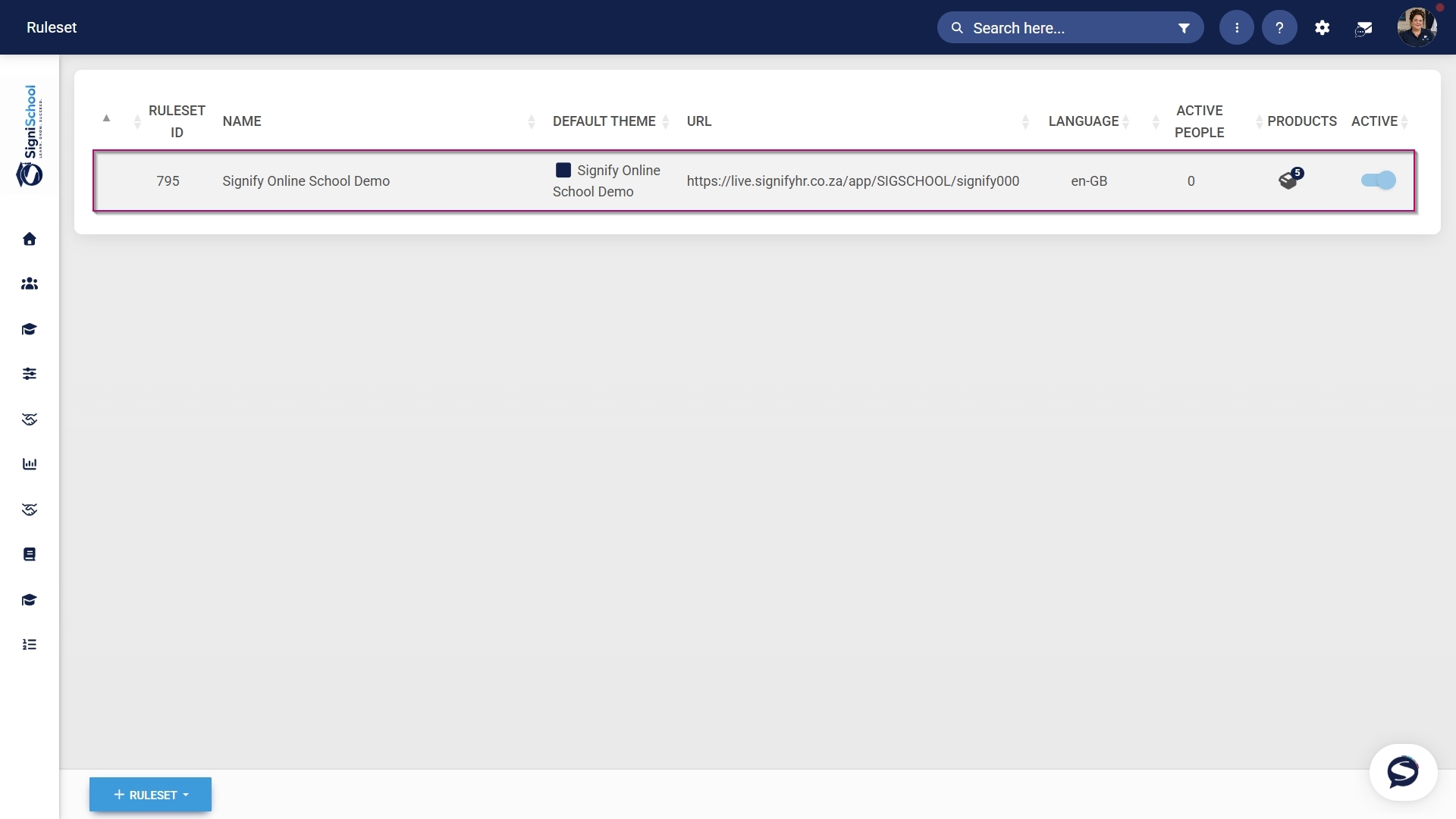
- Click the gear icon to access the Setup and Configuration menu.
- Click Ruleset Setup.

- Select the ruleset you would like to update.
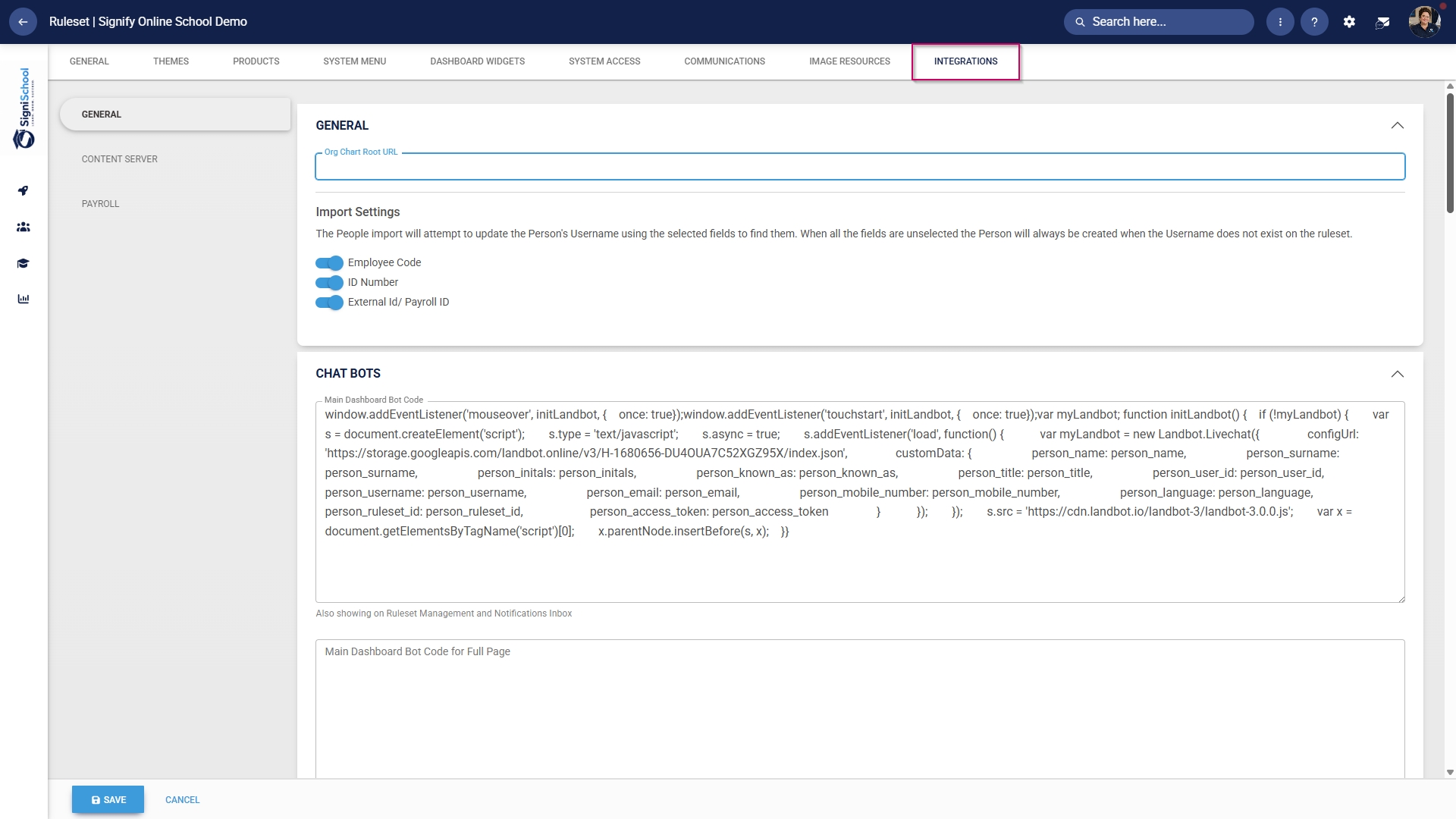
- Scroll down to the Bulk Additional Service Imports – Push section.
- For the People group import function, you have two options when synchronising manually:
-
- Click REQUEST ALL DATA to synchronise all the people groups.
-
- This is a time-consuming operation because all the people groups' data is overwritten and synchronised from scratch.
-
- Click REQUEST ALL DATA to synchronise all the people groups.
-
Please be very careful when selecting this option, as it can affect system performance and speed, particularly during business hours.
-
-
- Click REQUEST RECENT CHANGES to synchronise only recent changes to your people groups.
-
- This is a time-efficient option because only the changes are synchronised, and the previous data remains unchanged.
-
- Click REQUEST RECENT CHANGES to synchronise only recent changes to your people groups.
-
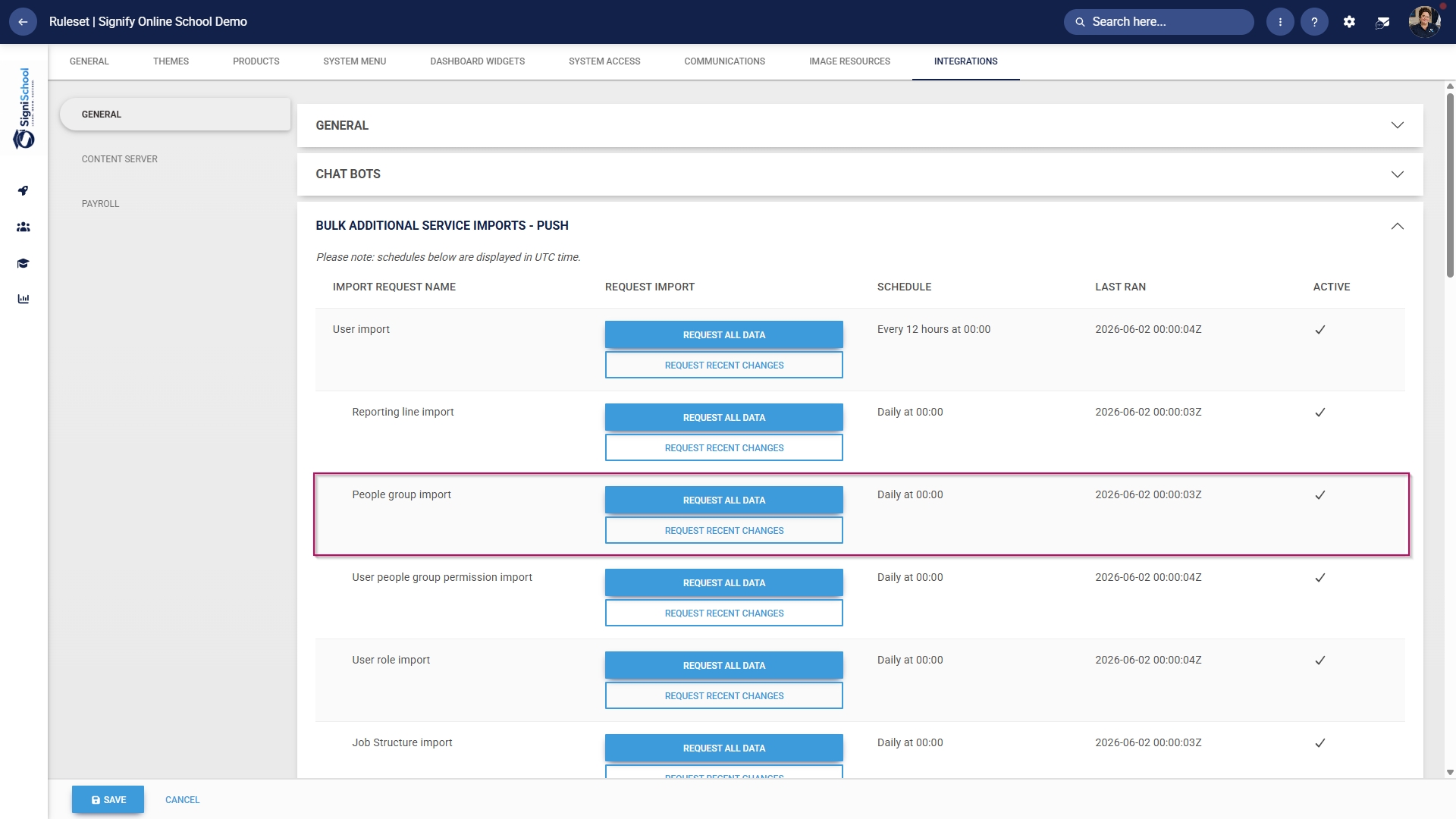
- Once you have selected a synchronisation method, a message will appear stating that the import has been requested. You can monitor the synchronisation progress by navigating to your System Inbox.
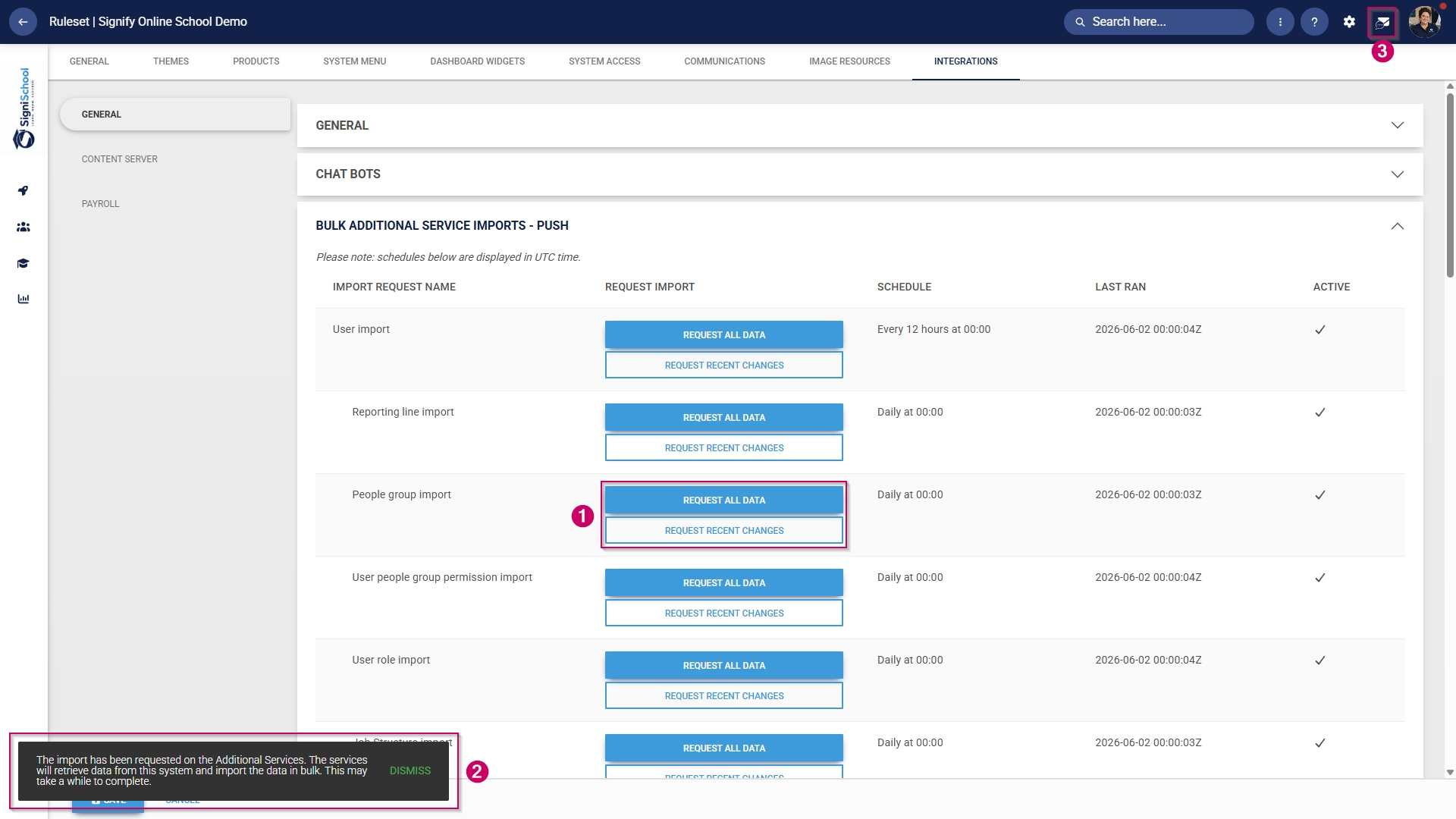
- Click the envelope icon at the top of your screen to navigate to your System Inbox, then click Imports.
- You can monitor the status of your imports and system processes here:
-
- Staged means the task has been added to the queue and will begin once the current tasks have been completed.
- Started means the task is currently running.
- Completed with Errors means the task has been completed, although only partially, due to detected errors.
- Completed means the task has been successfully executed.
- Failed means the task could not be completed.
-
- For a Completed with Errors or Failed task, you can download an Excel document with a breakdown of the errors.
-
- Click on the kebab icon next to the task.
- Click Export Errors.
- Review the errors, then re-attempt the task using the steps above.
-
Add training interventions
Training interventions are used to track a learner's academic progress. Each learning activity or assessment will have its own training intervention. Training interventions can be created in two ways:
- Manually through the training intervention builder
- Automatically through the training intervention import functionality
Both methods will be shown below.
Method 1: Add training interventions manually
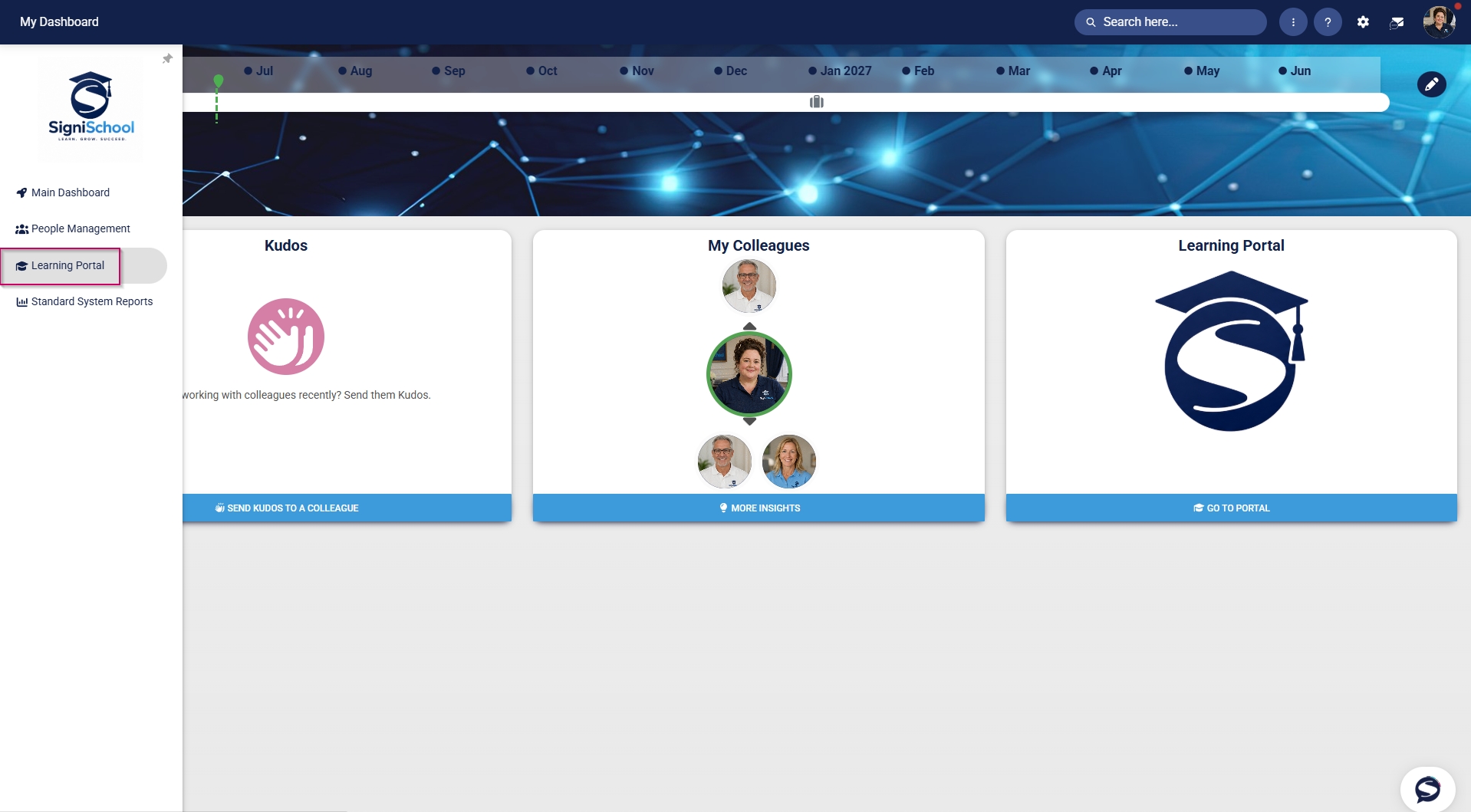
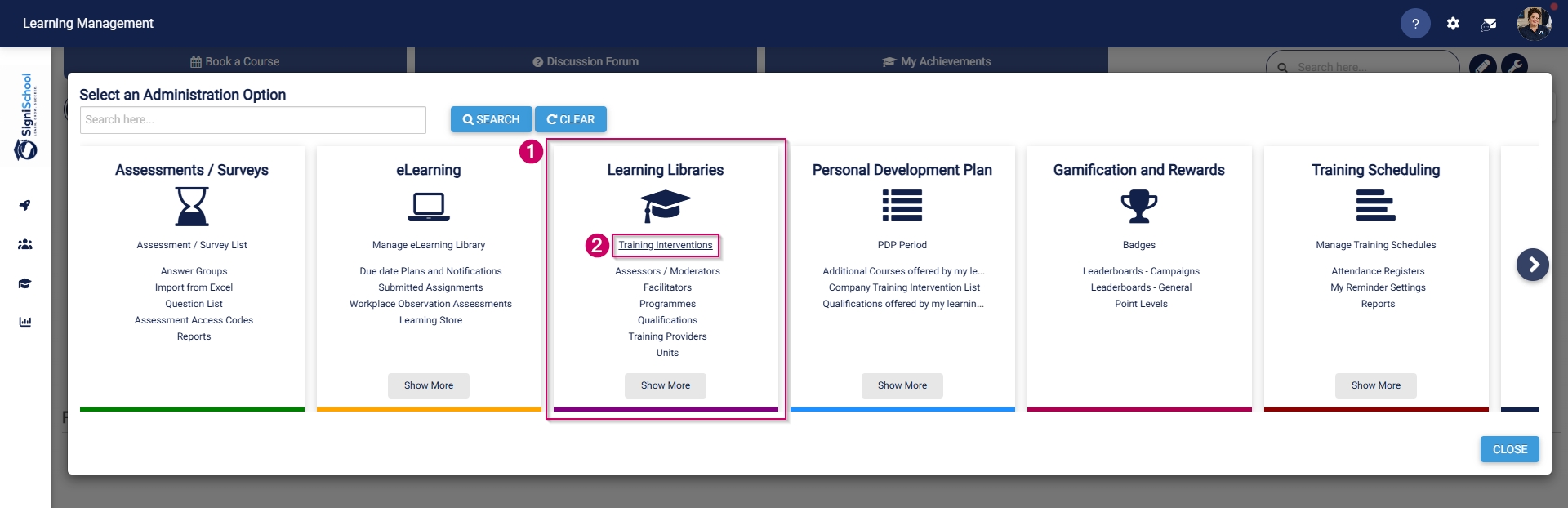
- Hover over the sidebar menu, then click Learning Portal.
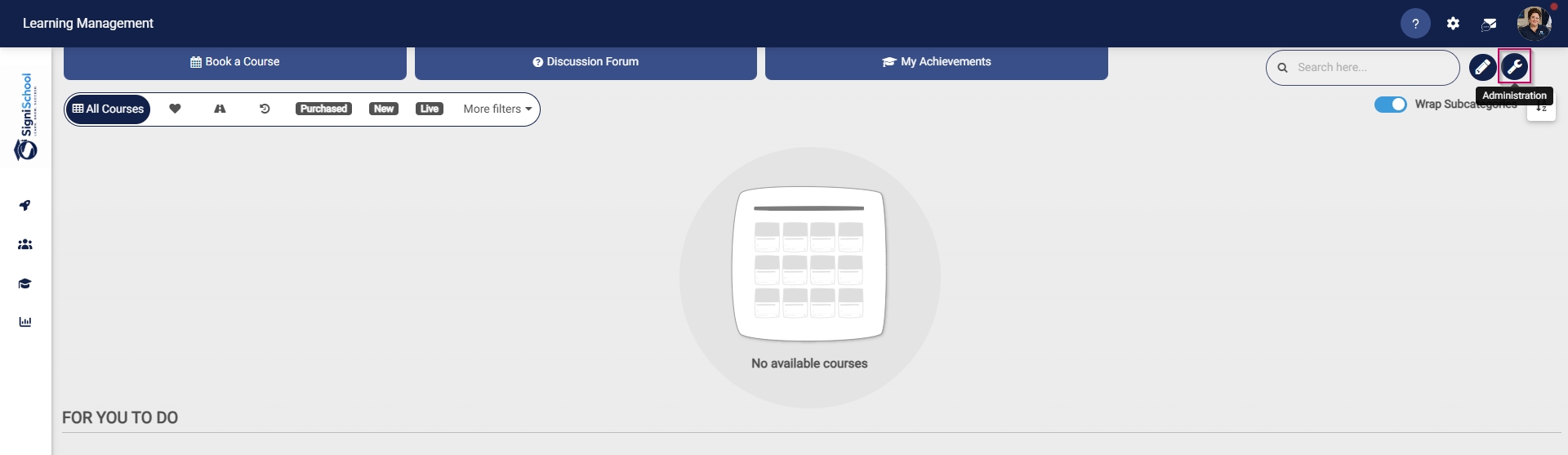
- Click the spanner icon to access the system's Administration menu.
- On the Learning Libraries card, click Training Interventions.
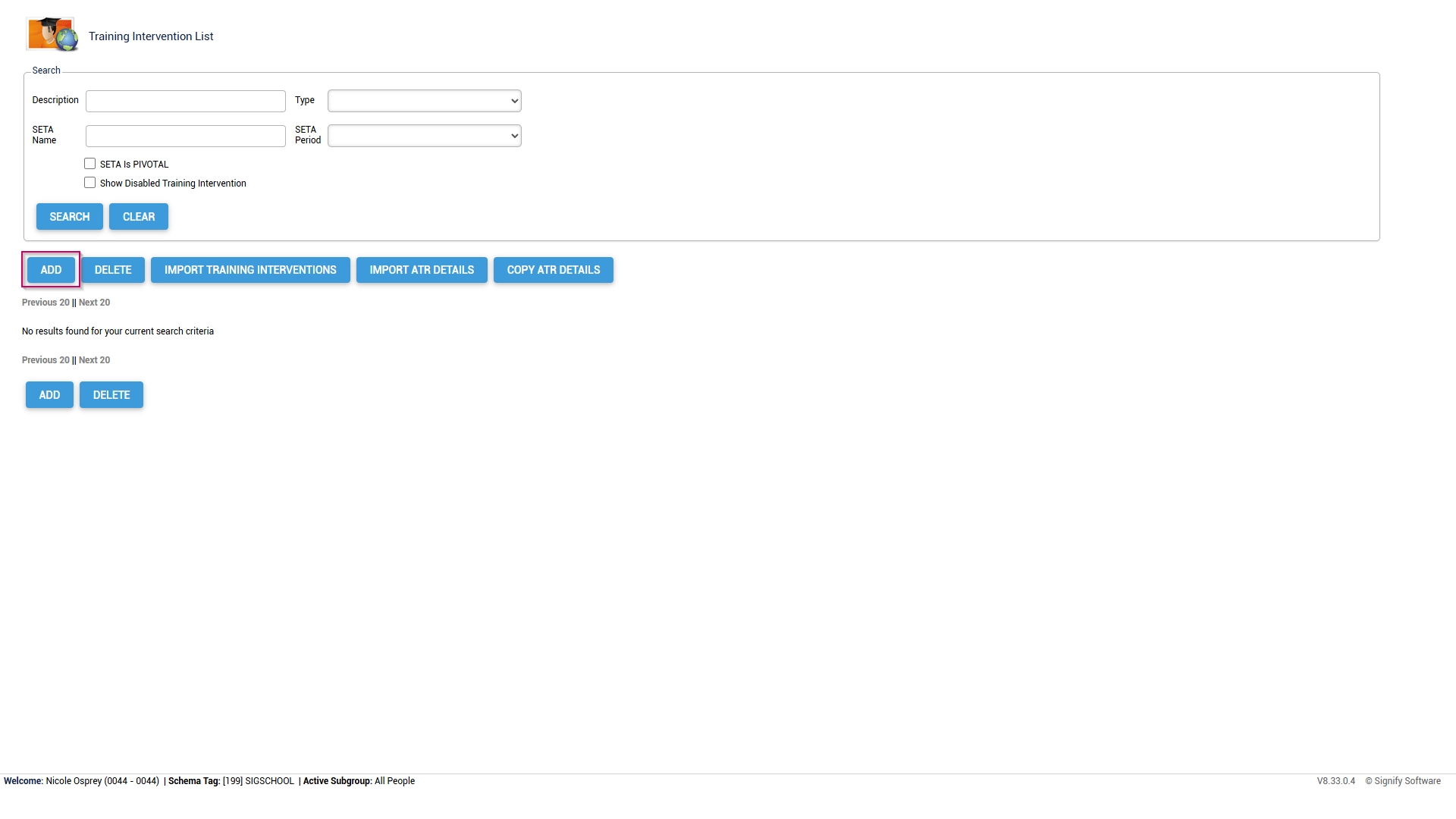
- The Training Intervention Library will open. This is where training interventions can be created, edited, or deleted. To add a new training intervention, click ADD.
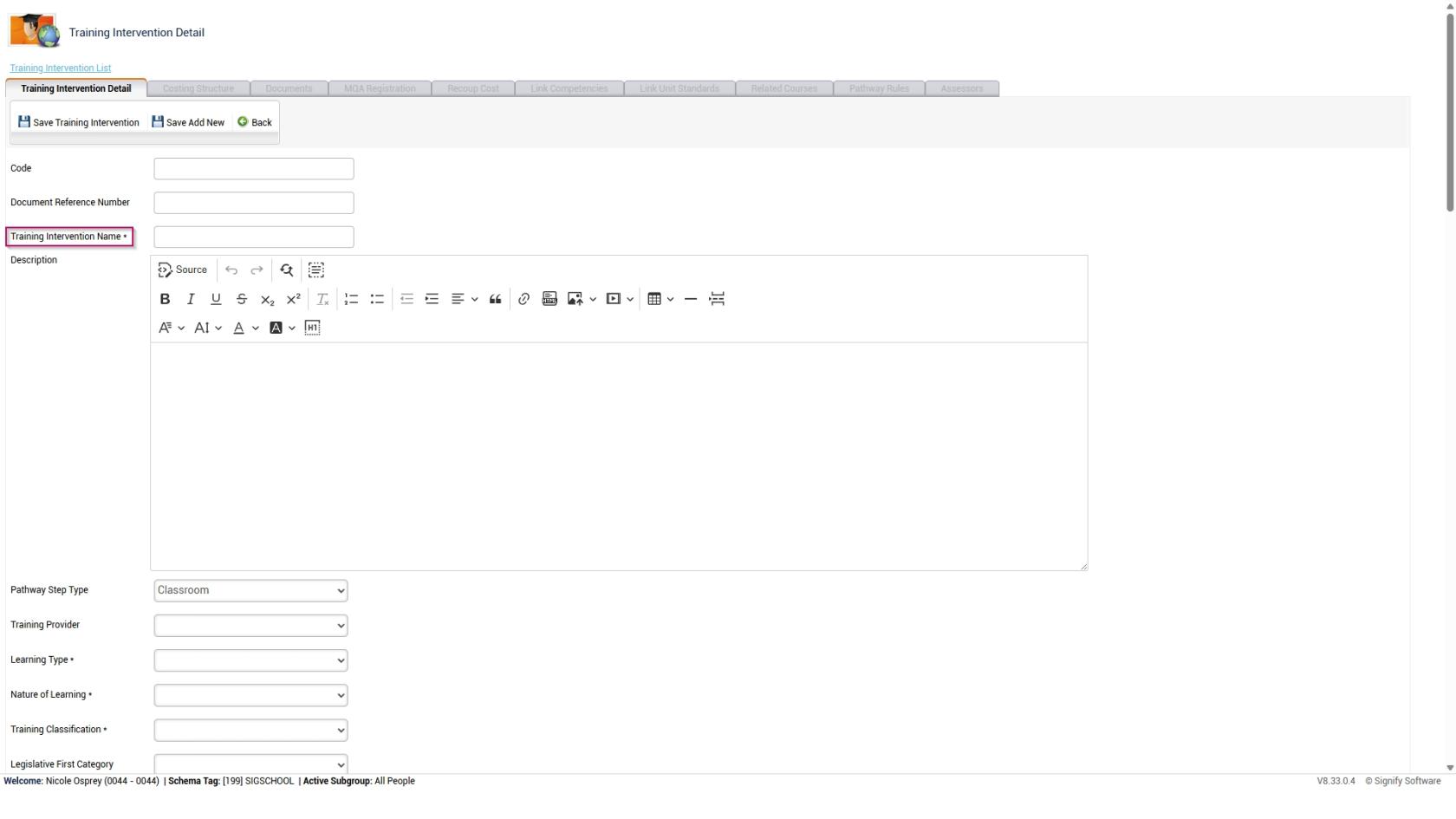
- The training intervention editing screen will open.
-
- Please note that all the fields marked with an asterisk (*) are required.
- For our example, we will only fill out the necessary fields, but you can add more details if desired.
-
It is recommended to use a naming convention to standardise the training interventions. This ensures it is easy to maintain the data integrity of the Training Intervention Library while also improving the quality of system report outputs.
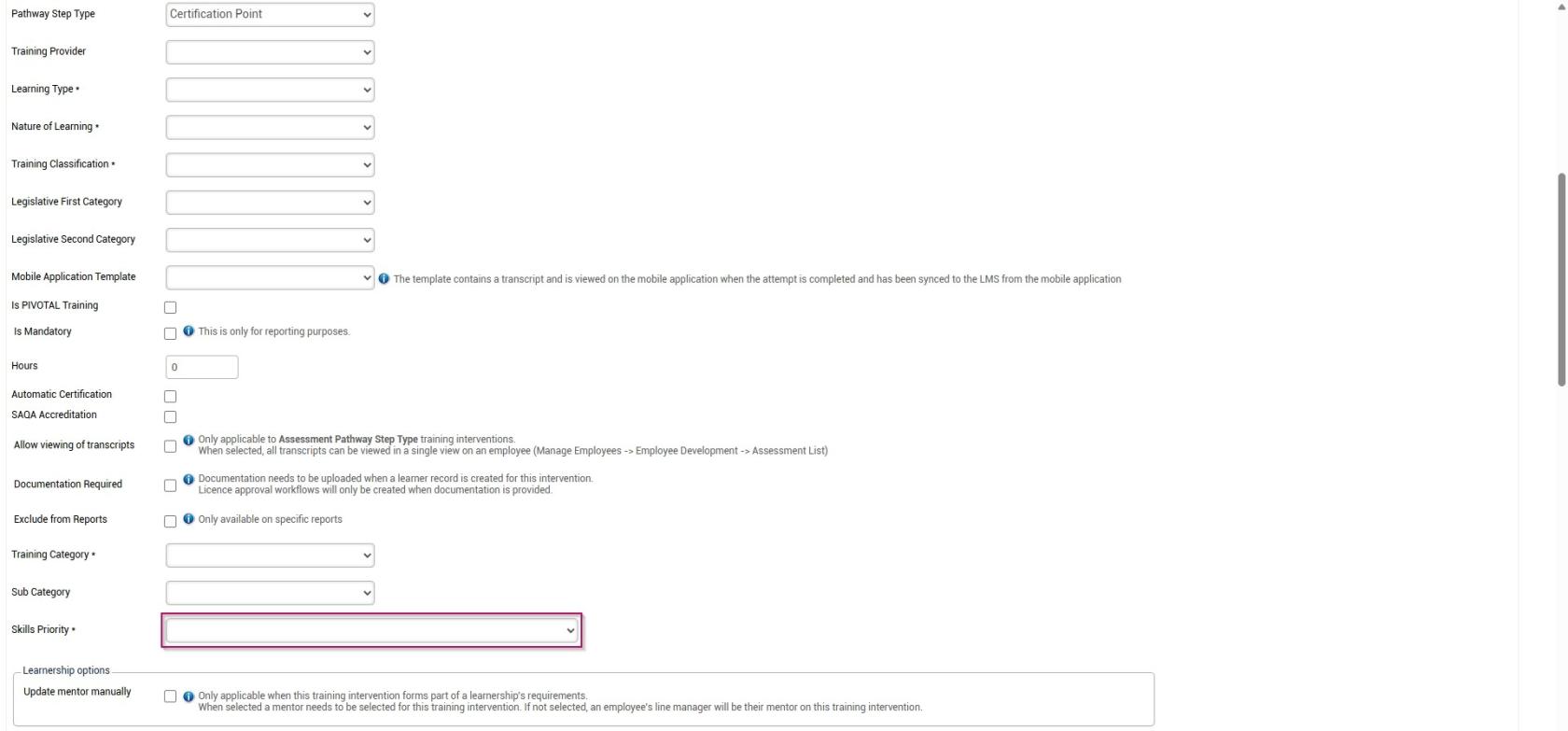
- Add an appropriate name for the training intervention.
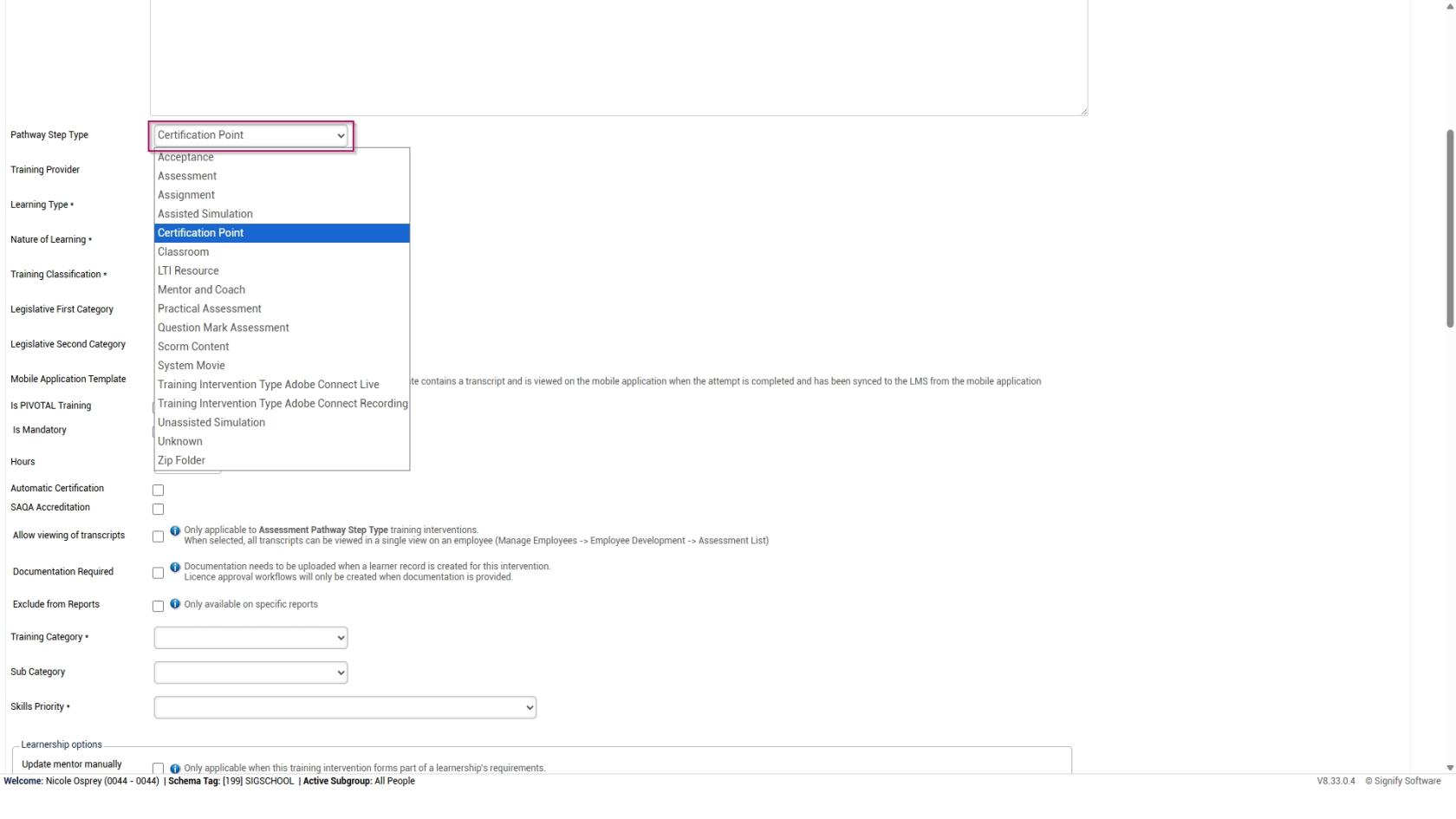
- Select the type of training intervention from the Pathway Step Type drop-down menu.
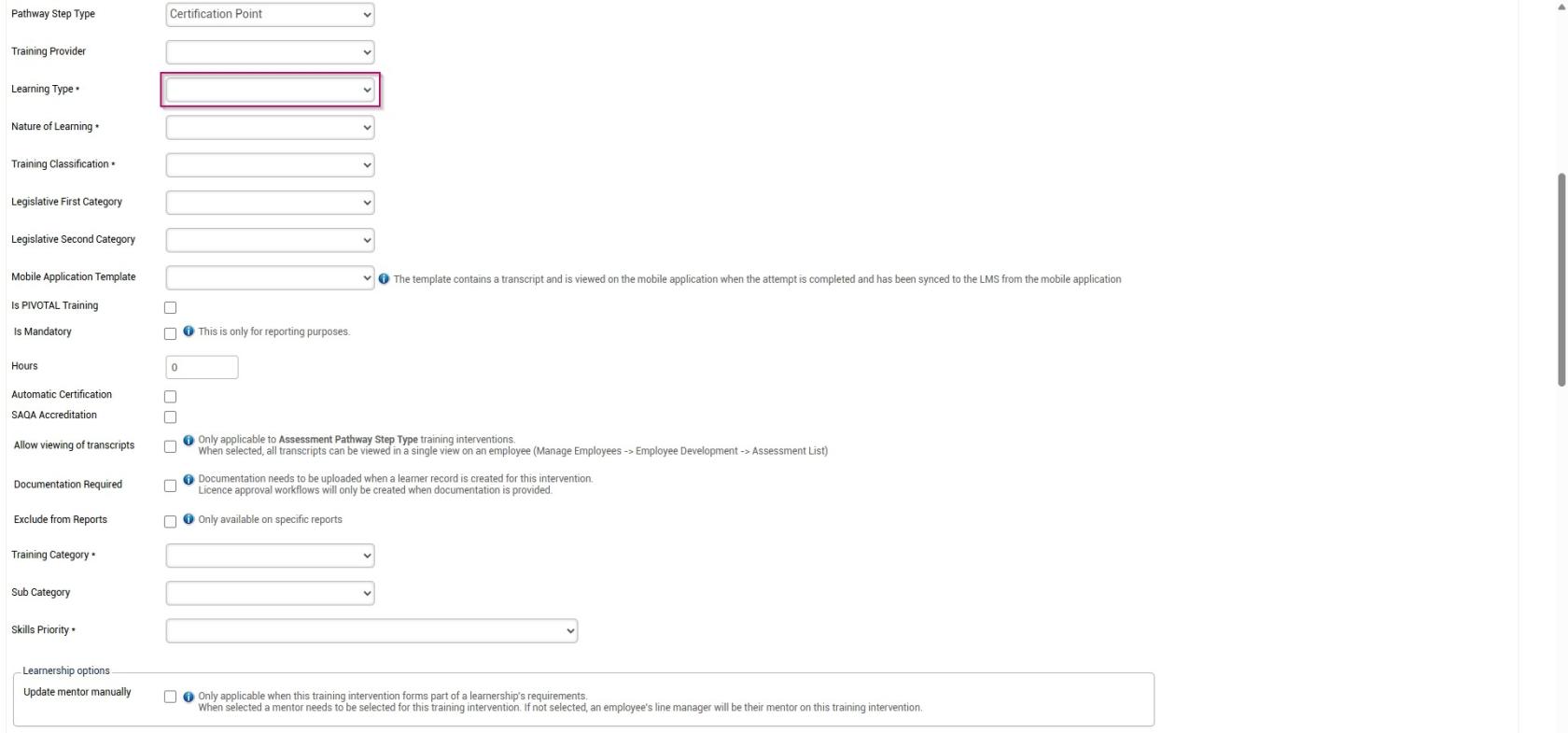
- Select the Learning Type from the drop-down menu.
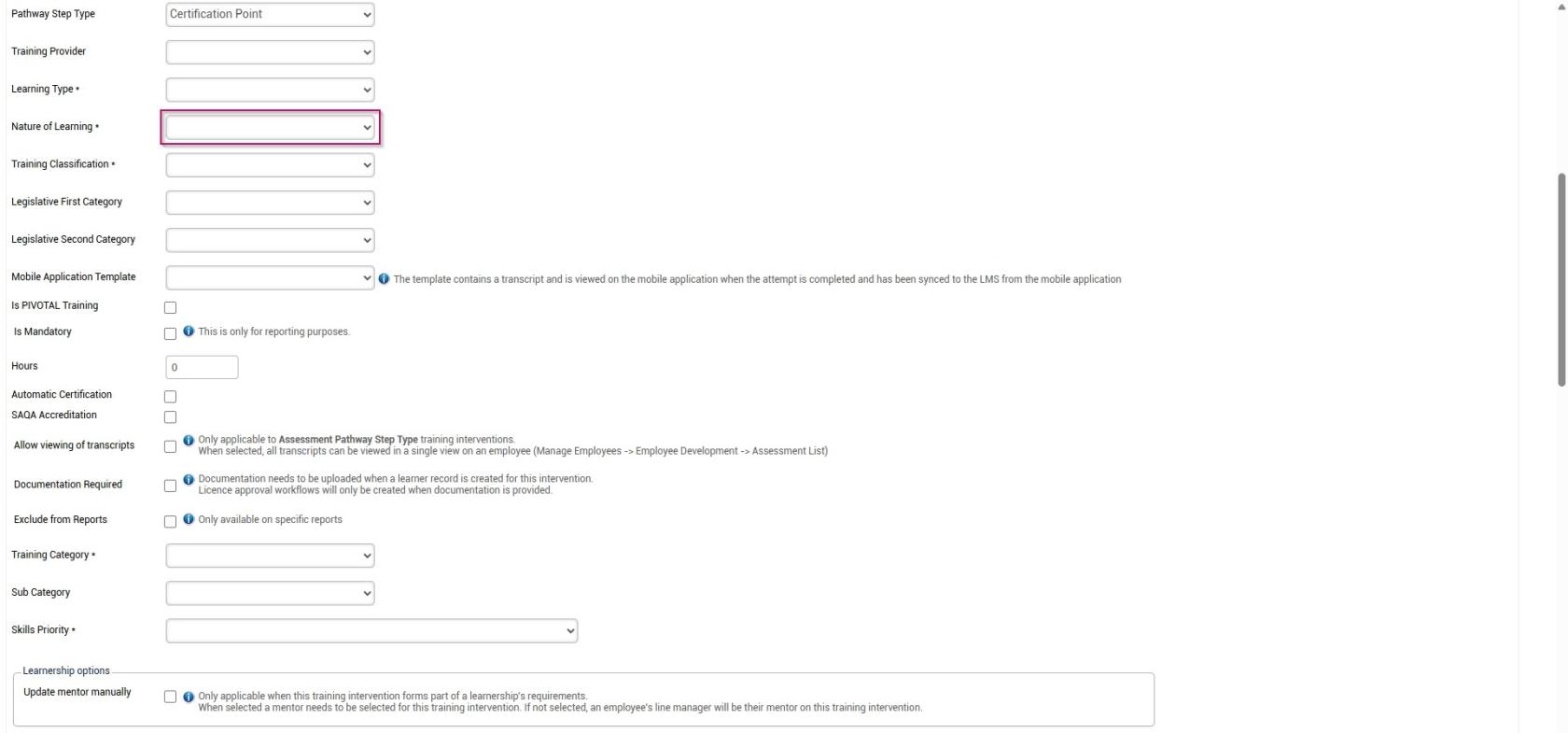
- Select the Nature of Learning from the drop-down menu.
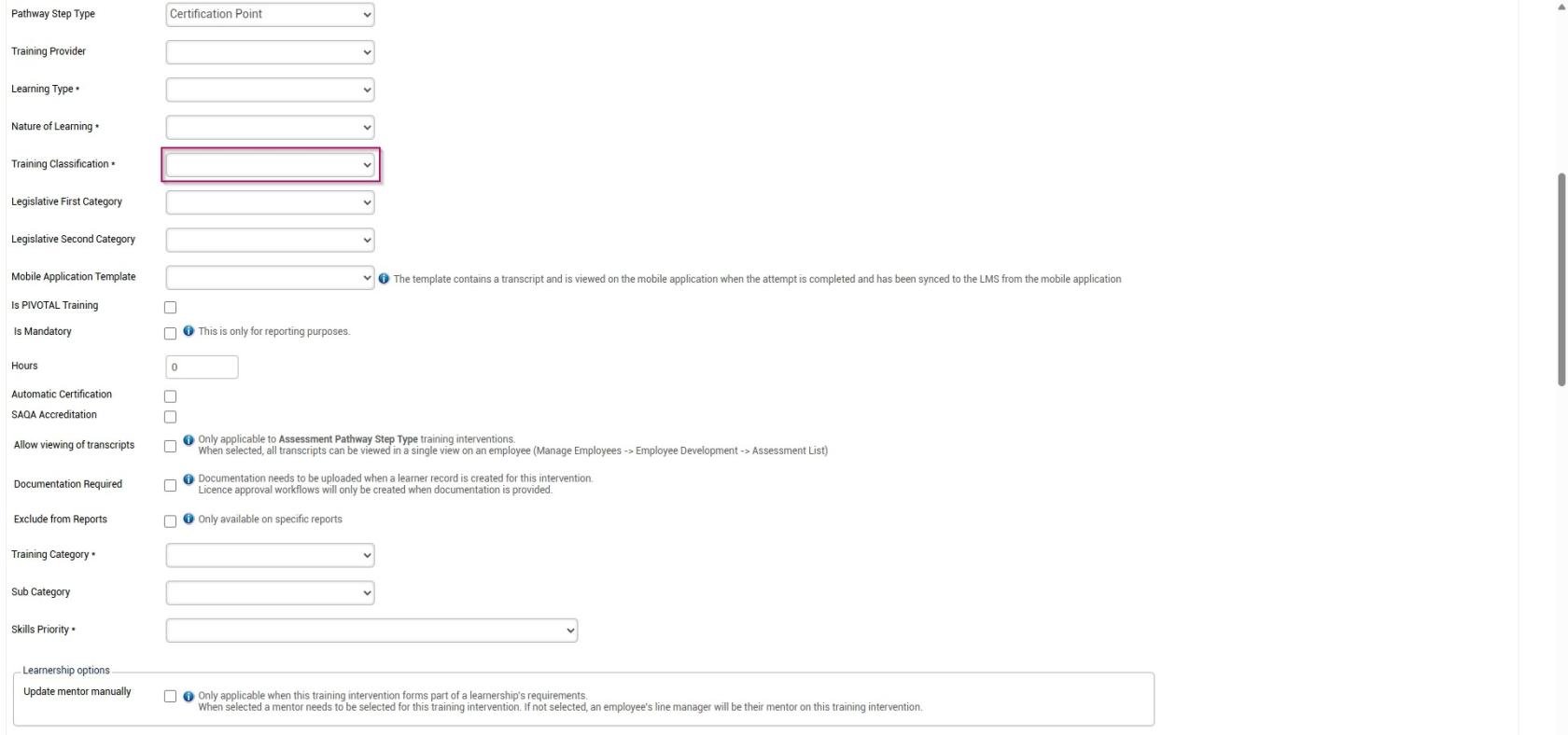
- Select the Training Classification from the drop-down menu.
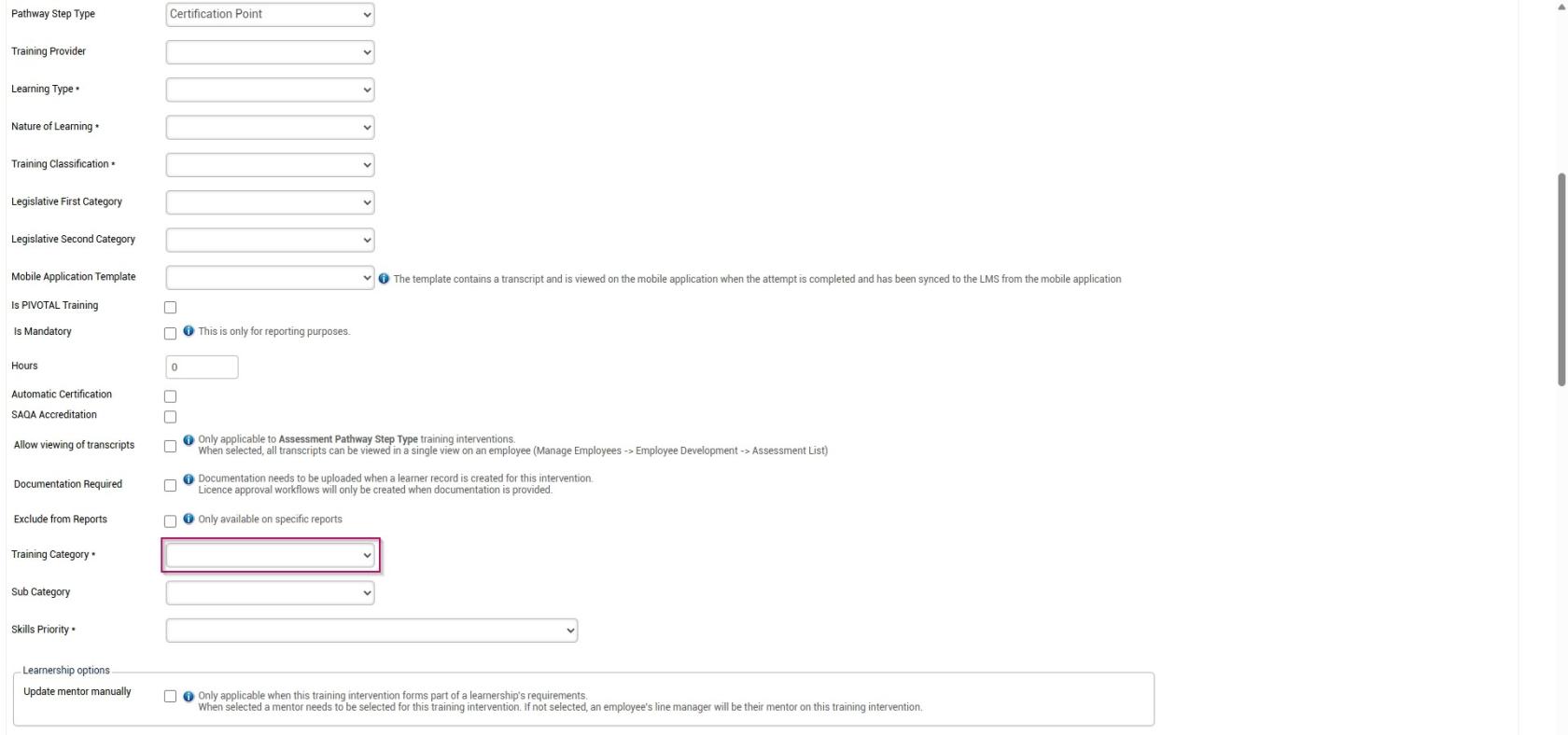
- Select the Training Category from the drop-down menu.
- Select the Skills Priority from the drop-down menu.
- Configure the settings for the expiry of learner records.

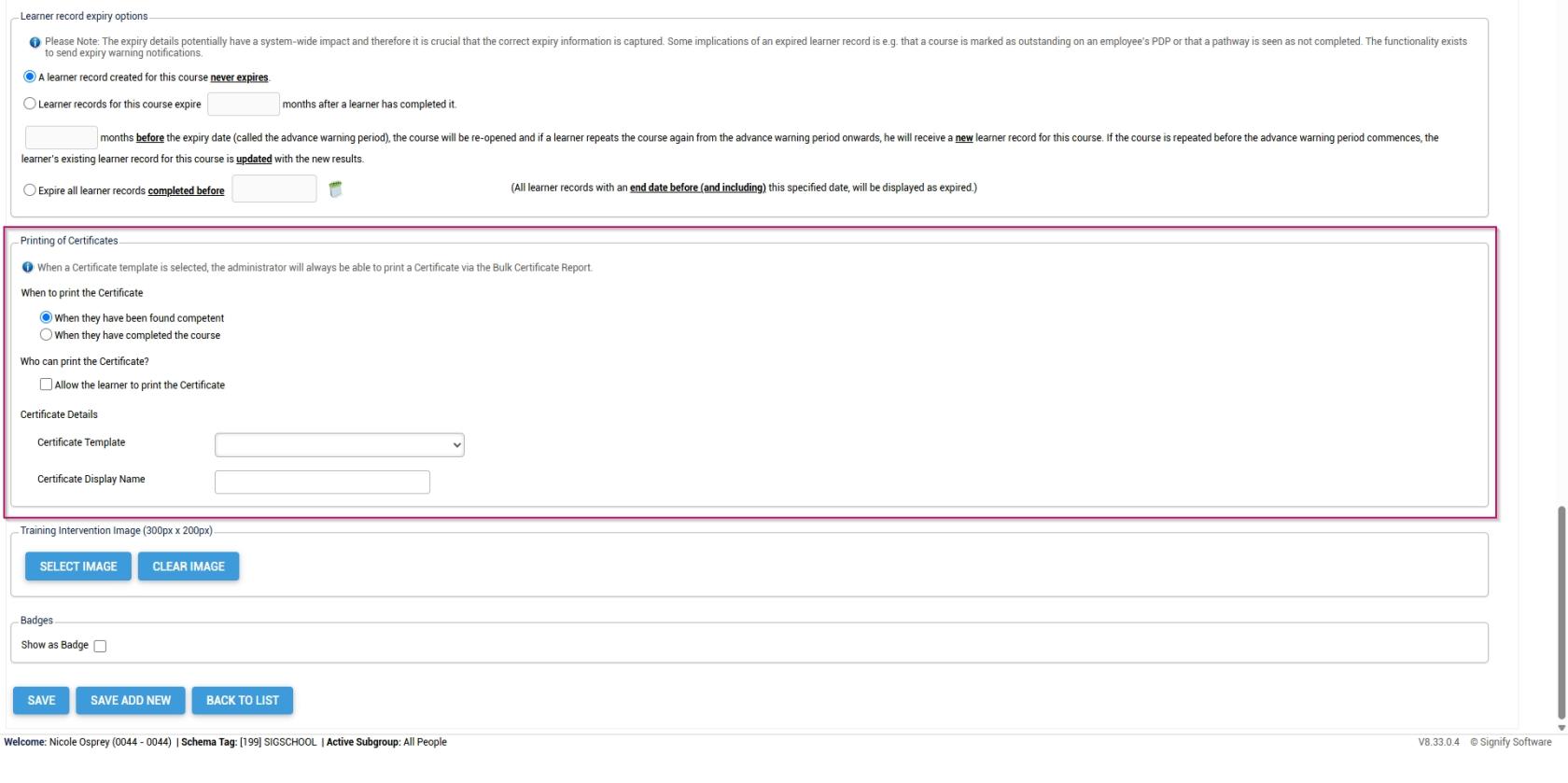
- Configure the settings for the printing of certificates.
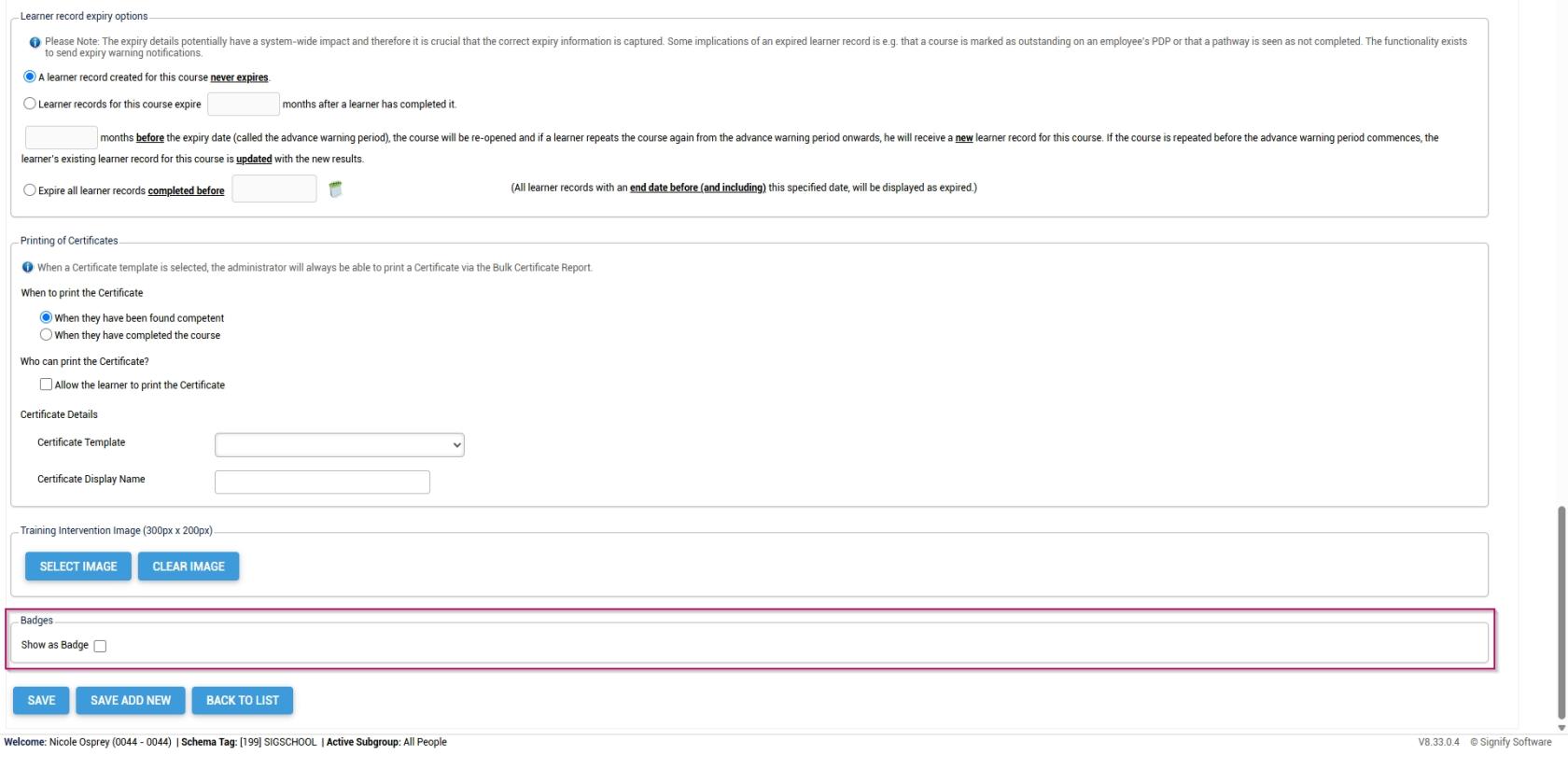
- If you employ a gamification strategy in your learning environment, you can display a completed course as a badge and assign points for leaderboard tracking.
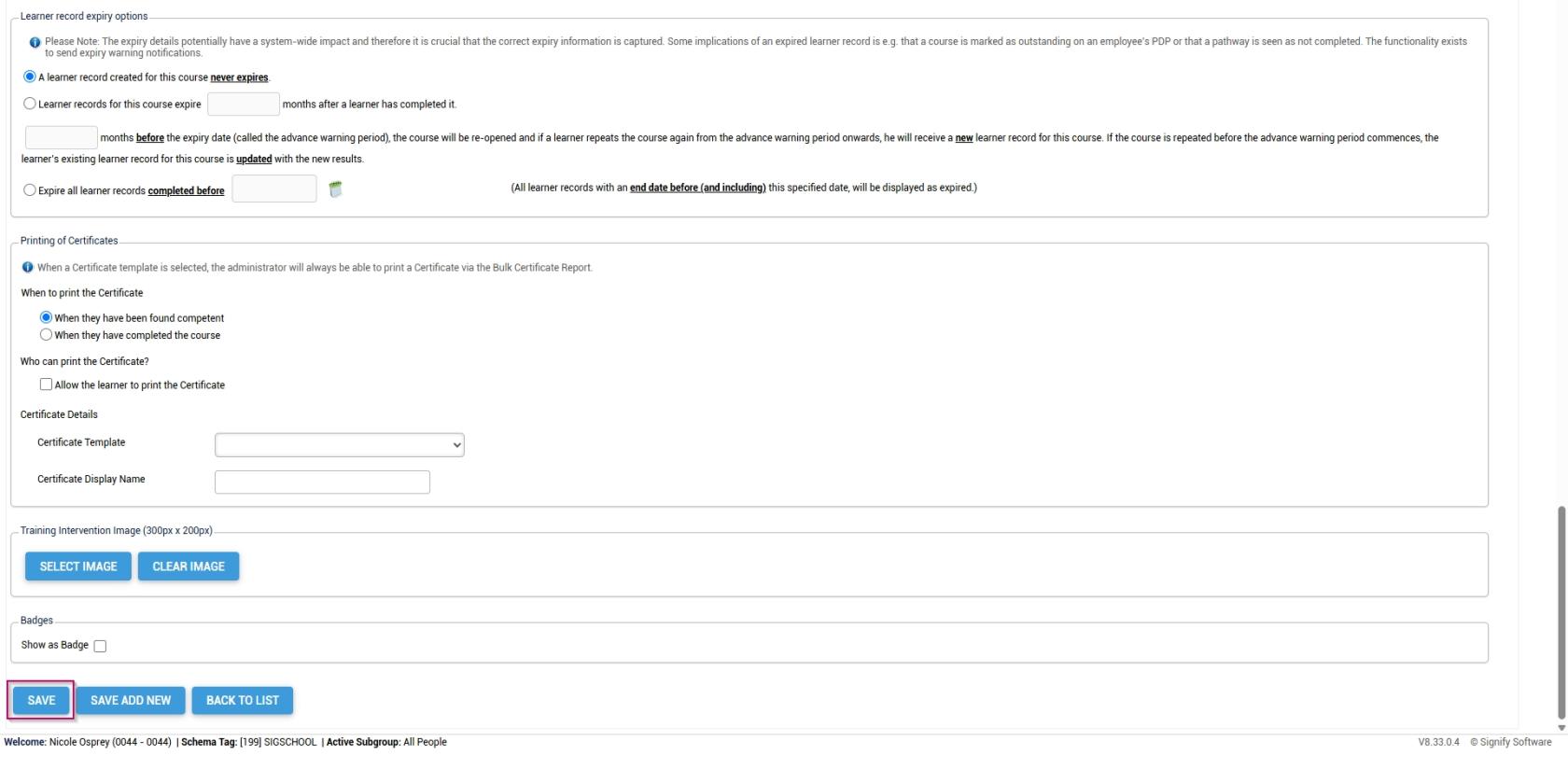
- Click SAVE when you are finished, SAVE ADD NEW to add another training intervention or click BACK TO LIST to discard your edits.
Method 2: Add training interventions using the import
- Hover over the sidebar menu, then click Learning Portal.
- Click the spanner icon to access the system's Administration menu.
- On the Learning Libraries card, click Training Interventions.
- The Training Intervention Library will open. This is where training interventions can be created, edited, or deleted. Click IMPORT TRAINING INTERVENTIONS to begin.
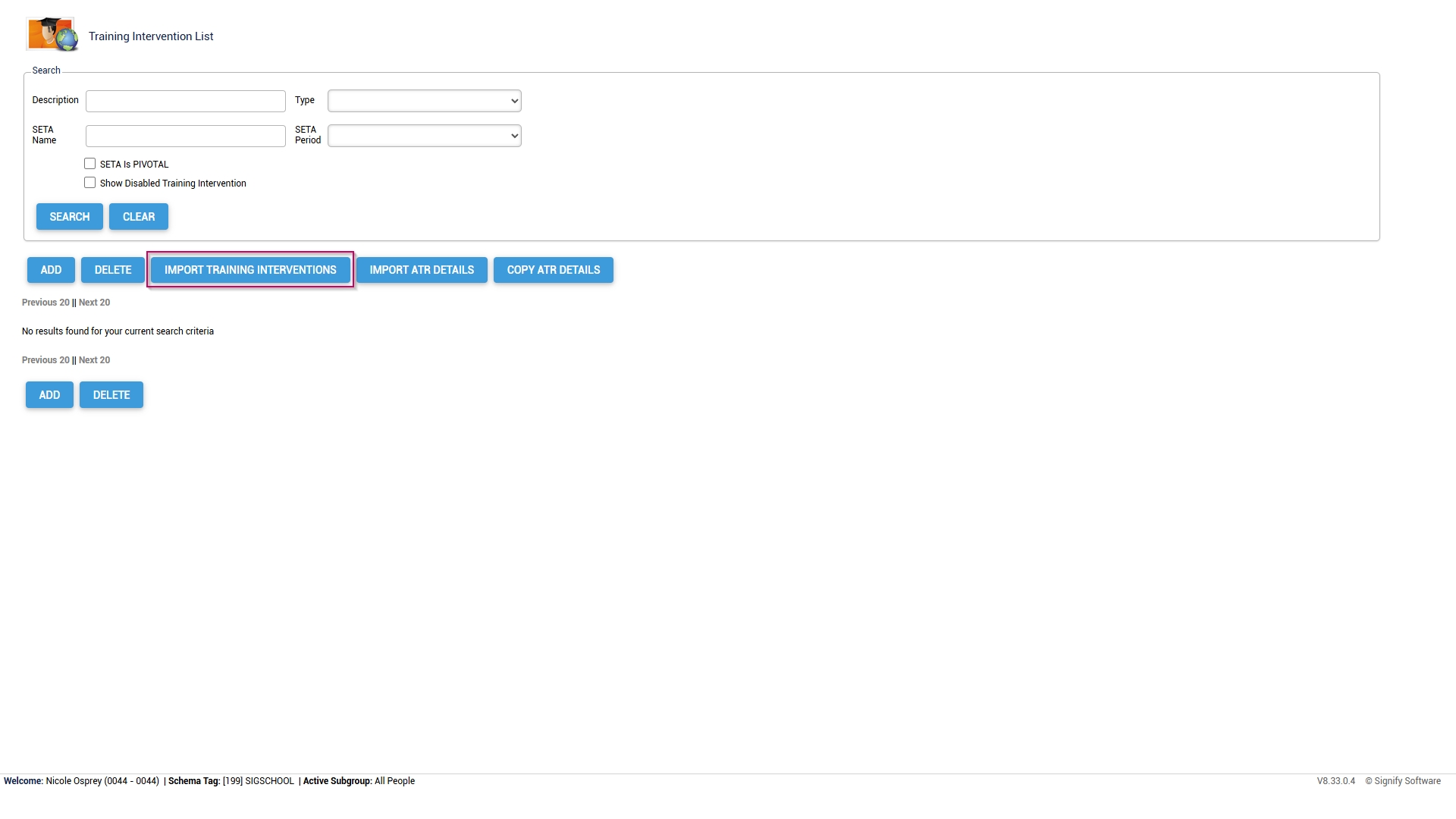
- Click on the Technical Information section.
-
- Take note of the maximum field lengths for each category.
-
- Copy the data in the section titled First row should look like.
-
- Use this data to construct a training intervention import file.
- For more information and a step-by-step guide on how to do this, go to the next section: Create a custom Training Intervention file in Excel.
-
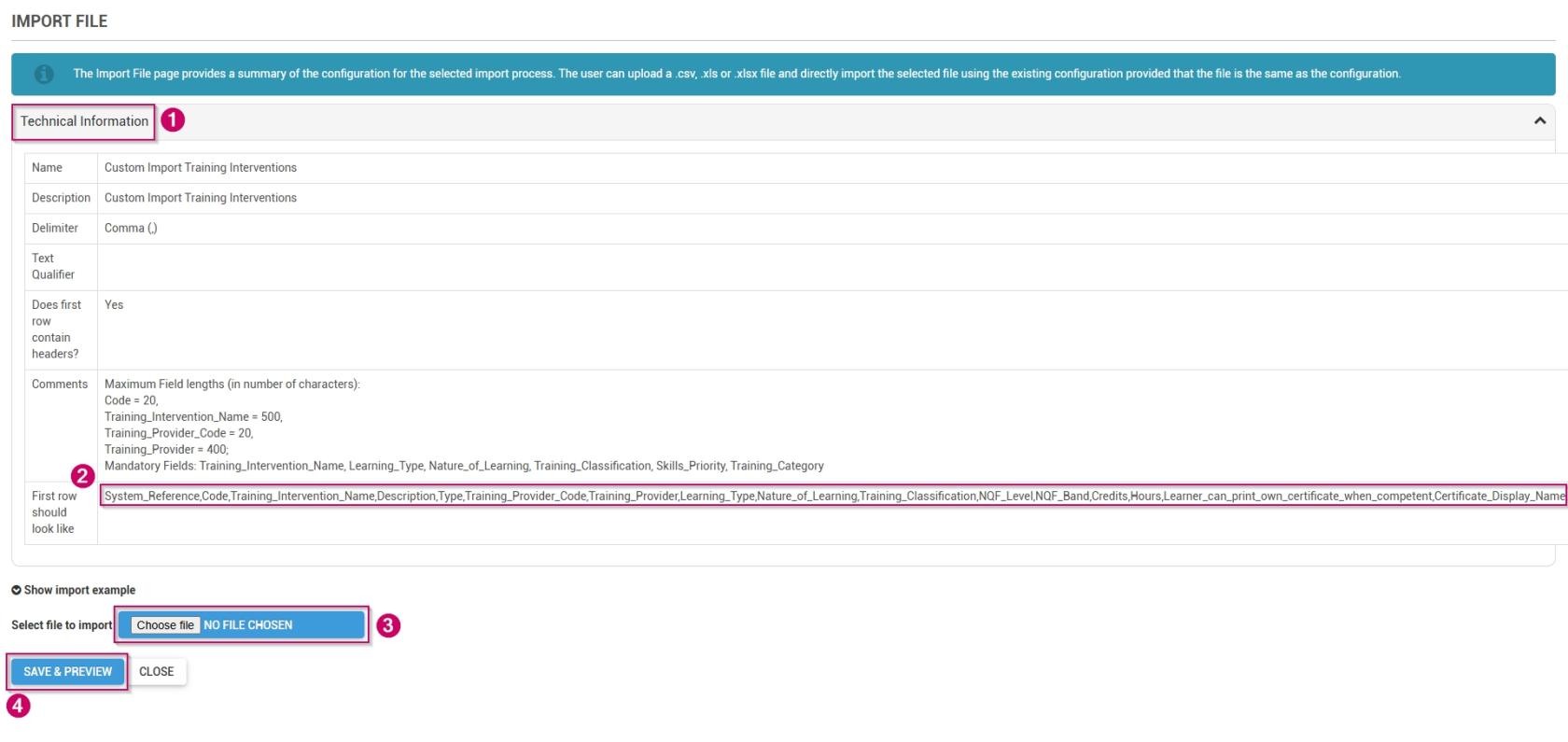
- Once you have populated your training intervention document, click CHOOSE FILE to upload your import file as a .csv, .xls, or .xlsx.
- Click SAVE & PREVIEW.
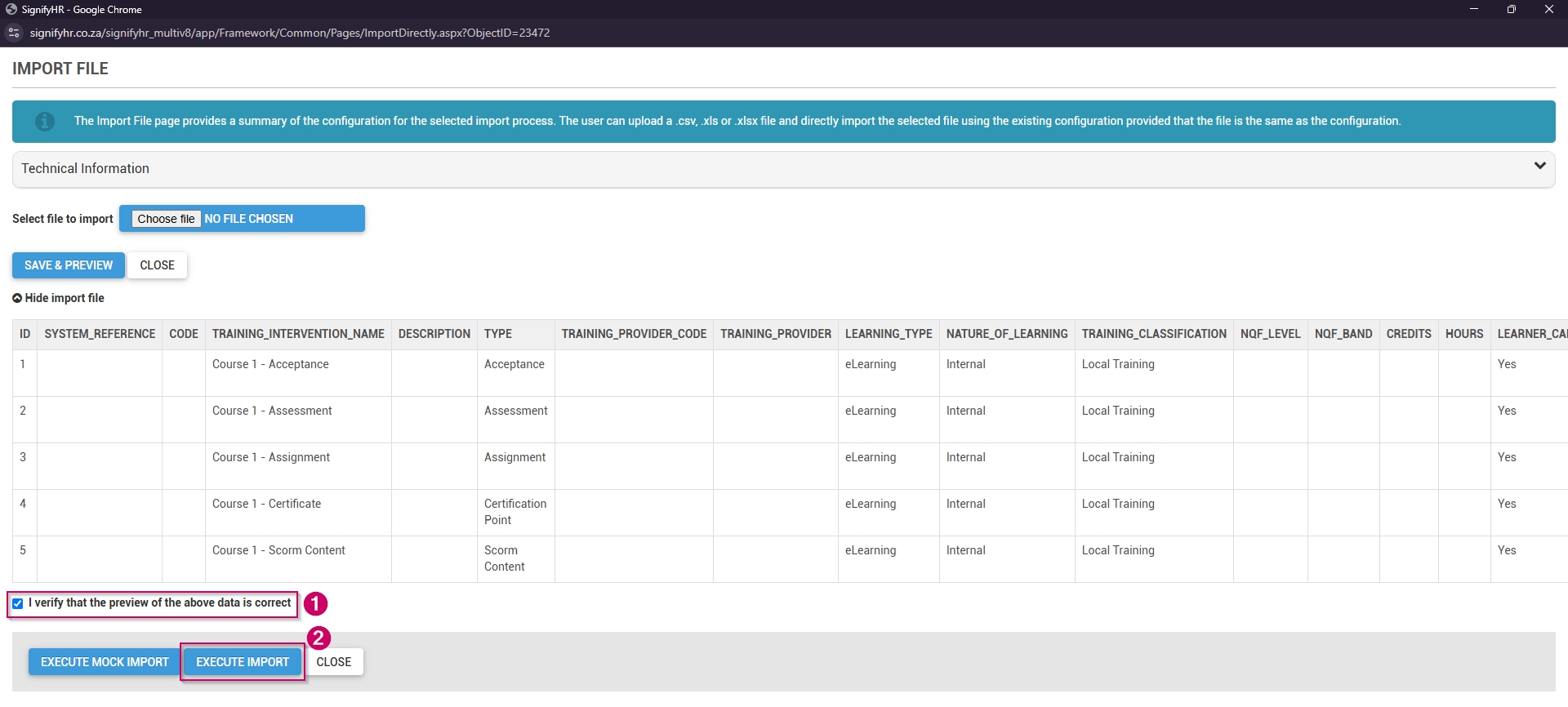
- Review the preview of your data import. If the data appears correct, tick the checkbox to confirm it.
- You are now ready to kick off the import.
-
- You can execute a mock import to ensure all the data displays correctly. This is recommended for very large import files. To do this, click EXECUTE MOCK IMPORT.
- If the data is ready to be imported, click EXECUTE IMPORT.
-
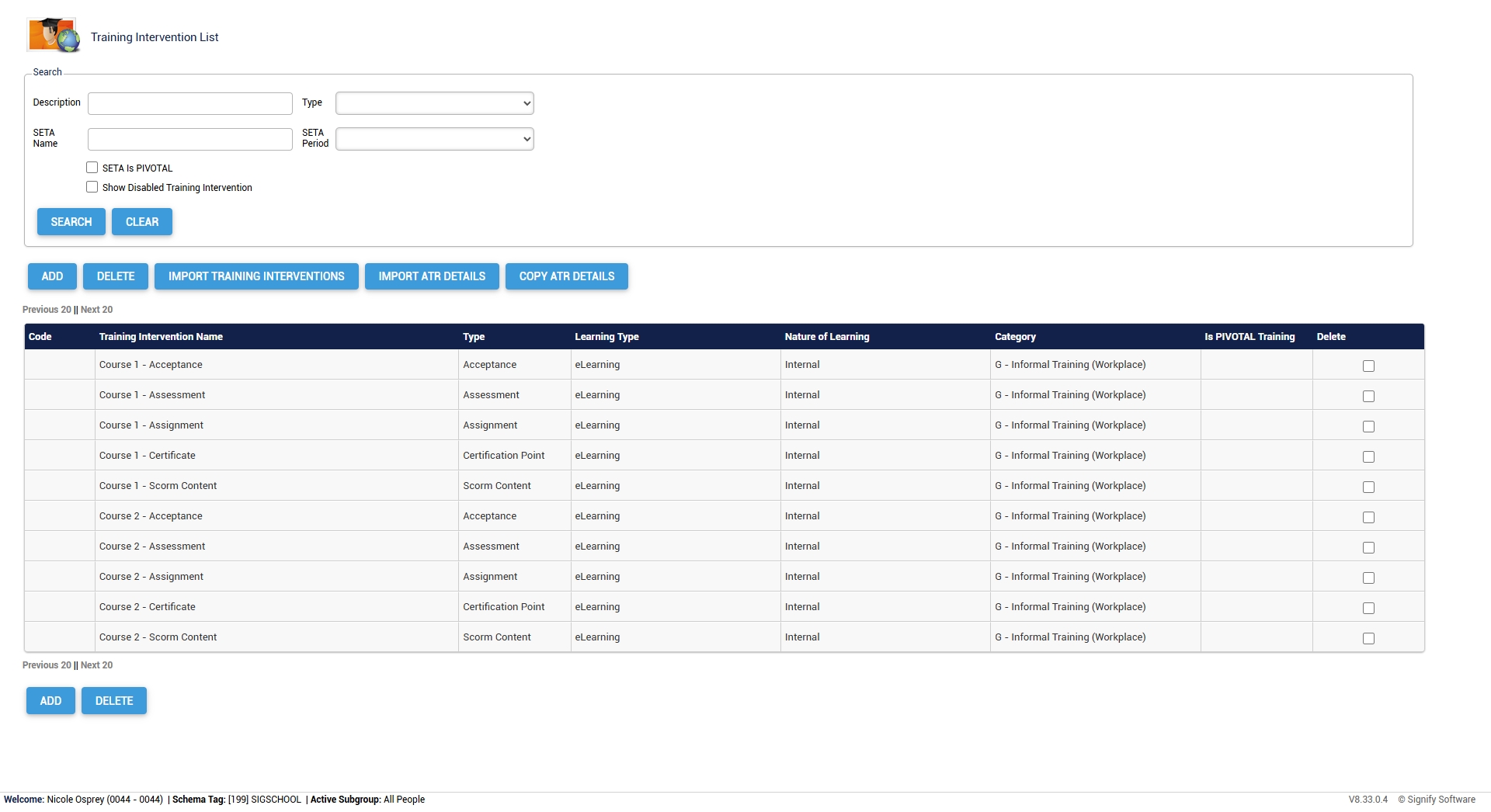
- Your Training Intervention Library is now populated with your new training interventions. If you do not see your training interventions, please refresh your browser window.
Create a custom Training Intervention file in Excel
- Copy the following information to your clipboard:
System_Reference,Code,Training_Intervention_Name,Description,Type,Training_Provider_Code,Training_Provider,Learning_Type,Nature_of_Learning,Training_Classification,NQF_Level,NQF_Band,Credits,Hours,Learner_can_print_own_certificate_when_competent,Certificate_Display_Name,Training_Scheduling_Category,Participants_Min,Participants_Max,Outcomes,Skills_Priority,Prerequisite,Training_Category,Log_to_Learner_Record,Learner_Record_Never_Expires,Advanced_Warning_Period,Expire_All_Learner_Records_Completed_Before,Learner_Records_Expiry,Exclude_From_Reports,WSP_ATR_Category,PTP_PTR_Category,DocumentationRequired,AllowViewingTranscripts,IsPivotalTraining,IsMandatory,Mobile_Application_Template,Automatic_Certification,SAQA_Accredited,Update_Mentor_Manually,ImageUrl,BadgeUrl,ShowBadgeWhen,MinPoints,MaxPoints,MinScore,MaxScore,BadgeExpiryMonths,BadgeShowScoreDistributionGraph,BadgeShowLeaderboard
- Open the Excel application and create a new workbook.
- Paste the information into the first cell of the new workbook.
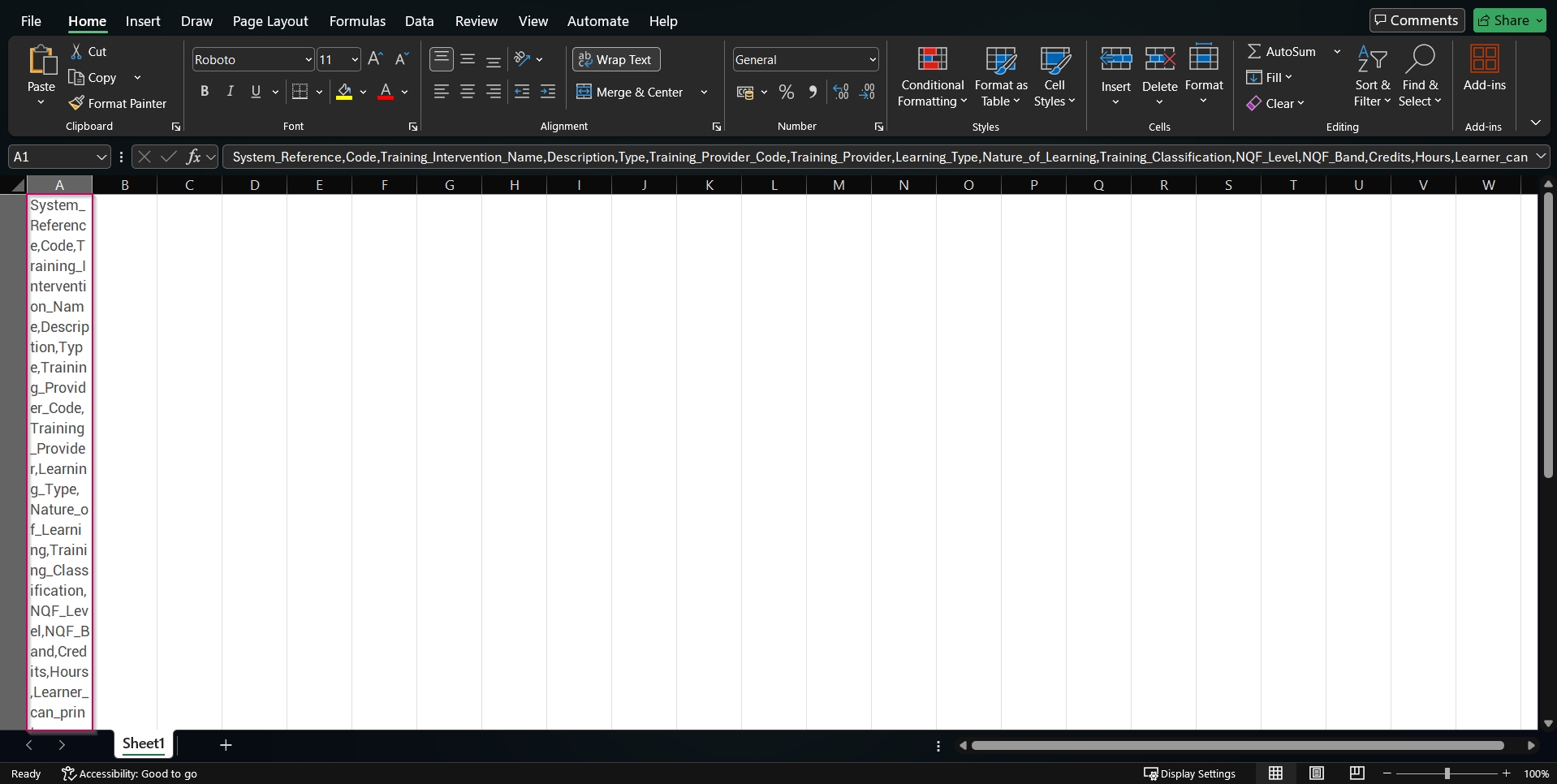
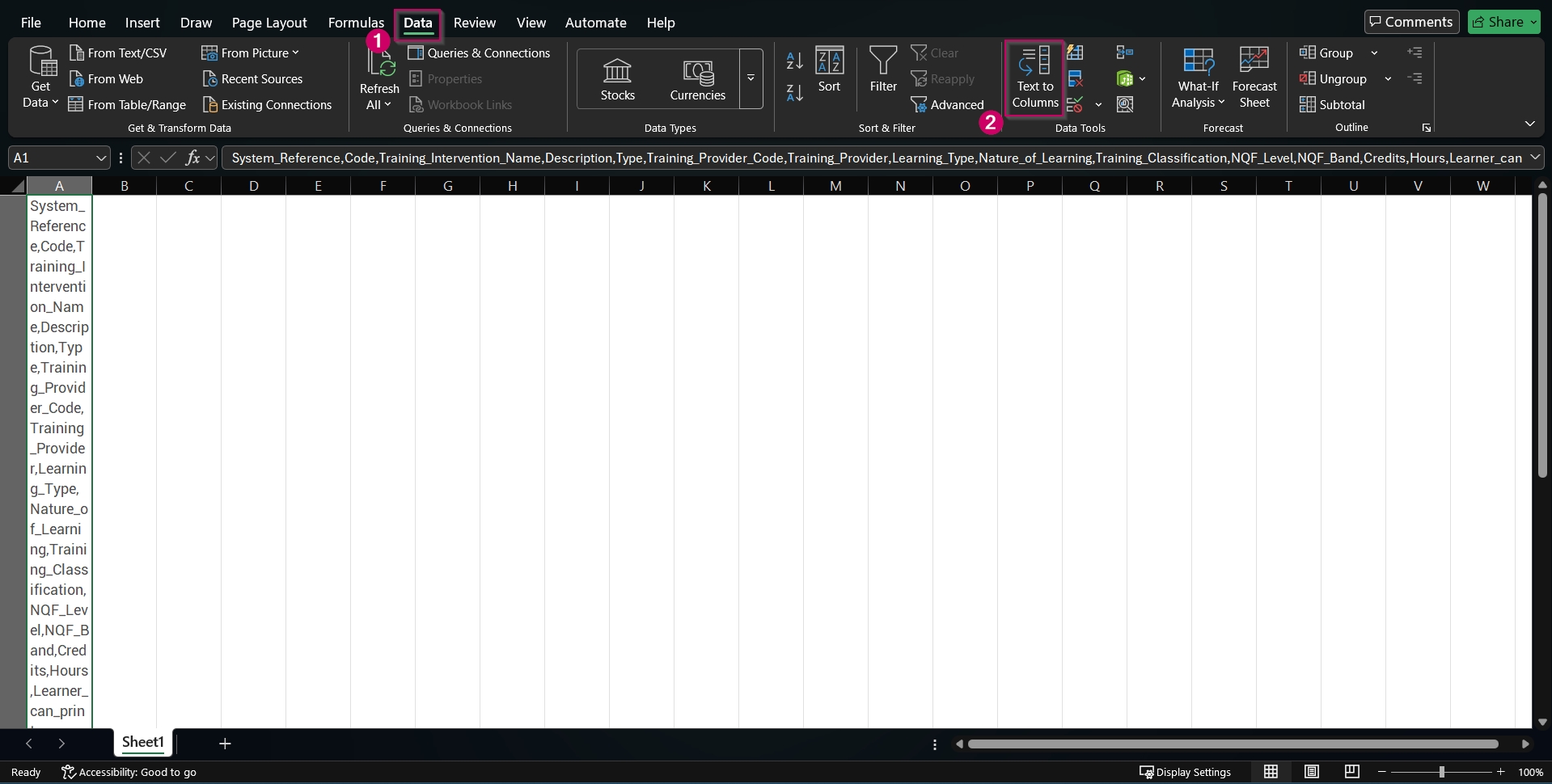
- Ensuring the first cell is selected, navigate to the Data tab. Click the Text to Columns option in the Data Tools section.
- The Convert Text to Columns Wizard will pop up. Click the Delimited radio button, then click Next.
- In the Delimiters section, ensure ONLY the Comma checkbox is ticked, then click Next.
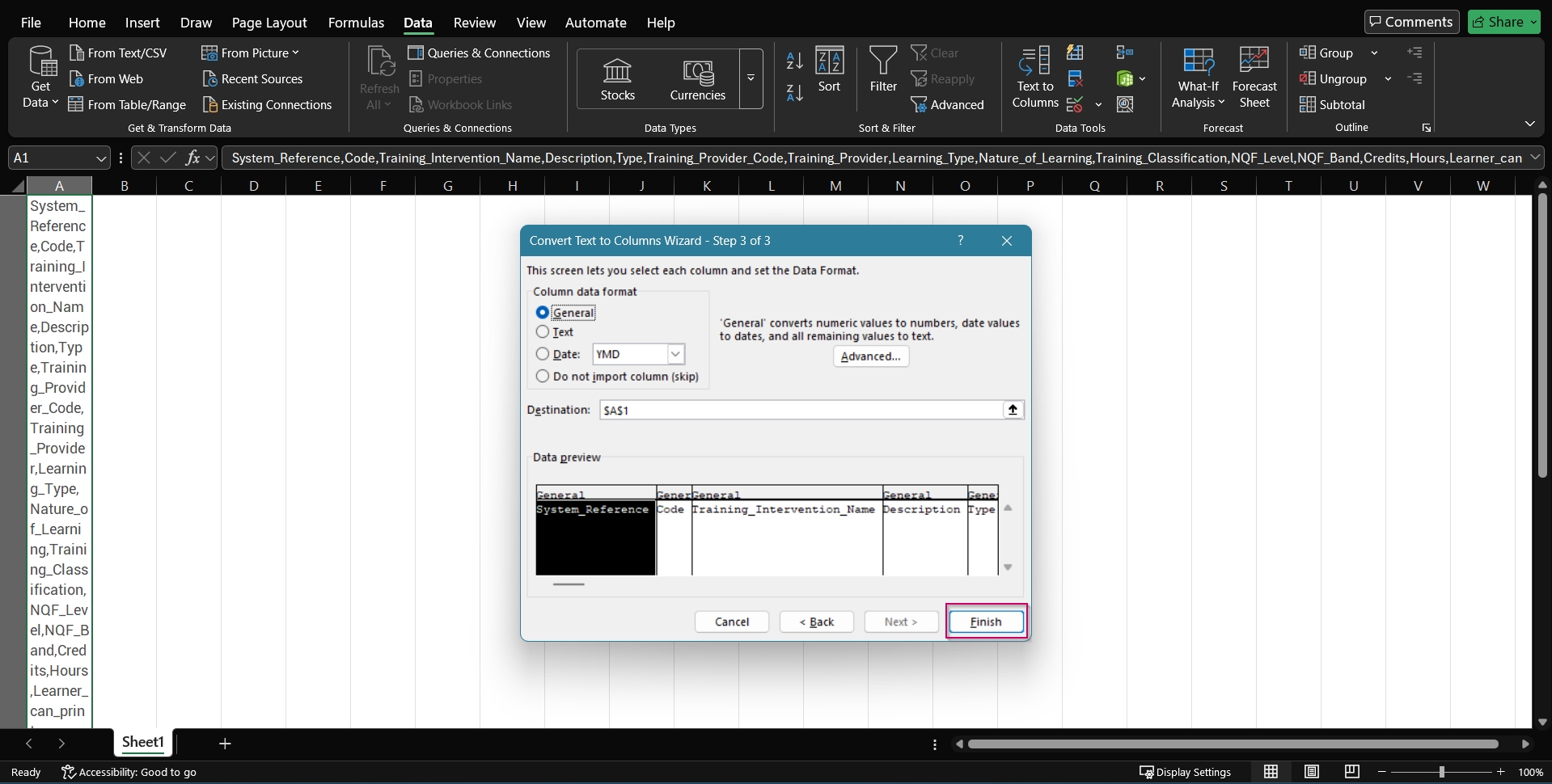
- Click Finish.
- Your file is now ready to be populated.
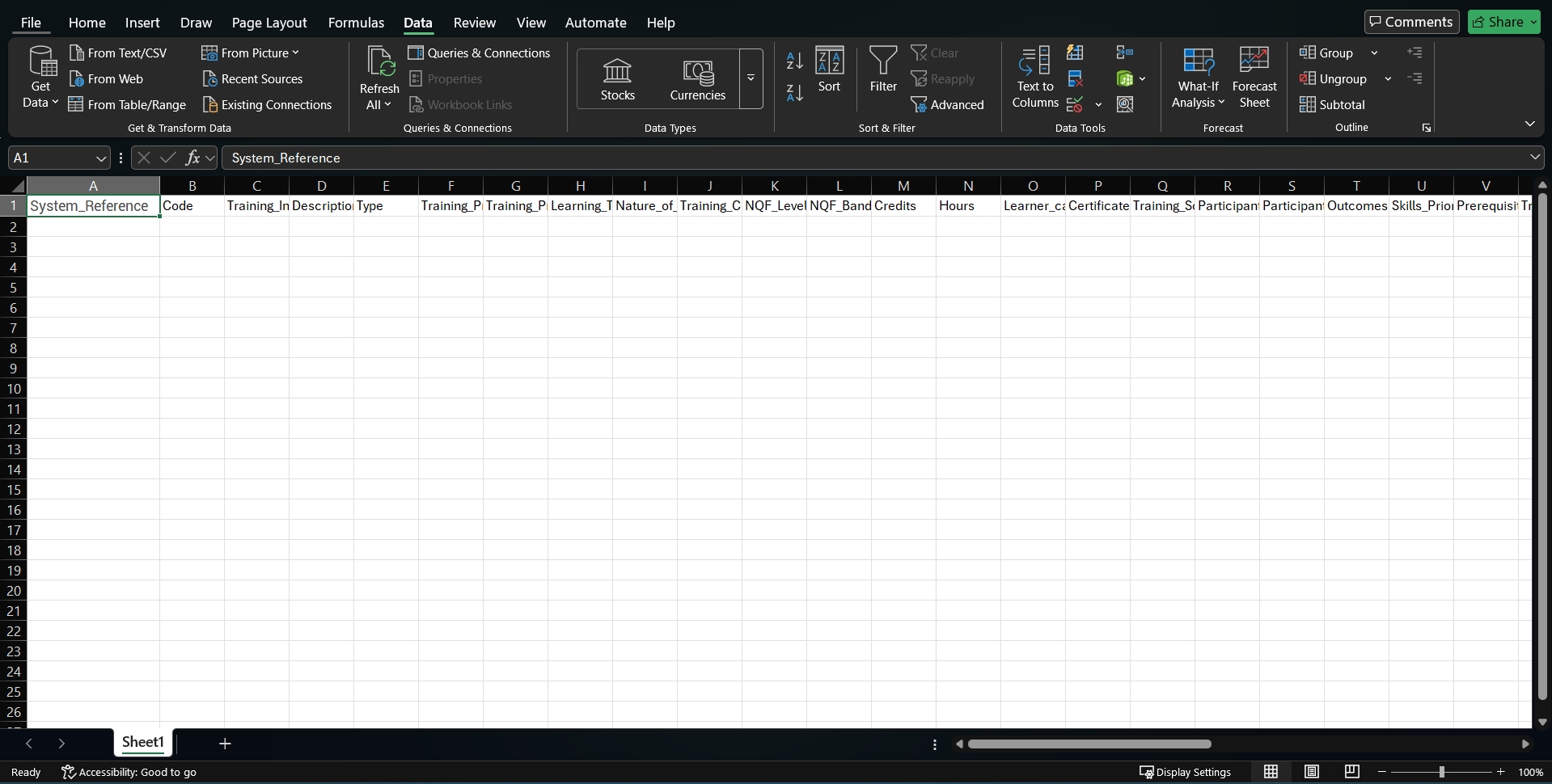
- Please do not enter any data into the System_Reference or Code columns, as these will be updated automatically.
- Save the Excel workbook as a .csv, .xls, or .xlsx file, then use it to import training interventions.
Create learning pathways
Pathway features
Learning mode
Manage content libraries
Document Repository
Learning Content Administration (SCORM / xAPI)
Gamification and Rewards
Badges
Leaderboards - Campaigns
Leaderboards - General
Point Levels
